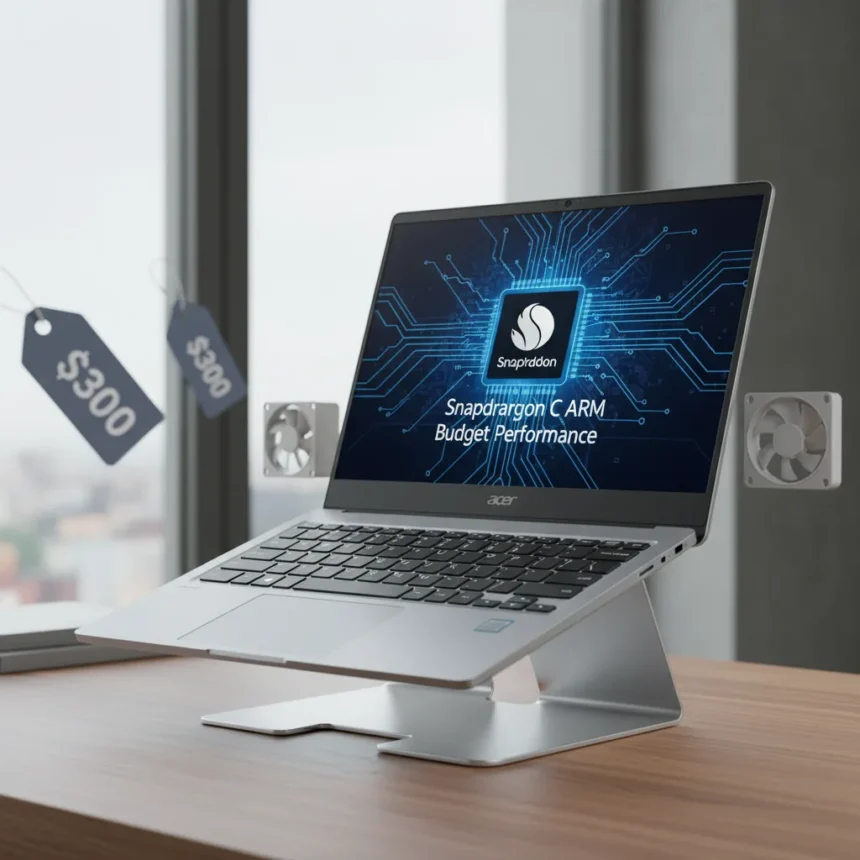
Qualcomm’s Snapdragon C ARM laptop platform is arriving at Computex 2026 as an aggressively priced entry into Windows on ARM, starting at $300 and up. The platform made its debut in an active-cooled Acer Aspire Go 15 demo unit, powered by a mystery eight-core CPU that Tom’s Hardware examined hands-on at the event.
Key Takeaways
- Qualcomm’s Snapdragon C platform targets budget Windows ARM laptops starting at $300
- The Acer Aspire Go 15 demo featured 8GB RAM and 512GB SSD storage at entry-tier pricing
- The platform uses an active-cooled eight-core processor design, a departure from fanless competitors
- Tom’s Hardware uncovered platform details by examining Windows utilities on the demo unit
- The Snapdragon C ARM laptop directly competes with Apple’s MacBook Neo positioning
What Is the Snapdragon C ARM Laptop Platform?
The Snapdragon C ARM laptop platform represents Qualcomm’s push into the budget Windows laptop segment, a space where ARM-based processors have largely been absent. The platform is designed to deliver functional computing at entry-level pricing, with the Acer Aspire Go 15 serving as the first tangible example of what this hardware can achieve. Rather than pursuing fanless designs like some premium Snapdragon Windows laptops, Qualcomm opted for active cooling on the Snapdragon C platform, suggesting the eight-core processor generates enough heat to warrant thermal management.
The Acer Aspire Go 15 demo unit came equipped with 8GB of RAM and 512GB of SSD storage, paired with what Tom’s Hardware describes as an eight-core CPU of unconfirmed model designation. By opening Windows system utilities on the demo device, Tom’s Hardware was able to extract new details about the platform’s architecture and capabilities. This hands-on approach revealed specifics that Qualcomm had not yet publicly disclosed about the processor configuration and platform design.
How Does the Snapdragon C ARM Laptop Compare to Alternatives?
The Snapdragon C ARM laptop’s $300 entry price positions it as a direct competitor to budget Windows laptops and, according to the Acer announcement framing, to Apple’s MacBook Neo. Unlike premium Snapdragon Windows laptops that emphasize thinness and fanless operation, the Snapdragon C platform accepts active cooling as a trade-off for lower cost and potentially higher sustained performance. This design choice reflects a different market segment—users prioritizing affordability over premium aesthetics.


The eight-core processor design differs from the performance-focused Snapdragon chips found in higher-end Windows laptops, which typically feature more complex core configurations and higher clock speeds. The Snapdragon C ARM laptop targets users who need basic productivity, web browsing, and light content consumption rather than demanding creative or professional workloads. This segmentation allows Qualcomm to capture price-sensitive buyers who might otherwise choose Intel or AMD-based budget laptops.
Why Does Active Cooling Matter on a Budget Laptop?
The presence of active cooling on the Snapdragon C ARM laptop platform is significant because it signals that Qualcomm prioritized sustained performance over the fanless simplicity that defined early Snapdragon Windows laptops. A fanless design appeals to premium buyers willing to pay more for silence and durability, but it often requires aggressive thermal throttling under load. By adding a cooling fan, the Aspire Go 15 can maintain higher performance for longer without thermal constraints, making it more practical for real-world use at an entry-level price point.



This engineering choice also suggests that the eight-core processor, while not identified by exact model number in available reports, generates sufficient heat during normal operation to warrant active thermal management. The decision reflects a pragmatic approach to the budget segment: users at this price point care more about usable performance than silent operation, and they are unlikely to notice or object to fan noise if it means their laptop runs faster and more reliably.
What Are the Key Specifications of the Acer Aspire Go 15?
The Acer Aspire Go 15 demo unit showcased at Computex 2026 featured 8GB of RAM and 512GB of SSD storage, which Tom’s Hardware confirmed by examining the device’s system information. These specifications align with entry-tier laptop configurations that prioritize storage capacity over memory expansion, a common pattern in budget Windows machines. The 15-inch form factor suggests the laptop targets users who value screen real estate for productivity tasks and media consumption.
The Snapdragon C ARM laptop platform’s $300 and up pricing indicates that the base configuration—likely matching or closely resembling the demo unit’s specs—will start at or near that threshold. This pricing is aggressive compared to most current Snapdragon Windows laptops, which typically launch at $600 or higher. The entry-tier positioning reflects Qualcomm’s strategy to establish ARM-based Windows laptops as a viable alternative to budget Intel and AMD options, rather than as a premium category.
Is the Snapdragon C ARM Laptop Available Now?
The Snapdragon C ARM laptop platform was demonstrated at Computex 2026, but no confirmed commercial launch date, retail availability, or regional rollout details were available at the time of Tom’s Hardware’s hands-on report. The demo unit in the Acer Aspire Go 15 represents the first public appearance of the platform, and Qualcomm and Acer have not yet announced when the laptop will be available for purchase globally or in specific markets.



What Makes the Eight-Core Processor a Mystery?
Tom’s Hardware’s hands-on examination of the Snapdragon C ARM laptop platform revealed new details about the processor through Windows system utilities, but the exact CPU model designation remains unconfirmed. This ambiguity may reflect Qualcomm’s strategy to keep certain architectural details under wraps until a formal announcement, or it could indicate that the processor is a custom variant designed specifically for the Snapdragon C platform rather than a rebranded existing chip. The eight-core configuration itself is worth noting—it suggests a focus on multi-threaded performance for everyday computing tasks rather than specialized optimization for gaming or creative work.
FAQ
How does the Snapdragon C ARM laptop’s price compare to traditional Windows laptops?
The $300 entry price for the Snapdragon C ARM laptop platform is competitive with budget Windows laptops powered by Intel Celeron or AMD Athlon processors. At this price point, buyers are choosing between ARM-based Snapdragon and traditional x86 architecture, with the Snapdragon C platform offering a new alternative in a segment historically dominated by Intel and AMD.
Will the Snapdragon C ARM laptop work with existing Windows software?
The Snapdragon C ARM laptop platform runs Windows on ARM architecture, which uses emulation to run x86 software. While most mainstream applications work through this compatibility layer, performance-intensive or specialized software may encounter limitations. Tom’s Hardware’s hands-on examination focused on hardware details rather than software compatibility testing, so specific application performance data is not yet available.
When will the Acer Aspire Go 15 be available for purchase?
No official launch date or availability window was announced in conjunction with the Computex 2026 demo. Qualcomm and Acer have not disclosed when the Snapdragon C ARM laptop will reach retail channels or which markets will receive it first. Interested buyers should monitor official announcements from both companies for availability updates.
The Snapdragon C ARM laptop platform represents Qualcomm’s most aggressive push into the budget Windows segment, using active cooling and an eight-core processor to compete directly with Intel and AMD at the entry-level price point. The Acer Aspire Go 15 demo proved the concept is real and functional, but the lack of a confirmed launch date means the actual market impact remains uncertain. For budget-conscious Windows laptop buyers, the Snapdragon C platform could reshape the competitive landscape—if Qualcomm can deliver on its $300 promise without sacrificing usability or reliability.
Edited by the All Things Geek team.
Source: Tom's Hardware