Container vulnerability scanning is supposed to be straightforward: run a tool, get a list of flaws, fix them. Except it isn’t. Run two industry-standard scanners on the same container image and you will get two entirely different answers. Not slightly different. Entirely different. That gap isn’t a bug—it’s the actual problem organizations need to solve.
Key Takeaways
- Different container vulnerability scanners produce conflicting results on identical images due to underlying assumptions.
- Scanner disagreement reveals that the real issue is how tools interpret packages and evidence, not the vulnerability count alone.
- Organizations must understand each scanner’s model and assumptions rather than treating any single scan output as definitive truth.
- Container vulnerability scanning effectiveness depends on managing scanner assumptions, not just managing discovered flaws.
- Security teams should expect inconsistency across tools and plan remediation accordingly.
Why Container Vulnerability Scanning Results Diverge
The core problem is this: vulnerability scanners don’t actually measure objective reality. They apply a model. That model includes assumptions about how packages are named, what versions mean, which evidence counts as proof, and how to interpret the software bill of materials embedded in a container image. When two scanners use different models, they reach different conclusions about the same artifact. Neither is necessarily wrong. They’re just working from different premises.
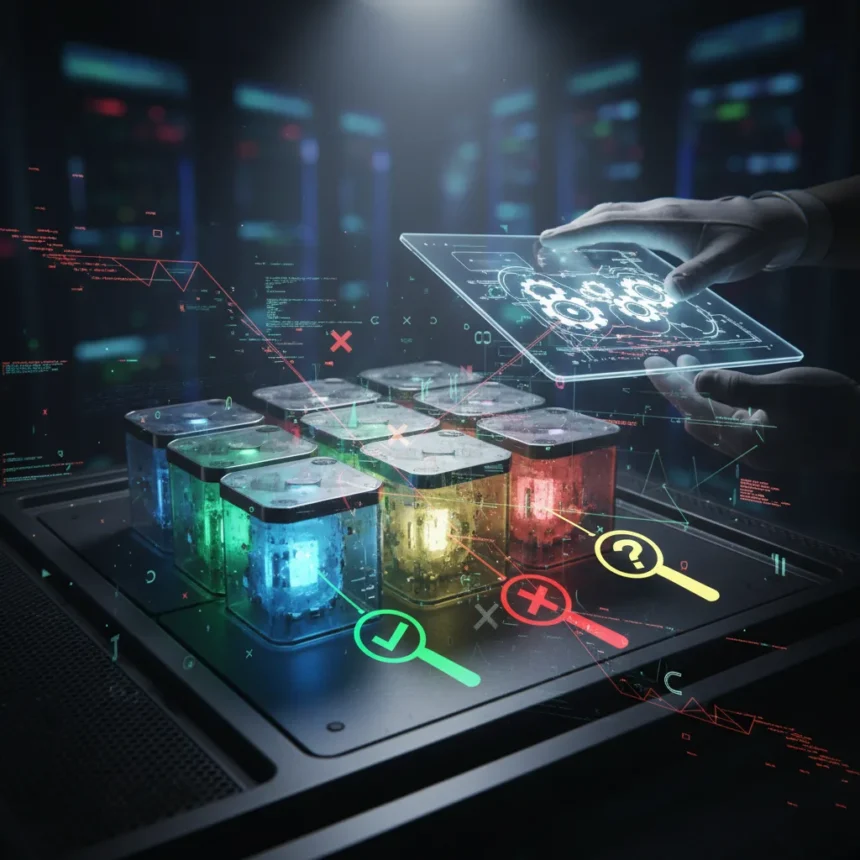
Consider a practical scenario: a container image contains a library with a known vulnerability. Scanner A detects it because the tool recognizes the package name and version. Scanner B misses it because the image was built in a way that doesn’t expose the package metadata Scanner B expects. Scanner C flags it but marks it as low-risk because the vulnerable function isn’t reachable in that particular image context. Three scanners, three answers, one image. Which one is correct? All of them, depending on what assumption you accept.
This matters because security teams often treat scanner output as gospel. A scan runs, a report appears, and remediation starts. But if the scanner’s assumptions don’t match your environment or your risk model, you’re chasing ghosts or missing real problems. The scanner isn’t lying—it’s just operating under a different set of rules than the next tool.


Container Vulnerability Scanning Means Managing Assumptions
The practical implication is uncomfortable: you can’t solve container vulnerability scanning by buying a better scanner. You solve it by understanding what each scanner assumes. That means knowing how each tool handles transitive dependencies, how it interprets version strings, whether it factors in reachability analysis, and what data sources it trusts. It means accepting that consistency across tools is the exception, not the baseline.
Teams running multiple scanners often see this as redundancy—belt-and-suspenders security. But the real value isn’t in catching more vulnerabilities. It’s in understanding where scanners diverge, because those divergence points reveal assumptions you need to examine. If Scanner A flags a critical issue and Scanner B ignores it, that gap is information. It tells you something about how each tool models risk. That’s where the conversation should start, not with a remediation ticket.


The implication for container vulnerability scanning workflows is significant. A single-scanner approach creates false confidence. Teams believe they have complete visibility when they actually have one vendor’s interpretation of visibility. A multi-scanner approach surfaces the reality: there is no single truth, only competing models. That’s harder to manage, but it’s more honest and ultimately more secure.
Building a Container Vulnerability Scanning Strategy Around Reality
Effective container vulnerability scanning doesn’t mean eliminating disagreement—it means systematizing it. Document which scanners you run, what each one does well, and where they diverge. Create a decision framework for when Scanner A and Scanner B conflict. Does the vulnerability have to be flagged by both to trigger remediation? Does one scanner’s high-confidence finding override another’s uncertainty? These choices should be intentional and documented, not left to whoever happens to read the report first.
Container vulnerability scanning also requires accepting that the process is fundamentally about risk judgment, not technical certainty. A scanner output is a data point, not a verdict. The verdict comes from understanding what the scanner’s assumptions mean for your specific containers, your deployment context, and your risk tolerance. Two organizations can run identical scans and reach different remediation decisions because they weight the underlying assumptions differently.
The teams getting the most value from container vulnerability scanning aren’t the ones with the most sophisticated tools. They’re the ones who understand their tooling deeply enough to question results and dig into disagreements. That’s the work that actually reduces risk.



Does container vulnerability scanning catch all flaws?
No. Container vulnerability scanning tools rely on package metadata, version detection, and vulnerability database coverage. If a flaw exists in source code that no scanner’s database has cataloged, or if a vulnerability is embedded in a way that doesn’t expose standard package information, scanners will miss it. Different tools have different blind spots based on their assumptions.
Should organizations use multiple container vulnerability scanners?
Multiple scanners expose disagreement, which forces you to understand the assumptions each tool makes. That visibility is valuable. A single scanner creates false confidence. The tradeoff is operational complexity—you’ll need to manage conflicting results—but that friction is often worth the insight it provides.
How do scanner assumptions affect container vulnerability scanning outcomes?
Assumptions determine what a scanner sees and how it interprets evidence. If a scanner assumes a particular package naming convention and your image uses a different one, the tool won’t detect vulnerabilities in that package. If a scanner applies reachability analysis and another doesn’t, they’ll assign different severity levels to the same flaw. These aren’t flaws in the scanners—they’re design choices that shape results.
Container vulnerability scanning works best when teams stop treating scan outputs as objective facts and start treating them as models. Each scanner is a lens. Different lenses reveal different things. Security comes from understanding not just what each lens shows, but why it shows it that way.
Edited by the All Things Geek team.
Source: TechRadar