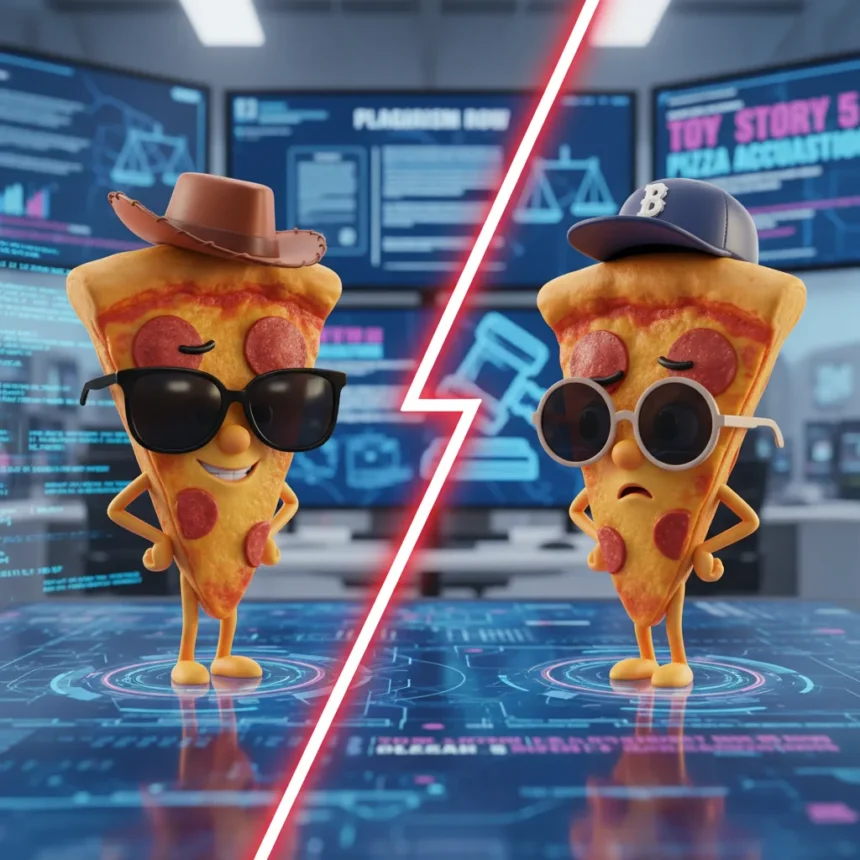
Toy Story 5 plagiarism accusations have ignited a conversation about originality in blockbuster animation. The controversy centers on a character design choice that has drawn comparisons to existing work, raising questions about creative integrity in major studio productions.
Key Takeaways
- Toy Story 5 plagiarism accusations focus on Bad Bunny’s Pizza with Sunglasses character.
- The character design has sparked debate among fans and design observers online.
- The controversy highlights ongoing tensions between homage and intellectual property in animation.
- No official legal claims have been verified as of current reporting.
- The incident reflects broader industry scrutiny of character originality.
What Are the Toy Story 5 Plagiarism Accusations?
Toy Story 5 plagiarism accusations emerged following the reveal of Bad Bunny’s Pizza with Sunglasses character, a new addition to Pixar’s beloved franchise. The character design has drawn criticism from online communities who argue it bears striking similarities to existing creative work. While the exact nature of the alleged source remains contested, the accusation has spread across social media and entertainment forums, prompting broader discussion about how major studios develop character designs.
The controversy is not isolated to casual fan observation. Design critics and animation enthusiasts have weighed in, noting that character originality is a cornerstone of franchise credibility. When audiences perceive derivative design choices in high-budget productions, it can undermine trust in the creative process. The Pizza with Sunglasses character, intended as a memorable addition to the Toy Story universe, instead became the focal point of a larger debate about creative responsibility.
Why Character Design Matters in Animation
Character design is the visual foundation of any animated film. A distinctive, original character can define a franchise and create lasting cultural impact. When a character feels borrowed or overly similar to existing designs, audiences notice immediately. This is especially true in a franchise like Toy Story, where fans have spent decades building emotional connections to carefully crafted characters.

The Pizza with Sunglasses character was presumably designed to appeal to younger audiences and inject humor into the film. However, the design choice has instead become a cautionary tale about the importance of thorough originality checks before character reveals. In an industry where fan communities actively analyze every detail, even subtle design similarities can trigger accusations of copying.
Toy Story 5 Plagiarism Accusations and Industry Standards
Toy Story 5 plagiarism accusations reflect a growing pattern in entertainment where studios face immediate scrutiny over character and design choices. The animation industry has no universal standard for what constitutes acceptable similarity versus outright plagiarism. This gray area creates space for controversy even when studios believe they are operating within acceptable creative boundaries.



Previous design controversies in animation and entertainment have established precedent for how audiences respond to perceived copying. When major studios release character designs that feel familiar or derivative, the backlash can be swift and damaging to marketing efforts. The Pizza with Sunglasses situation demonstrates that even a single character reveal can dominate conversation around a film’s launch, shifting focus from the story and other creative achievements to questions of originality.
What Comes Next for Pixar?
As Toy Story 5 moves toward release, the studio faces a choice: address the plagiarism accusations directly or allow the controversy to fade as the film’s narrative and other elements capture audience attention. Transparency about the character’s design process could help, though it remains unclear whether Pixar has issued any official statement regarding the allegations.
The broader lesson here is that character design in tentpole animation requires meticulous attention to originality. Studios investing hundreds of millions in films cannot afford to have individual character choices overshadow the entire production. Whether the Pizza with Sunglasses design ultimately proves derivative or simply unfortunate in its timing, the controversy highlights how closely fans and critics now scrutinize every element of major releases.
Is Toy Story 5 plagiarism accusation a legal issue?
No verified legal claims have been confirmed as of current reporting. The accusations remain primarily in the realm of fan criticism and design commentary rather than formal intellectual property disputes. Whether the similarity rises to the level of actionable plagiarism would depend on specific legal standards and evidence that has not been publicly detailed.



How do studios typically respond to plagiarism accusations?
Major studios usually respond through official statements clarifying the creative process or, in some cases, by redesigning elements if the criticism is substantial enough to impact marketing. Response strategies vary depending on the severity of the accusation and potential impact on the film’s reception. Some studios engage directly with fan communities, while others allow time for controversy to diminish naturally.
Could this affect Toy Story 5’s box office performance?
Character design controversies rarely derail major franchise releases, though they can create negative sentiment in pre-release coverage. Whether Toy Story 5 plagiarism accusations meaningfully impact ticket sales depends on how dominant the story becomes in mainstream media and whether casual audiences care about design originality versus story quality and emotional resonance.
The Toy Story 5 plagiarism accusations serve as a reminder that in the age of instant social media scrutiny, every creative choice in a blockbuster film faces potential backlash. Whether the Pizza with Sunglasses character ultimately proves controversial or simply becomes another footnote in the franchise’s history, the incident underscores how seriously audiences now take questions of originality and creative integrity in entertainment.
Edited by the All Things Geek team.
Source: Creativebloq