





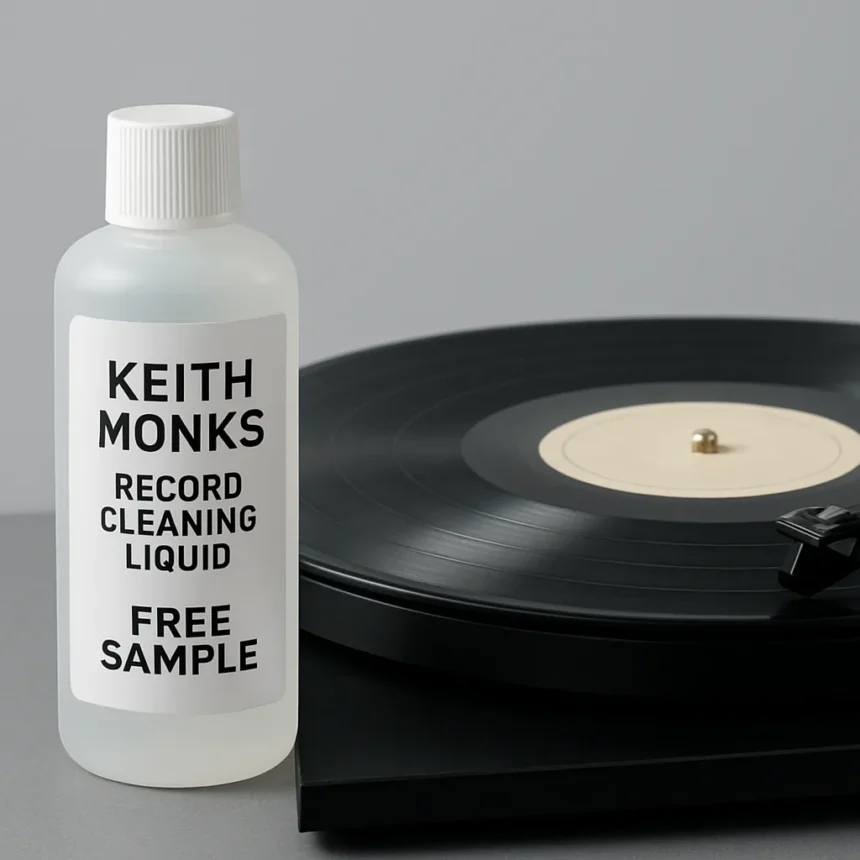
Record-cleaning liquid is one of those audiophile investments that divides the community: some swear it transforms their vinyl’s sound, others dismiss it as snake oil. Keith Monks, a renowned record cleaner, is betting you’ll believe the former—and they are willing to let you find out for free.
Key Takeaways
- Keith Monks record-cleaning liquid costs £50 per bottle but offers free samples to test first.
- Free samples require you to pay postage and packing costs.
- Record-cleaning liquid is part of a broader vinyl-care strategy alongside proper storage and equipment maintenance.
- The offer removes the financial barrier to trying whether cleaning fluids improve playback quality.
- Proper record-cleaning technique matters as much as the product itself.
What the Keith Monks Record-Cleaning Liquid Offer Actually Is
Keith Monks is offering a free sample of its record-cleaning liquid so you can test whether it improves your vinyl‘s sound without committing to the full £50 purchase price. You do not pay for the product itself, but you do cover the cost of postage and packing. This approach lowers the barrier to trial—a smart move for a product category where skepticism runs high.
The premise is straightforward: better cleaning equals better sound. But that claim depends entirely on how you use the product and what you are comparing it against. If your records are already clean, a record-cleaning liquid will have little effect. If they are dusty, scratched, or caked with grime, the results could be noticeable.
Record-Cleaning Liquid in the Broader Vinyl-Care Context
Record-cleaning liquid does not exist in isolation. Its effectiveness sits within a larger ecosystem of vinyl maintenance practices. Proper water quality matters—low-residue options like distilled or deionized water are recommended to avoid mineral buildup on your records. How you apply the liquid, whether you use the right brushes, and how you dry your records afterward all influence the outcome.



Beyond liquid cleaners, other approaches exist. Anti-static sleeves reduce pops and crackle by minimizing dust attraction. Cartridge alignment and tracking-force adjustment can unlock better sound from your existing setup without cleaning anything. Record-cleaning machines offer a more thorough approach than manual application, though they carry a higher cost. The Keith Monks liquid is one tool in a toolkit, not a magic fix.
Why Test a Record-Cleaning Liquid Before Committing
The free-sample model works because vinyl enthusiasts know that results vary wildly depending on record condition, equipment quality, and listening environment. Your turntable’s stylus condition, the quality of your preamp, and even room acoustics influence whether a cleaner will make an audible difference. By trying the sample first, you get real-world feedback from your own system rather than relying on marketing claims or online reviews written by someone with different gear.



The postage cost is not zero, so this is not entirely risk-free. But it is substantially lower than gambling £50 on a product that might deliver nothing in your specific situation. For readers in regions where Keith Monks shipping is expensive, that calculation shifts—but the principle remains: test before bulk-buying.
How to Request the Keith Monks Record-Cleaning Liquid Sample
The article title confirms the offer exists, but the full mechanics of requesting a sample—whether through a website form, email, or phone—are not detailed in the available information. Contact Keith Monks directly to inquire about sample availability and current postage rates. Availability and shipping timelines may vary depending on your location.
Does Record-Cleaning Liquid Actually Improve Sound?
The honest answer: it depends on your records. If your vinyl is genuinely dirty, cleaning it will reduce surface noise and improve clarity. If your records are already clean, you will hear little to no difference. The research brief does not include controlled listening tests for the Keith Monks liquid specifically, so claims about its particular performance are unverified. What matters is whether your records need cleaning and whether you are willing to spend time and money on the process.
Frequently Asked Questions
Is the Keith Monks record-cleaning liquid sample truly free?
The product itself is free, but you pay for postage and packing. The exact cost depends on your location and current shipping rates from Keith Monks. Contact them directly for a quote before ordering.


Can record-cleaning liquid damage my vinyl?
Record-cleaning liquid is designed for records, not for styluses or cartridges—keep the liquid away from those components unless a specific stylus-cleaning product instructs otherwise. Applied correctly to the record surface and rinsed properly, it should not cause damage.
What makes record-cleaning liquid worth trying?
If your records sound dull, crackly, or muffled despite a well-maintained turntable, dirt buildup could be the culprit. A free sample lets you test whether cleaning improves your listening experience without the full financial commitment. For vinyl enthusiasts who have already invested in decent equipment, the £50 cost is modest insurance against poor playback quality caused by neglected records.
The Keith Monks offer is a smart bet for anyone curious whether record-cleaning liquid will help their collection. You lose only postage costs if it does not work—a low-risk way to answer a question that matters to serious vinyl listeners.
Edited by the All Things Geek team.
Source: What Hi-Fi?




