What is Google Labs Portraits and why does it matter now?
Google Labs Portraits is a free AI experiment from Google that lets users hold real-time conversations with AI avatars of real-world experts, launched in June 2025 and available in the US to users aged 18 and over via labs.google/portraits. The first expert featured is Kim Scott, author of Radical Candor and one of the most recognised voices in leadership and workplace communication. At a moment when professional coaching is expensive, hard to access, and rarely available at 2am when you are spiralling about a difficult conversation with your manager, the timing feels deliberate.
The concept is straightforward but the implications are not. Google has built Portraits in direct partnership with the experts themselves, grounding each avatar in the expert’s authentic content, voice, and style. The result is an illustrated avatar with voice synthesis powered by Google’s Gemini AI model — not a generic chatbot dressed up with a famous name, but something closer to a scaled version of the real person’s expertise.
How Google Labs Portraits actually works in practice
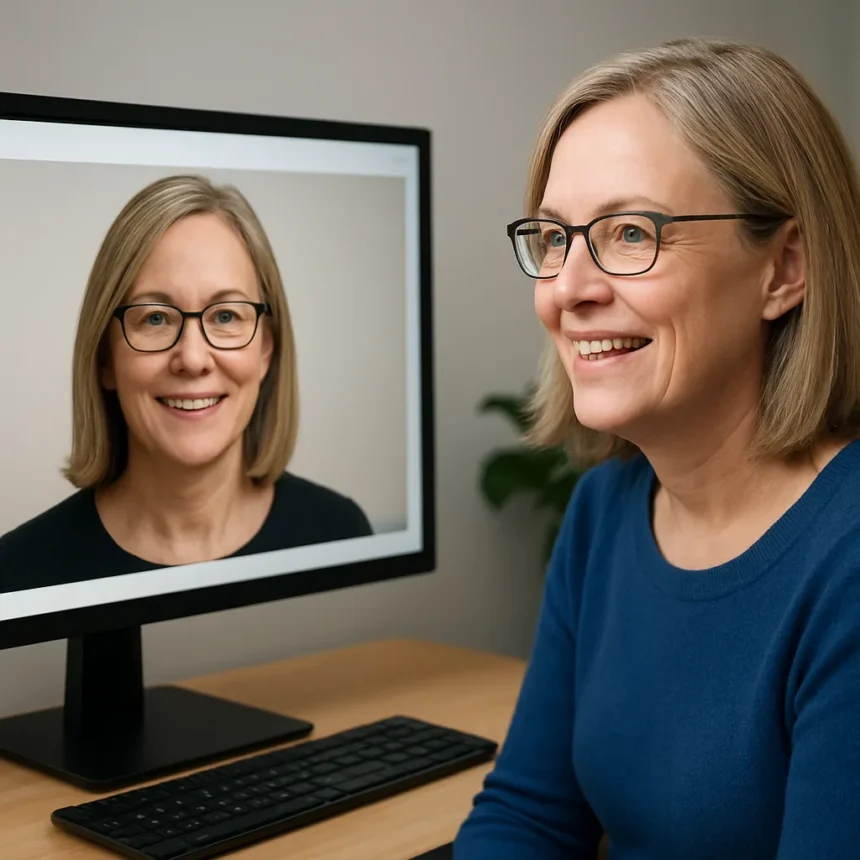
Users sign up via the Portraits site and, after approval, can begin free-form conversations with the Kim Scott avatar on topics like leadership, feedback, workplace conflict, and imposter syndrome. There are no scripts or rigid menus — you ask what you need. A demo example from the Radical Candor podcast illustrates the dynamic well: a user asks, “How do you give feedback to someone who’s underperforming, but you think has great potential?” and the Portrait responds with a grounded, Radical Candor-style answer.
Interestingly, Kim Scott herself noted during a live demo that the Portrait is “pretty snappy” compared to her own tendency to be “a little bit long-winded”. That is not a flaw — it is arguably a feature. Distilled expertise, on demand, without the scheduling. Google Labs product manager Pavan Kumar framed the ambition clearly: “Imagine having direct access to Kim’s guidance to navigate tough workplace situations or practice difficult conversations”. The Portraits are also designed to be embeddable on creators’ own platforms, meaning Kim Scott could theoretically offer her Portrait as a coaching tool directly through Radical Candor’s channels.



Google Labs Portraits vs Character.AI and ChatGPT prompts
The obvious question is whether Google Labs Portraits offers anything meaningfully different from what already exists. Character.AI lets users simulate conversations with famous figures, but those are fan-constructed approximations with no official involvement and no grounding in verified source material. A well-crafted ChatGPT prompt can channel a leadership framework, but it is pulling from whatever training data it absorbed — not from a structured partnership with the expert themselves.
Portraits’ core differentiator is authenticity through collaboration. The avatar is built with the expert’s input and based on their actual content. That matters more than it might seem. When you ask Kim Scott’s Portrait about ruinous empathy — a specific concept from Radical Candor — you are getting a response shaped by the person who coined the term, not an AI’s interpretation of what she probably meant. Grok’s companion features skew toward social interaction rather than subject-matter depth, which puts Portraits in a different category entirely.



What Google Labs Portraits could become — and what holds it back
Right now, Google Labs Portraits is a single-expert experiment with a US-only access restriction and an approval-based sign-up process. That is a significant limitation. Readers outside the United States cannot access it at all, and even within the US, the waitlist model means not everyone can jump in immediately. Google has signalled that additional experts are being considered — storytelling expert Matt Dicks has been mentioned in related coverage — and there is an interest form for experts who want to partner on their own Portraits.
The scalability argument is compelling. Kim Scott cannot personally coach every manager who reads Radical Candor. A Portrait version of her expertise, available 24 hours a day, potentially embedded across coaching platforms, changes the economics of expert access entirely. Google Distinguished Designer Ryan Germick is involved in the project, which suggests the team is thinking seriously about the experience design, not just the underlying model.
The risks are real too. Voice synthesis and illustrated avatars built on real people’s likenesses raise questions that Google has not fully addressed publicly. The experiment includes user feedback mechanisms to flag issues, which is a sensible precaution for an early-stage product — but it also signals that the team knows this is uncharted territory.
Is Google Labs Portraits free to use?
Yes, Google Labs Portraits is free after completing the US sign-up and receiving approval at labs.google/portraits. There is no subscription fee or paid tier mentioned for the current experiment phase.


Who is the first expert featured in Google Labs Portraits?
The first Portrait is Kim Scott, author of Radical Candor and a leadership and communication expert. Her Portrait covers topics including feedback, workplace situations, management challenges, and imposter syndrome.
Can people outside the US use Google Labs Portraits?
Not currently. Google Labs Portraits is available only in the United States to users aged 18 and over. There is no confirmed timeline for international expansion at this stage of the experiment.
Google Labs Portraits is one of the more genuinely interesting AI experiments to emerge in 2025 — not because the technology is unprecedented, but because the partnership model gives it a credibility that generic AI chatbots simply cannot match. If Google expands the expert roster and opens access beyond the US, it has the foundation of something that could make high-quality coaching accessible to people who currently cannot afford it. That is worth watching closely.
Edited by the All Things Geek team.
Source: Tom's Guide