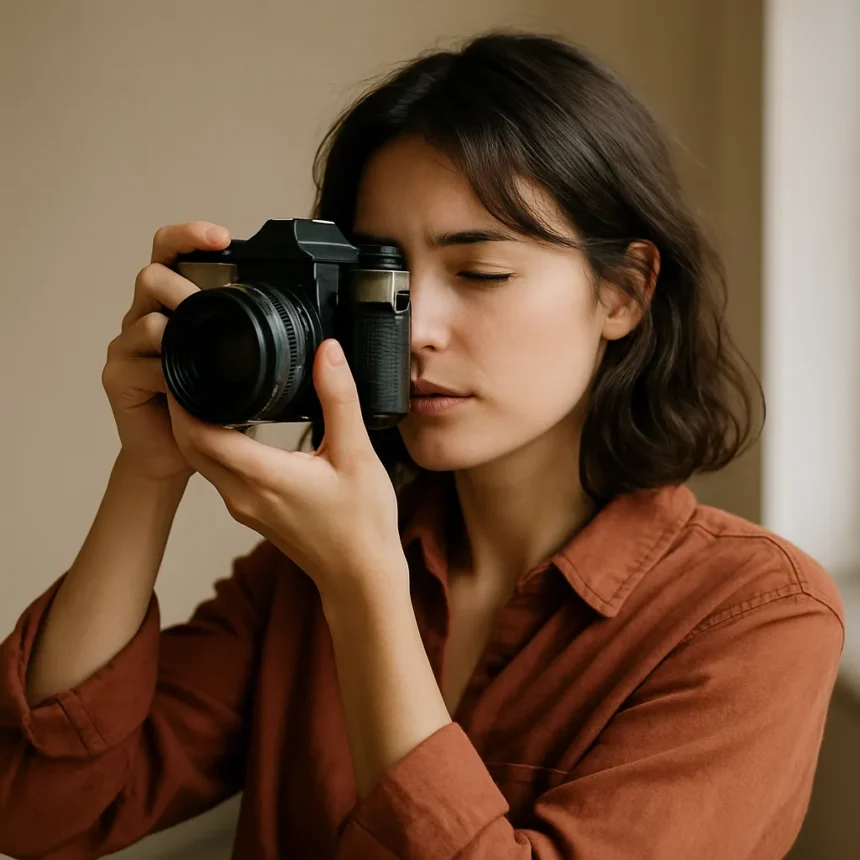
Vintage DSLR photography refers to the practice of shooting with digital single-lens reflex cameras that are typically a decade or more old, often with lower megapixel counts and fewer automated features than today’s mirrorless systems. The idea of deliberately stepping back from cutting-edge gear to spark creativity is gaining traction among photographers who feel that modern cameras do too much of the thinking for them.
Why vintage DSLR photography is making a comeback
Modern mirrorless cameras are engineering marvels. They offer eye-tracking autofocus, computational image processing, and subject detection that can lock onto a moving bird mid-flight. But for many photographers, all that automation comes at a cost: the sense that you are a passenger rather than the driver of your own creative process. When a camera handles exposure, focus, and stabilisation almost entirely on its own, the photographer’s role shrinks.
Older DSLRs, by contrast, demand more from the person holding them. With fewer megapixels to work with — some cameras from around 2005 offered roughly 6 to 8 megapixels — every frame carries more weight. You cannot simply crop aggressively in post-production and recover a usable image. You have to compose carefully, get close, and commit to the shot before pressing the shutter.
The creative case for shooting with older gear
Constraints have long been recognised as a driver of creativity across all art forms, and photography is no exception. When a camera limits what you can do, you are forced to work within those limits imaginatively. A vintage DSLR with slower autofocus encourages you to anticipate your subject rather than react to it. A smaller buffer means you shoot more deliberately rather than firing off bursts and sorting through hundreds of near-identical frames later.

There is also something to be said for the tactile experience. Older DSLRs tend to have physical dials and buttons for core settings rather than touchscreen menus buried several levels deep. Adjusting aperture or shutter speed becomes a muscle-memory action rather than a menu navigation exercise. Many photographers report that this directness reconnects them with the fundamentals of exposure in a way that modern interfaces can obscure.
Vintage DSLR photography versus modern mirrorless: what you actually give up
It would be dishonest to pretend the trade-offs are trivial. Compared to a current mirrorless system, a 20-year-old DSLR will fall short in low-light performance, autofocus reliability for fast-moving subjects, video capability, and dynamic range. Modern sensors have improved dramatically in all of these areas. If you shoot sports, wildlife, or events professionally, the gap in autofocus technology alone makes vintage gear a poor choice for primary work.



Battery life, however, is one area where older DSLRs can actually outperform their mirrorless descendants. Optical viewfinders consume far less power than electronic viewfinders, and many classic DSLRs can manage hundreds of shots on a single charge. For photographers who spend long days in the field, that is a genuine practical advantage rather than nostalgia.
How to get started with vintage DSLR photography
The entry point for vintage DSLR photography is remarkably low. Bodies from major manufacturers that were considered professional-grade equipment in the mid-2000s can now be found secondhand for a fraction of their original price. Lenses from that era are often fully compatible with newer bodies from the same manufacturer, so switching back and forth between old and new is straightforward if you already own glass from a major system.
The most valuable approach is to treat the vintage DSLR as a dedicated creative tool rather than a replacement for your primary kit. Use it on weekends, on personal projects, or whenever you feel your photography has become mechanical and habitual. The friction it introduces is the point — not a flaw to be worked around.
Is vintage DSLR photography worth trying for serious photographers?
If you shoot professionally with a modern mirrorless system and rely on its autofocus and high-ISO performance, a vintage DSLR is not a replacement. But as a secondary body used deliberately to sharpen your compositional instincts and slow down your shooting rhythm, it can be genuinely transformative. The photographers who benefit most are those who feel their work has become too polished and too safe.



What megapixel count do old DSLRs typically have?
DSLRs from around 2005 typically offered between 6 and 8 megapixels, compared to the 24 to 60 megapixels common in modern mirrorless cameras. That lower resolution forces more careful in-camera composition since aggressive cropping in post-production is not a reliable fallback.
Can old DSLR lenses work on modern mirrorless cameras?
In many cases, yes. Major manufacturers offer adapter rings that allow older DSLR lenses to mount on current mirrorless bodies, often with full or partial electronic communication. This makes it easy to build a hybrid kit that combines the handling of vintage glass with the sensor performance of a modern body.
Vintage DSLR photography is not about rejecting progress — it is about using deliberate limitation as a creative tool. The photographers getting the most out of this approach are not abandoning their modern gear permanently; they are using older cameras to remember why they picked up a camera in the first place. If your shooting has started to feel automatic, a 20-year-old DSLR might be the most useful piece of equipment you can add to your bag.
Where to Buy
OM System OM-D E-M10 Mark IV: | OM System OM-3 | OM System E-M10 Mark IV
Edited by the All Things Geek team.
Source: Tom's Guide