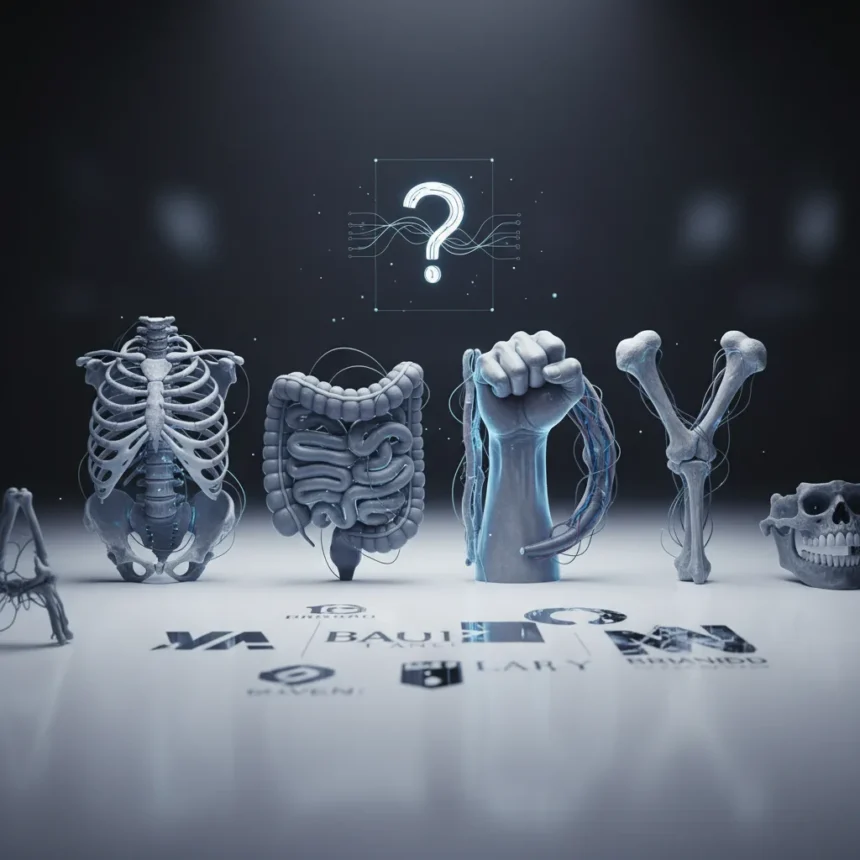
Body part fonts represent an unconventional approach to typeface design where human anatomy—limbs, torsos, hands, and other body elements—form the actual letterforms themselves. This experimental typography trend sits at the intersection of body art, fashion, and graphic design, challenging traditional notions of what a functional typeface should look like.
Key Takeaways
- Body part fonts use human anatomy to construct individual letters and characters
- This trend bridges typography, body art, and fashion design disciplines
- Designers are exploring how anatomical forms can create readable, visually striking letterforms
- The concept challenges conventional typography rules and functional design principles
- Social media has amplified visibility of experimental font concepts, including anatomy-based designs
What Are Body Part Fonts Exactly?
Body part fonts take the fundamental building blocks of typography—strokes, curves, serifs, and terminals—and replace them with human anatomical elements. Instead of geometric lines, designers position arms, legs, torsos, and hands to form recognizable letters. The concept sounds absurd until you see it executed: a capital A formed by two legs meeting at an angle, or the letter O constructed from a circular arrangement of hands.
This approach sits firmly in the experimental typography space, where function and aesthetics collide. Traditional typeface design prioritizes legibility, consistency, and technical precision. Body part fonts prioritize conceptual impact and visual storytelling. They ask: what happens when we strip away the mechanical and inject the organic, the human, the visceral?
Why Designers Are Pushing Into Body Part Typography
The rise of body part fonts reflects a broader shift in design culture toward experimentation and concept-driven work. Designers increasingly use typography not just as a functional tool for communication, but as a medium for artistic expression and social commentary. Body art has evolved significantly in recent years, with models and performers using their bodies as canvases for visual concepts. Body part fonts naturally extend this trend into the typography realm.

Social media amplification plays a crucial role here. A viral video of body part fonts—whether a model posing to form letters or an animated sequence showing anatomy-based typefaces—reaches millions instantly. This visibility encourages designers to explore increasingly bold, unconventional approaches. The shock value of seeing human limbs arranged into readable text creates memorable, shareable content that traditional serif fonts simply cannot match.
Branding and marketing teams have also begun experimenting with these concepts for campaigns targeting younger, design-forward audiences. The novelty and conceptual strength of body part fonts make them ideal for luxury brands, fashion labels, and design-focused companies looking to stand out in crowded visual spaces.



Body Part Fonts vs. Traditional Typography
Traditional typeface design operates under strict constraints: consistency across all characters, predictable stroke widths, optimal spacing, and above all, legibility. A well-designed sans-serif font works equally well at 8 points or 72 points, on screen or in print. Every letter follows the same structural logic. Body part fonts abandon most of these rules. Each letter becomes a unique sculptural problem, solved using human anatomy rather than geometric principles.
This fundamental difference means body part fonts excel in specific contexts—poster design, album art, editorial spreads, social media content—where visual impact trumps functional legibility. They fail in contexts requiring sustained readability: body copy in books, interface design, or professional documents. The comparison reveals that body part fonts and traditional fonts solve different design problems. They are not competitors but rather different tools for different jobs.
The Intersection of Body Art and Typography
Body part fonts blur the boundary between typography and body art. Designers working in this space often collaborate with models, performers, and body artists to physically manifest their concepts. The process becomes performance-based: positioning human bodies, capturing them photographically or on video, and translating that visual information into a cohesive typeface system.
This approach introduces constraints that pure digital design avoids. Real human bodies have proportions, limitations, and anatomical realities that cannot be ignored. A designer cannot simply stretch an arm to fit a letter’s proportions—the arm is what it is. This forces creative problem-solving: how do you construct the letter T using only human anatomy? Do you use one person or multiple people? How do you achieve visual consistency across letters when each is built from different bodies?



Will Body Part Fonts Become Mainstream?
The answer is almost certainly no—and that is fine. Body part fonts occupy a valuable niche in the design ecosystem. They serve specific creative purposes: generating buzz, sparking conversation, pushing conceptual boundaries, and creating memorable visual experiences. They are not designed to replace Helvetica or become the default font for corporate documents.
However, the underlying impulse—to challenge typography conventions and explore unconventional materials and forms—will continue to influence mainstream design. Designers will keep asking: what if we built a font from X? The X might be body parts, but it could also be natural materials, architectural elements, food, or technology. Body part fonts are one expression of a larger trend toward experimental, concept-driven typography that treats letters as sculptural objects rather than purely functional symbols.
Are body part fonts actually readable?
Readability depends entirely on the execution and context. Some body part fonts maintain clear letterforms that remain legible at a glance, while others prioritize artistic expression over clarity. Most are designed for display purposes—headlines, posters, social media—rather than body text, where legibility becomes critical. A well-executed body part font can be surprisingly readable in short bursts; a poorly executed one becomes visual noise.
Can you use body part fonts in professional branding?
Yes, but sparingly and strategically. Fashion brands, entertainment companies, and design-forward agencies have successfully incorporated body part fonts and similar experimental typography into campaigns and identity systems. The key is matching the font’s conceptual strength to the brand’s values and audience expectations. A luxury fashion house might use body part fonts in editorial campaigns, while a financial services firm would avoid them entirely. Context determines appropriateness.
Where did the body part font trend originate?
Body part fonts emerged from the convergence of experimental typography, body art, and social media culture. No single designer or brand invented the concept, but rather it evolved organically as designers explored the intersection of these disciplines. The viral nature of social media accelerated the trend’s visibility, turning niche experimental work into widely recognized design phenomena.
Body part fonts ultimately reveal something fundamental about contemporary design: the hunger for novelty, the power of visual storytelling, and the willingness to challenge conventions. Whether they remain a fringe experimental practice or influence broader design trends, they have already succeeded in their primary goal—making people stop, look, and reconsider what typography can be.
Edited by the All Things Geek team.
Source: Creativebloq