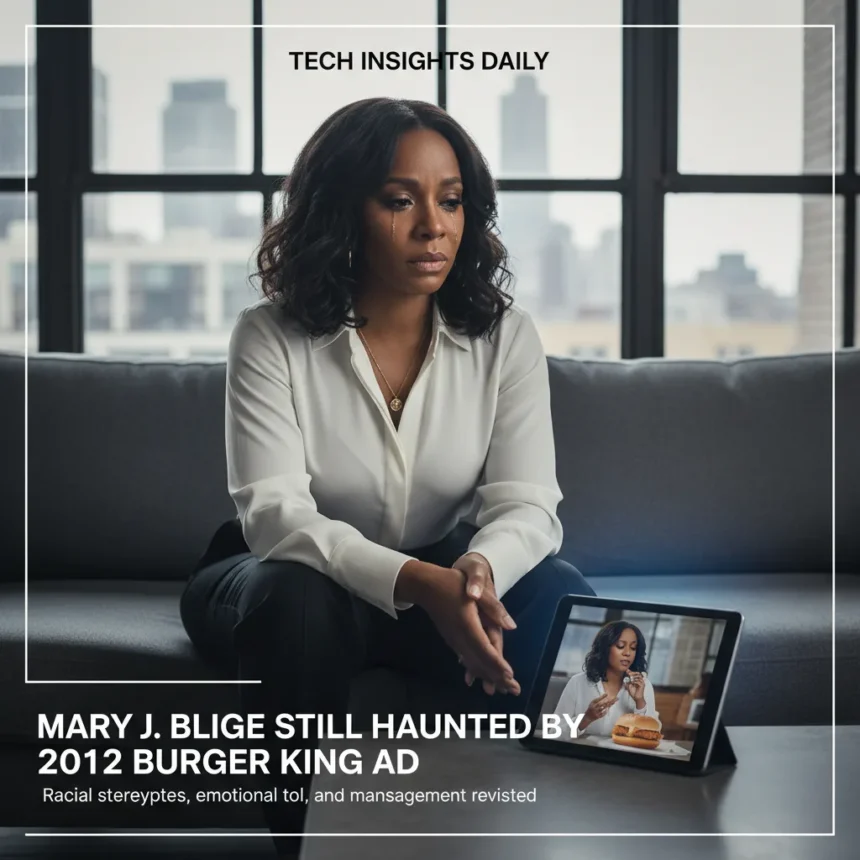
Mary J. Blige Burger King ad controversy from 2012 still stings more than a decade later. On Scott Evans’ podcast in April 2026, the 55-year-old R&B icon revisited the Crispy Chicken snack wrap commercial that became a defining moment of career embarrassment, revealing how the backlash deeply affected her and fractured her trust in the creative process.
Key Takeaways
- Burger King released a 2012 YouTube ad featuring Blige singing about Crispy Chicken wraps to her song “Don’t Mind,” listing ingredients
- The ad faced immediate backlash for perpetuating racial stereotypes through imagery and lyrics, prompting quick deletion
- Blige stated the aired version differed from what she approved and expected a dream sequence concept
- She blamed bad representation, mismanagement, and deliberate setup by ad creators for the disaster
- Blige emphasized the controversy remains “not a laughing matter” and left a lasting emotional mark
How the Mary J. Blige Burger King Ad Went Wrong
The 2012 commercial was supposed to be playful and creative. Instead, it became a cautionary tale about how a well-intentioned collaboration can spiral into a public relations nightmare. Burger King initially blamed licensing issues for the ad’s appearance on YouTube, later clarifying it was released before final approvals were secured. Blige’s version of events tells a different story—one of miscommunication, poor execution, and a setup designed to fail.
She approved participation in what she understood to be a “fun and creative campaign that was supposed to feature a dream sequence”. The finished product bore little resemblance to her vision. “The way they shot it was wrong. It was set up to make exactly what happened in the press happen like that,” Blige explained on the podcast. The imagery and lyrical choices triggered immediate criticism for leaning into harmful racial stereotypes, transforming what should have been a lighthearted brand partnership into a controversy that followed her for years.
The Emotional Toll and Lasting Impact
What makes Blige’s recent reflection remarkable is her candor about the psychological damage. “I was deeply, deeply affected,” she said, describing how the backlash “crushed” her. She was not exaggerating when she noted: “I was getting clobbered for no f***ing reason”. The controversy created confusion among fans and the public alike. “The people who were like, ‘What’s going on?’ And I didn’t really know what was going on. Everybody dropped the ball, and I’m holding everything,” she recalled.

What stings most is that Blige felt isolated in the fallout. Management failed to protect her reputation. The ad creators did not step forward to clarify the disconnect between her approved concept and the final product. She bore the weight of public judgment for a campaign she had not fully authorized in its released form. Over a decade later, she remains adamant: “It’s still not a laughing matter to me,” and “I would never laugh at that”.
Why This Moment Still Matters
The Mary J. Blige Burger King ad serves as a reminder of how quickly brand partnerships can backfire, especially when creative control breaks down and cultural insensitivity goes unchecked. Fast-food advertising has a fraught history with racial representation, and this commercial landed squarely in that minefield. Blige’s willingness to revisit the incident on Evans’ podcast signals not a desire to relitigate the past, but to reclaim her narrative. She was not complicit in a stereotypical campaign—she was let down by the system around her.



Some listeners have defended the ad’s catchiness over the years, with one noting: “That crispy chicken was a bop. Still is. It’s still in your head”. But for Blige, the earworm quality of the jingle does nothing to offset the damage. She framed it as a “learning curve,” yet one that came at significant personal cost. The incident exposed vulnerabilities in how celebrities are protected—or not protected—when collaborating with major brands.
What Blige Learned from the Disaster
In her 2012 statement to TMZ, Blige had already made clear the gap between intention and execution: “I agreed to be a part of a fun and creative campaign that was supposed to feature a dream sequence. Unfortunately, that’s not what was happening in that clip”. That statement should have closed the conversation, but it did not. The controversy lingered, a shadow over her brand and credibility.
Today, Blige’s candor on the podcast reveals a woman who has processed the incident but refuses to minimize it. She did not allow herself to become a punchline. Instead, she held firm to the truth: the ad that circulated was not the one she approved, and the backlash she endured was unjust. For anyone in the entertainment industry watching, the lesson is stark—approval processes matter, creative oversight is non-negotiable, and when things go wrong, the celebrity often pays the price.
Did Mary J. Blige approve the final version of the Burger King ad?
No. Blige has stated repeatedly that the aired version was not what she approved. She expected a dream sequence concept and a different creative direction entirely. The ad was released before final approvals, according to Burger King.



Why did the Burger King ad face backlash?
The commercial drew criticism for perpetuating racial stereotypes through its imagery and lyrics. The disconnect between Blige’s intended creative vision and what actually aired amplified the negative reaction.
Has Mary J. Blige addressed the controversy since 2012?
Yes. She revisited the incident on Scott Evans’ podcast in April 2026, providing deeper insight into how it affected her emotionally and professionally. She emphasized that it remains a serious matter and not something she has moved past lightly.
The Mary J. Blige Burger King ad remains a potent example of how miscommunication, poor creative management, and cultural insensitivity can collide to damage a career moment. More importantly, it illustrates how a talented artist can be undermined by systems that fail to protect her vision and reputation. Blige’s refusal to laugh it off or treat it as ancient history demonstrates that some wounds, even from over a decade ago, never fully heal—and perhaps they should not, if they serve as a reminder to do better.
Edited by the All Things Geek team.
Source: Creativebloq