

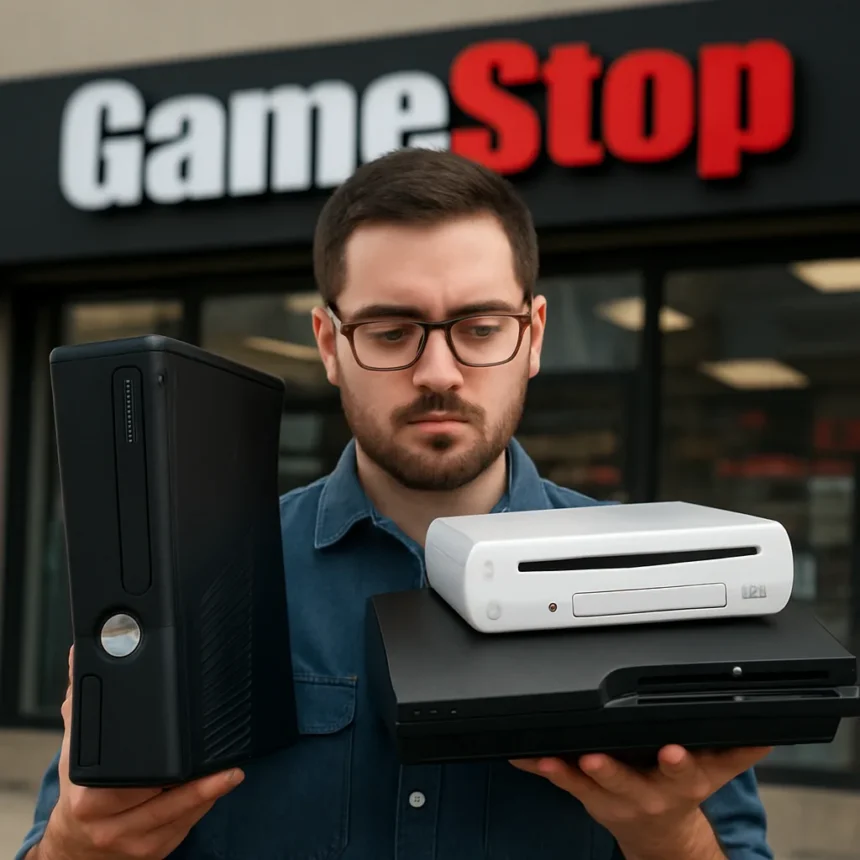
GameStop retro console trade-in policy marks a watershed moment for three aging platforms. PlayStation 3, Xbox 360, and Nintendo Wii U have been officially reclassified as retro consoles, opening the door to trade-ins for units that power on regardless of condition—even if they’re broken or cosmetically damaged. This shift represents more than nostalgia; it’s a calculated business response to GameStop’s shrinking revenue as digital game sales dominate the market.
Key Takeaways
- GameStop has officially classified PS3, Xbox 360, and Wii U as retro consoles, accepting trade-ins for any unit that powers on.
- Faulty or “aesthetically unfortunate” consoles now qualify for trade-in, expanding the pool of eligible hardware.
- GameStop is converting select locations into dedicated retro stores stocking classic consoles, games, and accessories.
- The retro store network includes systems from NES through PS3, with a locator tool showing roughly 11 locations within a 100-mile search radius.
- This pivot counters GameStop’s revenue decline, which fell from $2.23 billion in Q4 FY2023 to $1.79 billion.
Why GameStop retro console trade-in matters now
The reclassification signals GameStop’s acceptance of a hard truth: the seventh-generation of consoles—launched between 2005 and 2012—has aged into collectibility. By accepting trade-ins for damaged or non-functional units, GameStop lowers the barrier for collectors and casual gamers to offload aging hardware. The lenient policy reflects a recognition that these systems, despite their years, retain cultural value and resale potential in a retro gaming market that continues to grow.
GameStop’s Q4 FY2023 earnings tell the story behind this pivot. Revenue dropped from $2.23 billion to $1.79 billion year-over-year, a decline driven by the unstoppable shift toward digital distribution. Physical game sales, once GameStop’s lifeblood, now compete with streaming and downloadable titles. The company’s response: double down on what digital cannot replace—nostalgia, tangible hardware, and the collector’s impulse to own vintage systems.
GameStop retro console trade-in expansion across store locations
GameStop is not just accepting old consoles; it’s reimagining store format entirely. Select locations are being converted into “GameStop Retro” or “Retro GameStop” stores, stocked with classic consoles ranging from the NES and SNES through PlayStation 3, plus Game Boy, N64, GameCube, Sega Genesis, Saturn, Dreamcast, and Xbox 360. These aren’t dusty museum pieces—they’re functional systems paired with physical games on disc and cartridge, along with controllers and accessories.


The company launched a retro store locator on its website. A search within 100 miles shows approximately 11 locations, though GameStop has not officially announced the total number of stores undergoing conversion. This measured rollout suggests a test-and-learn approach rather than a company-wide overhaul. If the retro format proves profitable, expect expansion; if not, GameStop risks doubling down on a niche market while the industry races toward cloud gaming and subscription services.
What the retro shift reveals about gaming’s future
The GameStop retro console trade-in policy exposes a paradox in modern gaming: as the industry accelerates toward digital-only distribution, older physical formats gain cultural and monetary value. A PS3 or Xbox 360 that cannot run modern games becomes a gateway to a curated library of titles no longer available on current platforms. Backward compatibility is limited; emulation remains legally murky. For collectors, owning the original hardware is often the only reliable way to play aging exclusives.


GameStop’s strategy also acknowledges that retro gaming appeals to multiple demographics. Millennials seeking nostalgia for their teenage years. Parents introducing children to the games they grew up with. Hardcore collectors chasing completionism. By accepting trade-ins for damaged units—machines that would have been discarded—GameStop taps into a market of sellers who assumed their broken consoles were worthless. The policy transforms junk into inventory, a win for both parties.
Is the GameStop retro console trade-in program permanent?
GameStop has not officially announced how long the retro initiative will last or whether it will become a permanent fixture of the company’s retail strategy. The program’s success will depend on foot traffic, transaction volume, and margins on retro hardware and software. If retro stores become profitable anchors that drive repeat visits, expect expansion. If they remain niche attractions, the company may scale back.
What consoles qualify for GameStop retro console trade-in?
PlayStation 3, Xbox 360, and Nintendo Wii U are the three systems officially classified as retro and eligible for trade-in. Any unit that powers on qualifies, regardless of functionality or cosmetic condition. Damaged screens, broken controllers, and systems with hardware faults are accepted. GameStop has not published specific trade-in values, so expect valuations to vary by location and condition.
Can you trade in retro games at GameStop retro stores?
The retro store format stocks physical games on disc and cartridge alongside consoles and accessories, but the research brief does not specify whether trade-in programs extend to retro game titles themselves. The focus of the new policy is hardware acceptance; game trade-ins may be handled separately or vary by location.



GameStop’s pivot to retro gaming represents a calculated retreat from a losing battle against digital distribution—and a bet that nostalgia and physicality still have commercial value. Whether the strategy sustains the company long-term remains uncertain, but for collectors with aging hardware gathering dust, the GameStop retro console trade-in policy offers a second life for machines once destined for landfills.
Edited by the All Things Geek team.
Source: Tom's Hardware