






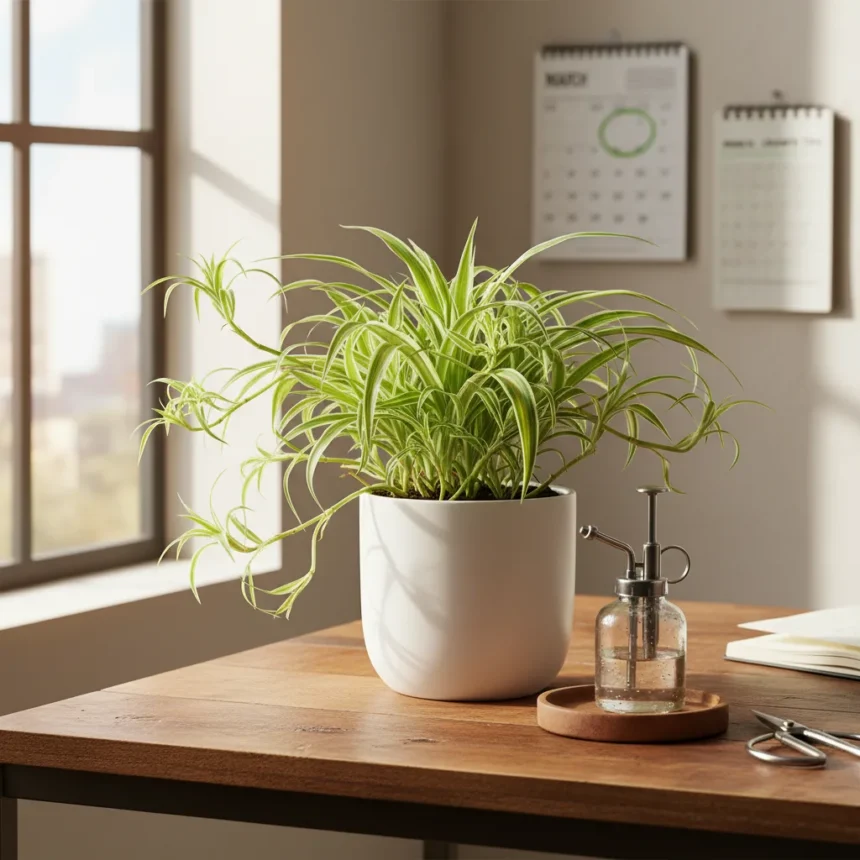
Spider plant care in March marks the transition into the active growing season, when your chlorophytum comosum shifts from dormancy into rapid development. As days lengthen and temperatures rise, spider plants respond to increased light and warmth by producing new foliage and runners. March is when seasonal adjustments to watering, feeding, and light exposure become essential for maximizing healthy growth through spring and summer.
Key Takeaways
- March signals the start of active growth season for spider plants as daylight increases.
- Watering frequency should increase as temperatures rise and soil dries faster.
- Fertilizing every 2-4 weeks supports new foliage and runner development.
- Bright, indirect light encourages compact growth and vibrant striping in variegated varieties.
- Repotting in early spring prevents root-bound conditions during peak growth.
Increase Watering as Spring Temperatures Rise
As March temperatures warm and daylight extends, spider plants enter their peak growing period and require more frequent watering than winter months. The soil dries faster when the plant is actively photosynthesizing and producing new leaves. Check soil moisture every 3-4 days by inserting your finger 1 inch into the soil—water when the top layer feels dry to the touch. Overwatering remains a risk, so always err toward slightly moist rather than soggy conditions.
Spider plants are relatively forgiving about water quality, but they are sensitive to fluoride and chlorine in tap water. If your tap water is heavily chlorinated, let it sit overnight before watering to allow chemicals to evaporate, or use filtered water. Consistent moisture during March supports new growth without creating the root rot risk that comes with waterlogged soil.
Start a Regular Feeding Schedule for Spring Growth
March is the ideal time to begin fertilizing spider plants every 2-4 weeks as they enter their active growing season. Use a balanced, water-soluble fertilizer diluted to half strength—this supports new leaf and runner production without overloading the plant with nitrogen. Spider plants are not heavy feeders, so light, consistent nutrition works better than occasional heavy applications.

Feeding frequency matters because March through September is when spider plants channel energy into vegetative growth and the production of runners that eventually develop plantlets. Without supplemental nutrients during this window, the plant may produce fewer runners or weaker foliage. Stop fertilizing in October as growth naturally slows heading into winter.
Optimize Light Conditions for Compact, Vibrant Growth
Spider plants thrive in bright, indirect light, and March’s increasing daylight makes this an ideal time to assess your plant’s location. Variegated varieties with white or cream stripes develop stronger coloration and more compact growth when positioned in bright light, while solid green varieties tolerate lower light but still prefer brightness. Place your spider plant 3-6 feet from a south or west-facing window, or use a sheer curtain to filter direct afternoon sun that can scorch leaf tips.



If your spider plant has become leggy or pale during winter, gradually move it to a brighter location over 7-10 days to avoid shock. Increased light in March accelerates photosynthesis, which fuels new growth and helps the plant produce runners more reliably. Direct sun exposure is unnecessary and can cause bleaching on tender new growth, so bright indirect light remains the sweet spot.
Repot if the Plant Has Become Root-Bound
Early March is an excellent time to repot spider plants before the peak growing season, especially if roots are circling the soil surface or emerging from drainage holes. Use a pot only 1-2 inches larger in diameter than the current one—spider plants actually prefer slightly snug conditions and produce runners more reliably when roots have some constraint. Use well-draining potting soil mixed with perlite or orchid bark to prevent waterlogging.
Repotting in early spring rather than winter allows the plant to establish new roots quickly in the warmer season. Water gently after repotting and hold off on fertilizing for 4-6 weeks to avoid burning new root growth. A fresh soil mix also replenishes depleted nutrients, reducing the need for aggressive feeding immediately after the move.
Monitor for Pests as Humidity Increases
Warmer March temperatures and increased indoor humidity can attract spider mites and mealybugs, which target new tender growth. Check the undersides of leaves weekly for tiny webs or cotton-like clusters. If pests appear, isolate the plant and spray affected areas with insecticidal soap diluted according to label directions, or use neem oil as an organic alternative. Repeat applications every 7-10 days until pests are gone.



Preventive care is simpler than treatment—mist your spider plant occasionally in March to raise humidity and deter mites, and ensure good air circulation by placing the plant away from walls. Healthy, actively growing plants are more resilient to pest damage, so consistent watering and feeding reduce vulnerability.
How often should I water my spider plant in March?
Check soil moisture every 3-4 days and water when the top inch feels dry. March’s warming temperatures cause soil to dry faster than winter, so watering frequency increases. Avoid waterlogging by ensuring pots have drainage holes and excess water drains freely.
Can I propagate spider plant runners in March?
Yes, March is an ideal time to propagate plantlets from runners. Once plantlets develop small roots (usually visible after 2-4 weeks of growth), snip them from the runner and place them in moist potting soil or water until roots establish. Spring warmth accelerates root development.
Should I repot my spider plant in March?
Early March is an excellent time to repot if roots are circling the soil or emerging from drainage holes. Use a pot only 1-2 inches larger in diameter, as spider plants prefer slightly snug conditions. Water gently after repotting and delay fertilizing for 4-6 weeks.
March transforms spider plant care from the minimal maintenance of winter into an active growth partnership. Increase watering, start feeding, optimize light, and monitor for pests—these seasonal adjustments align with the plant’s natural rhythm and reward you with vigorous new foliage and abundant runners through spring and summer. Spider plants are forgiving, but they respond dramatically to the right conditions at the right time.
Where to Buy
17% OFFFelco F2 Pruning Shears$71.52$86.35shop now | Amazing StuffGarden Gloves$9.90shop now | 11% OFFGrampa's Weeder$39$44shop now
This article was written with AI assistance and editorially reviewed.
Source: Tom's Guide