






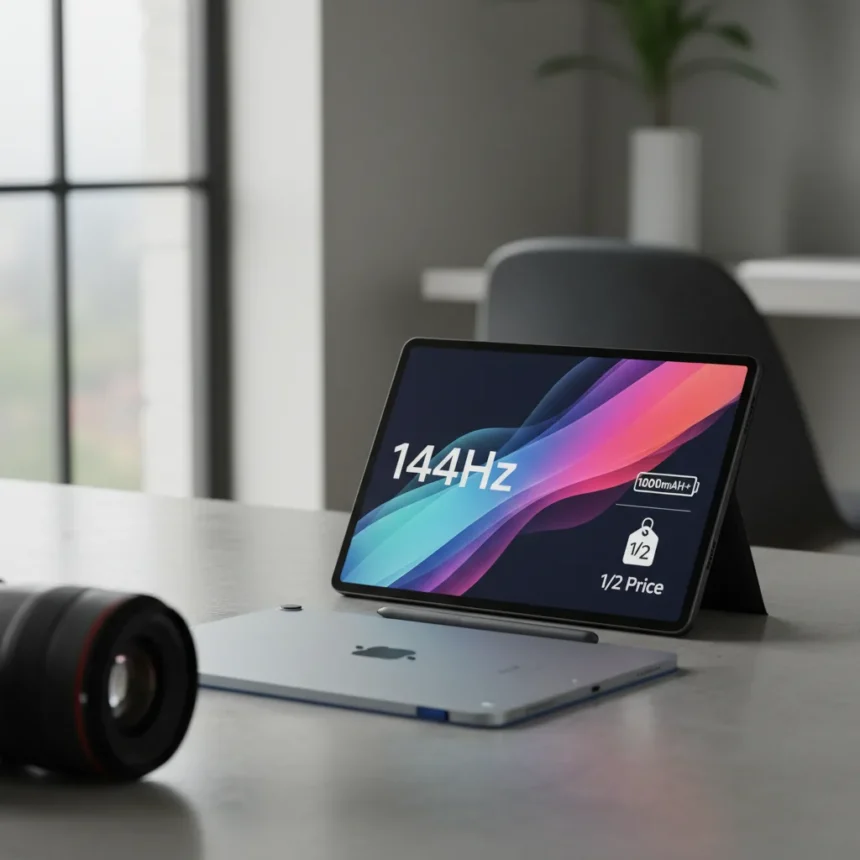
The Xiaomi Pad 8 is a mid-range Android tablet made by Xiaomi, featuring an 11.2-inch QHD+ display, Snapdragon 8s Gen 4 processor, 12GB RAM, and 256GB storage, priced at approximately half the cost of Apple’s iPad Air. After a month of daily use, this tablet challenges the assumption that Android tablets lag behind iPad in meaningful ways.
Key Takeaways
- 11.2-inch 144Hz display with 800 nits brightness matches flagship iPad specs
- 9200 mAh battery with 67W fast charging outlasts iPad Air
- HyperOS 3 multitasking supports 5:5 split-screen and advanced window management
- Snapdragon 8s Gen 4 delivers flagship-level performance for productivity and media
- Priced at roughly half the iPad Air 11-inch, making it exceptional value
The Display Is Where Xiaomi Pad 8 Pulls Ahead
The Xiaomi Pad 8 features an 11.2-inch QHD+ IPS LCD with 144Hz refresh rate, 800 nits peak brightness, and 2136 x 3200 pixel resolution. This directly outpaces the iPad Air 11-inch, which tops out at 120Hz and 500 nits brightness. For content creators, the difference is tangible—scrolling through design files, editing video timelines, and browsing photo galleries feel noticeably smoother on the Xiaomi’s higher refresh rate. The display also supports HDR10, Dolby Vision, and HDR Vivid, delivering richer color grading for video work.
The brightness advantage matters in sunlight. At 800 nits, the Xiaomi Pad 8 remains legible outdoors where the iPad Air’s 500 nits can struggle. For anyone editing content or consuming media in varied lighting, this is a real win. The pixel density sits at 344 ppi with 68 billion colors, ensuring text remains sharp and gradients smooth across the 11-inch canvas.
Battery Life and Charging Speed Redefine Expectations
The Xiaomi Pad 8 ships with a 9200 mAh battery paired with 67W wired fast charging. The iPad Air 11-inch carries a smaller 7606 mAh battery with slower charging speeds. In real use, the Xiaomi’s larger capacity means fewer charging sessions throughout the week. The 67W charging speed—supporting Qualcomm Quick Charge 2.0 and 3.0—gets the tablet back to usable battery levels in under an hour.


This is a substantial upgrade over Xiaomi’s previous tablet generations, which users frequently cited as a weakness. The combination of bigger battery and faster charging shifts the Xiaomi Pad 8 from a device that needs daily charging to one that comfortably lasts multiple days with moderate to heavy use. For anyone working remotely or traveling, this is the single most impactful spec difference between it and the iPad Air.
HyperOS 3 Multitasking Unlocks Productivity Features iPad Lacks
Running HyperOS 3 on Android 16, the Xiaomi Pad 8 supports advanced multitasking that goes beyond what iPadOS offers in standard configurations. The tablet handles 5:5 vertical split-screen layouts and 1:9 horizontal splits, allowing power users to run multiple apps simultaneously with granular control. This flexibility appeals to writers, developers, and content creators who juggle reference materials, communication tools, and creative software at once.

The iPad Air’s multitasking is competent but more rigid—iPadOS enforces specific split ratios and limits how many apps can coexist on screen. For professionals who need to compare documents side-by-side or monitor live feeds while editing, the Xiaomi’s approach feels less constrained. The Android ecosystem also grants deeper file system access, making it easier to manage project folders and export assets without relying on cloud services.
Performance Handles Everything Without Compromise
The Snapdragon 8s Gen 4 processor is a flagship chip that delivers sustained performance across gaming, video editing, and multitasking. Benchmarks show similar results to the iPad Air in some tests, with no dramatic daily-use difference unless you’re pushing heavy workloads like 4K video rendering or complex 3D modeling. The Adreno 825 GPU handles media playback and creative apps smoothly, and the 12GB LPDDR5T RAM ensures apps stay resident in memory.
Thermal management is solid—the tablet doesn’t throttle during sustained use, which matters for content creators working on time-sensitive projects. The 256GB UFS 4.1 storage is fast enough for creative workflows, though there’s no microSD expansion if you need more capacity. The quad speakers with Dolby Atmos elevate media consumption, making it a genuine alternative for anyone who watches films or edits audio on a tablet.
Where the iPad Air Still Wins
The iPad Air’s ecosystem remains tighter. Apps like Final Cut Pro, Logic Pro, and Adobe’s suite are optimized for iPadOS in ways that Android equivalents simply aren’t. The iPad’s front-facing camera is also superior for video calls and content creation, a detail that matters for streamers and remote workers. Battery optimization is another iPad strength—the ecosystem squeezes more runtime from smaller batteries, partly because Apple controls hardware and software.



The Xiaomi Pad 8 lacks GPS and cellular connectivity in the base Wi-Fi model, limiting navigation and always-on connectivity. The iPad Air supports both, making it more versatile for outdoor professionals. Build thickness also favors iPad—the Xiaomi has a thinner profile, but iPad remains the more refined object in hand.
Accessories and Productivity
Xiaomi is rolling out productivity accessories that position the Pad 8 as an iPad Air alternative rather than a budget compromise. With the right keyboard and stylus pairing, the tablet becomes a credible laptop replacement for writing, design, and note-taking. The Android ecosystem gives more freedom in accessory choice—you’re not locked into Xiaomi’s ecosystem the way iPad users are tethered to Apple’s.
Should You Buy the Xiaomi Pad 8?
The Xiaomi Pad 8 is the best mid-range Android tablet if you prioritize display quality, battery endurance, and multitasking flexibility over ecosystem lock-in. At roughly half the iPad Air’s price, it delivers flagship-level specs that justify the purchase for content creators, remote workers, and anyone tired of iPad’s premium pricing. The 144Hz display and 67W charging alone make it worth considering, even if you’re an Apple user elsewhere.
Skip it if you need Final Cut Pro, Logic Pro, or deep integration with Mac and iPhone—the iPad Air’s ecosystem advantage is real and worth the premium for creative professionals already invested in Apple. But if you’re building a tablet setup from scratch and value raw specs over brand loyalty, the Xiaomi Pad 8 is a serious contender that shouldn’t be dismissed.
How does the Xiaomi Pad 8 compare to iPad Air in everyday use?
Performance is comparable in most tasks, with the Xiaomi’s 144Hz display and larger battery providing tangible daily benefits. The iPad Air wins in app optimization and ecosystem integration, but the Xiaomi handles multitasking, media, and productivity work just as smoothly.
Is the Xiaomi Pad 8 worth buying over the iPad Air?
Yes, if you value display refresh rate, battery capacity, and price. The Xiaomi Pad 8 costs half as much while matching or exceeding iPad specs in key areas. Choose iPad Air only if you need its app ecosystem or cellular connectivity.
What makes the Xiaomi Pad 8 stand out among Android tablets?
The 9200 mAh battery, 144Hz display, and HyperOS 3 multitasking set it apart from competitors. Most Android tablets in this price range compromise on one or more of these features—the Xiaomi Pad 8 delivers all three.
The Xiaomi Pad 8 proves that Android tablets don’t need to chase iPad’s design language or ecosystem to be compelling. By focusing on display quality, battery endurance, and software flexibility, Xiaomi has built a tablet that appeals to power users and budget-conscious buyers alike. It’s not an iPad Air clone—it’s a different philosophy that happens to cost half as much and deliver more of what working professionals actually use.
Where to Buy
This article was written with AI assistance and editorially reviewed.
Source: Android Central