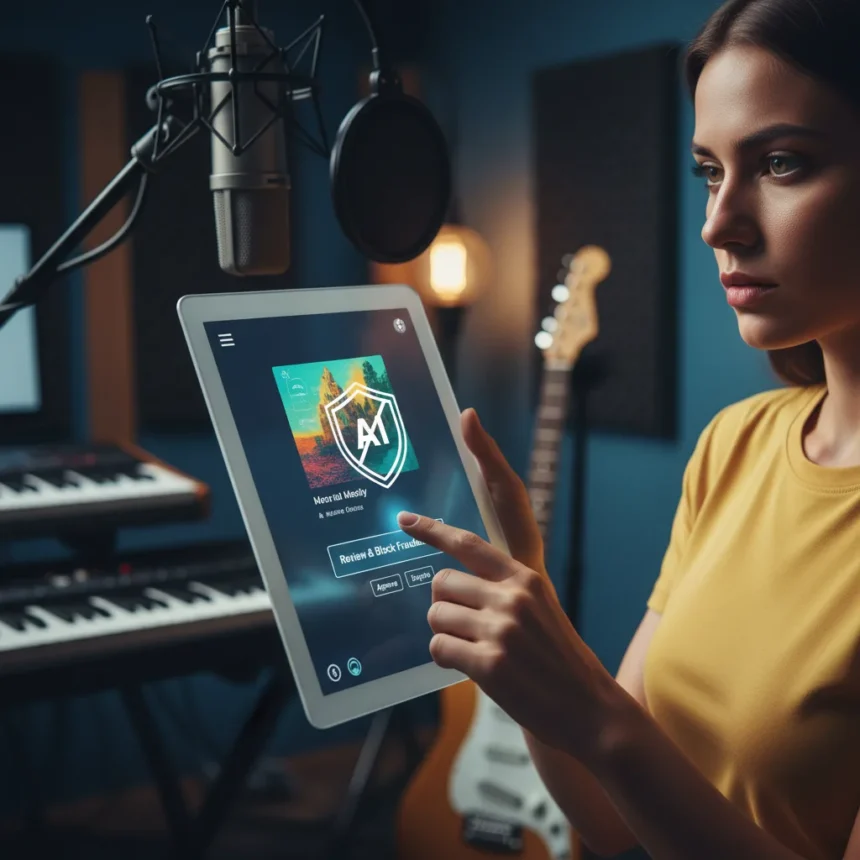
Spotify AI slop protections represent a major shift in how the platform handles AI-generated music and deepfakes. On September 25, 2025, Spotify announced strengthened defenses against unauthorized AI content, including tools that let artists review and block fraudulent releases appearing on their profiles, new impersonation policies, and mandatory AI disclosures in music credits.
Key Takeaways
- Artists can now review and block unauthorized releases on their Spotify profiles before they spread
- Spotify banned unauthorized AI voice clones and vocal impersonations, permitting them only with explicit artist consent
- New AI disclosure system requires labels and distributors to flag AI use in vocals, instrumentation, and post-production
- Enhanced content mismatch process reduces review wait times and lets artists report problems before official release
- Music spam filter targets fraudulent uploads that dilute royalty pools and clutter artist profiles
Why Spotify AI slop protections matter now
The flood of AI-generated music on Spotify has become impossible to ignore. Folk artist Emily Portman discovered AI-generated tracks fraudulently added to her profile, credited to an unknown producer—a cautionary tale playing out across the platform as bad actors exploit minimal barriers to upload. Spotify’s new defenses address this directly by giving artists gatekeeping power and establishing clearer rules about what AI content is allowed. This is not about banning AI music outright; it’s about preventing impersonation, fraud, and the dilution of legitimate artists’ work and royalty streams.
The timing reflects growing pressure from the music industry and artist advocacy groups. Unauthorized AI voice clones exploit an artist’s identity, undermine their artistry, and threaten the fundamental integrity of their work, according to Spotify’s own statement. By implementing preventive checks at the distributor level—working with intermediaries to stop fraudulent uploads before they reach the platform—Spotify is trying to solve the problem upstream rather than playing whack-a-mole with takedowns after release.
How the new approval and filtering system works
Spotify is testing prevention tactics with artist distributors to stop both AI-generated and non-AI fraudulent uploads at the source, before they ever appear on an artist’s profile. The enhanced content mismatch process now allows artists to report problems even before official release, reducing review wait times significantly. This gives artists real-time visibility and control—no more discovering unauthorized tracks weeks after they’ve been live and generating (or stealing) plays and royalties.



The new music spam filter targets uploads designed solely to game the system or dilute royalty pools, a growing problem as AI tools make mass-production of mediocre tracks trivial. Spotify for Artists, the free tool available to verified artists, now includes these management capabilities alongside existing profile controls like images, bios, artist picks, and playlist curation. Artists do not need to opt in or pay extra; the tools roll out automatically to eligible accounts as the feature expands.
AI disclosure and impersonation rules reshape artist rights
Spotify’s impersonation policy is now explicit: vocal impersonation is only allowed when the impersonated artist has authorized the usage. This closes a major loophole. Previously, AI deepfakes of famous artists’ voices could theoretically stay live as long as they were not attributed to the real artist—a technicality that provided little real protection. The new rule makes unauthorized cloning a direct violation, regardless of how the track is credited.



To enable transparency, Spotify is supporting the DDEX industry standard for AI disclosures in music credits. When a label or distributor uploads a track, they can now flag whether AI was used in vocals, instrumentation, or post-production. This metadata will display in the Spotify app via labels or badges, giving listeners visibility into how a track was made. Spotify is clear that this change is not about punishing artists who use AI responsibly or down-ranking tracks for disclosing AI use. The goal is transparency, not stigma—though in practice, some listeners may filter accordingly.
What Spotify AI slop protections mean for the broader streaming ecosystem
Spotify’s moves do not solve the AI slop problem alone. The platform still relies on distributors and labels to correctly implement these protections, and bad actors will find workarounds. However, the shift is significant: Spotify is moving from a reactive, take-down-heavy model to a proactive, preventive one. By working with distributors to verify uploads before they reach the platform, implementing artist-controlled approval gates, and mandating AI disclosures, Spotify is raising the cost of fraud and making it harder for low-effort spam to thrive.
Other streaming platforms have not announced comparable protections. Apple Music, Amazon Music, and YouTube Music have all faced criticism for hosting AI deepfakes and spam, but none have rolled out artist approval systems or impersonation bans as comprehensive as Spotify’s. This gives Spotify a credibility advantage with artists and labels—a critical constituency as the platform navigates the AI music gold rush.
Are Spotify AI slop protections enough to stop fraud?
No single policy can eliminate AI fraud entirely. Determined bad actors will still find ways to impersonate artists, and the sheer volume of uploads to Spotify makes perfect enforcement impossible. However, the combination of distributor-level checks, artist approval gates, and impersonation bans raises the bar significantly. A fraudster can no longer simply upload an AI deepfake under a fake name and hope it stays live long enough to generate revenue; artists can now block it proactively, and the impersonation rule gives Spotify legal grounds to remove it immediately.



Will AI disclosures change how listeners perceive AI-made music?
That depends on listener behavior and platform implementation. If Spotify makes AI disclosures prominent and easy to filter, some listeners will seek out AI-made tracks while others avoid them. If the badges are buried in metadata, most listeners will never see them. Spotify says the disclosure is about transparency, not down-ranking or stigma, but market dynamics may differ from stated intent. Early adopters of AI music production may benefit from novelty appeal, while mainstream artists using AI in subtle ways might face listener skepticism if disclosures are too visible.
When do Spotify AI slop protections roll out globally?
Spotify announced the protections on September 25, 2025, with testing underway. The impersonation policy and AI disclosure support are rolling out via app updates and distributor integrations, but Spotify has not specified exact dates for full global availability. The artist approval and content mismatch enhancements are being tested with distributors first, suggesting a phased rollout over weeks or months rather than an immediate flip. Artists using Spotify for Artists should check their account settings for new controls as they become available.
Spotify’s AI slop protections represent a meaningful step forward, but they succeed only if artists use them consistently and if distributors implement the rules faithfully. The real test comes in the next six months: whether fraudulent AI uploads actually decline, whether artists feel empowered to protect their work, and whether listeners trust that the music they hear is authentic. For now, Spotify has shifted the burden of proof—bad actors must now work harder to exploit the platform, while legitimate artists have real tools to defend themselves.
Edited by the All Things Geek team.
Source: TechRadar