


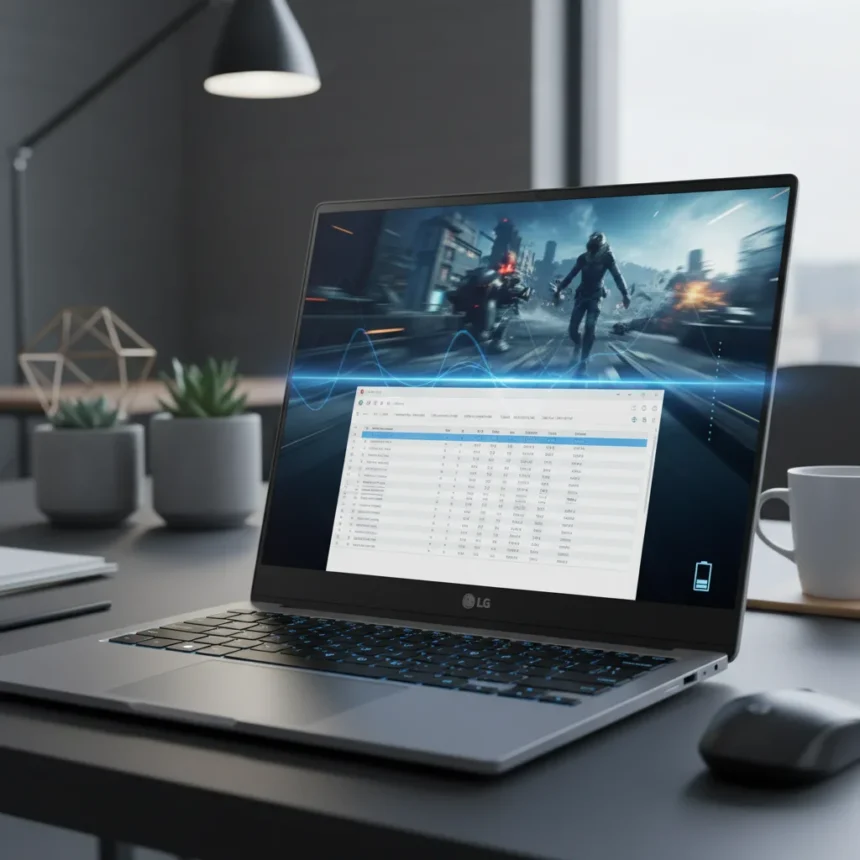
LG’s adaptive LCD laptop display is a variable refresh rate panel made by LG Display, now in mass production as of March 2026, supplied to Dell’s premium XPS lineup. The panel automatically adjusts between 1Hz for static tasks and 120Hz for dynamic content, delivering a claimed battery life improvement of over 48% compared to existing fixed-refresh laptop screens.
Key Takeaways
- LG’s adaptive LCD panel adjusts refresh rates from 1Hz to 120Hz based on content type, extending battery life by over 48%.
- Oxide 1Hz technology minimizes power leakage during low-refresh operation through proprietary thin-film transistor design.
- Dell XPS laptops are the first to receive the adaptive LCD panels in mass production.
- LG’s tandem OLED version will reduce power consumption by up to 40% with 0.03ms response time and 40% thinner design.
- Dell has ordered 100,000 tandem OLED panels for XPS 13, making LG the sole supplier for premium OLED laptops.
How the adaptive LCD laptop display saves battery
The adaptive LCD laptop display works by dynamically responding to what appears on screen. During static tasks like reading emails, viewing documents, or browsing e-books, the panel drops to just 1Hz refresh rate, dramatically cutting power consumption. When you switch to gaming, video playback, or other fast-paced content, it ramps up to 120Hz for smooth visuals. This isn’t a manual toggle—the technology adapts automatically without user intervention.
The engineering behind this efficiency comes from LG’s Oxide 1Hz technology, which modifies the thin-film transistor layer to prevent power leakage during low-refresh operation. Combined with proprietary circuit algorithms and panel design adjustments, the result is power consumption that drops significantly during the hours most people spend on static tasks. For professionals checking email or working with spreadsheets, that 48% battery improvement translates directly to longer unplugged work sessions.
Compared to traditional fixed-refresh laptop displays that maintain constant refresh rates regardless of content, the adaptive LCD laptop display eliminates wasted power during idle moments. A conventional panel refreshing the screen 60 times per second while you read a document is burning battery for no visual benefit—LG’s approach solves that fundamental inefficiency.



Dell XPS gets first-mover advantage with adaptive LCD
Dell’s premium XPS line is the first laptop family to ship with LG’s adaptive LCD laptop display, giving the ultrabook line a meaningful battery endurance edge. This isn’t a budget or mid-range move—XPS is Dell’s flagship, signaling that the technology is production-ready and worth the investment in high-end machines where battery life matters most to buyers.
The partnership validates LG’s approach at the exact moment when AI-driven laptop features are pushing power consumption higher. As manufacturers cram more processing power into thin chassis, battery anxiety becomes a real concern for professionals. An adaptive display that cuts power draw by nearly half during typical office work addresses that pain point directly.


The OLED version is where things get serious
LG’s adaptive LCD laptop display is just the opening act. The company is launching a tandem OLED version that reduces power consumption by up to 40% while achieving a 0.03ms response time and becoming 40% thinner and 28% lighter than standard OLED panels. Tandem OLED stacks two organic light-emitting layers, which sounds like it would consume more power—but LG’s design proves the opposite, delivering efficiency gains that overcome OLED’s notorious battery drain problem on laptops.
Dell has already committed to 100,000 tandem OLED panels for the XPS 13, making LG the sole supplier for premium OLED laptops in that tier. That’s a massive vote of confidence and a signal that the market is ready to move beyond LCD into high-efficiency OLED. For gaming laptops and creative workstations, the combination of OLED’s color accuracy and response time with genuine power efficiency changes the calculus entirely.
Why this matters for the laptop market
Battery life has plateaued on most laptops for years. Manufacturers have optimized conventional panels about as far as physics allows. LG’s adaptive LCD laptop display and the tandem OLED version represent a genuine leap forward—not through bigger batteries or faster charging, but through smarter display engineering. That’s harder to market in spec sheets, but it’s what actually improves daily experience.
The technology also arrives at exactly the right moment. AI features are becoming standard on laptops, and they demand power. A display that intelligently cuts consumption during the static work that AI typically handles—document analysis, email processing, code review—creates breathing room for processors to handle heavier tasks without destroying battery life. It’s a complementary efficiency play that works across the entire laptop ecosystem.



Is the 48% battery improvement real?
LG claims the adaptive LCD laptop display improves battery life by over 48% compared to existing solutions, but that figure comes from the company itself and applies specifically to static image display scenarios. Real-world gains will vary depending on your actual usage pattern—someone gaming eight hours a day will see less improvement than someone alternating between email and documents. The 48% number is a ceiling, not a guarantee, but it’s a meaningful improvement even if actual results land at 30-35%.
When will these panels arrive in consumer laptops?
The adaptive LCD laptop display is already in mass production and shipping in Dell XPS models as of March 2026. The tandem OLED version is further out—LG hasn’t announced specific availability dates, but Dell’s 100,000-unit order suggests a rollout within the next 6-12 months. If you’re buying an XPS today, you might already be getting the adaptive LCD panel. If you’re waiting for OLED, it’s coming, but patience is required.
LG’s adaptive LCD laptop display and its OLED successor represent a shift in how manufacturers think about battery life—not as a spec to chase with bigger batteries, but as a problem to solve through intelligent hardware design. That’s the kind of innovation that actually changes how you use a laptop.
This article was written with AI assistance and editorially reviewed.
Source: TechRadar