





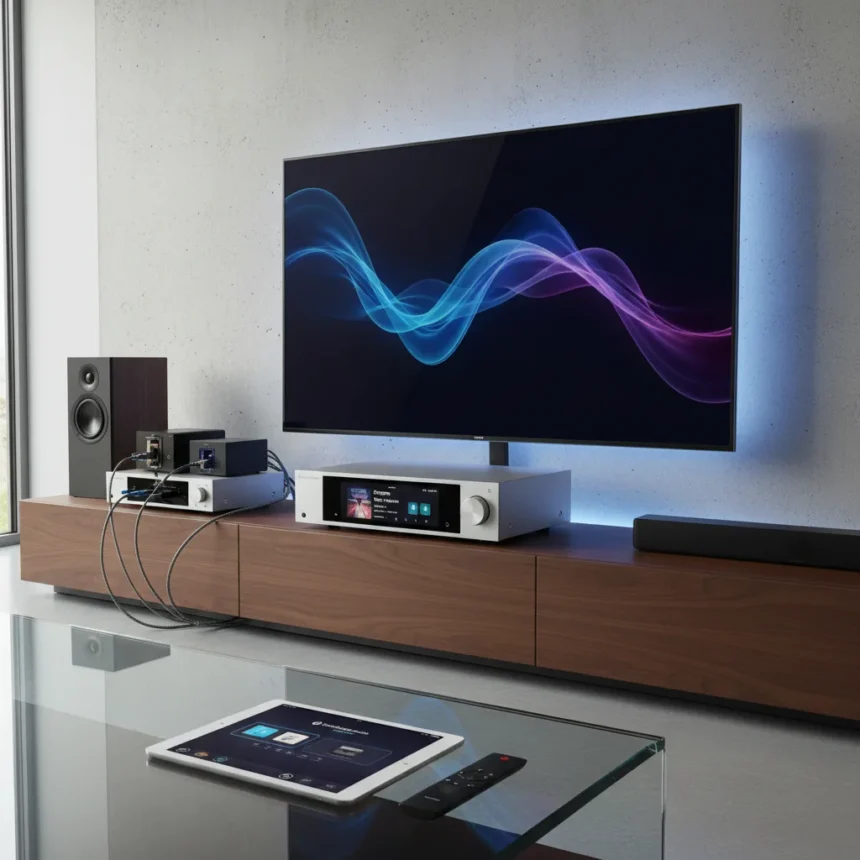
The Cambridge Audio CXN100 SE is a network music streamer designed to integrate with television systems more effectively than traditional standalone audio components. This product represents a shift in how audiophiles approach music streaming within living rooms that already host high-end displays and entertainment setups.
Key Takeaways
- The CXN100 SE offers enhanced TV integration capabilities compared to standard network audio players.
- Music streamer TV integration allows seamless control across both audio and video components from a single interface.
- The device functions as a dedicated streaming component within larger home entertainment ecosystems.
- Cambridge Audio positioned the CXN100 SE to bridge the gap between pure audio components and home theater systems.
- Network-based architecture enables flexible placement and integration with existing TV setups.
Why Music Streamer TV Integration Matters for Home Entertainment
Most dedicated music streamers operate independently from television systems, requiring separate control interfaces and manual switching between audio sources. The Cambridge Audio CXN100 SE changes this dynamic by enabling tighter integration with TV ecosystems, allowing listeners to control music playback through their television interface or a unified remote system. This approach eliminates the friction of managing multiple devices and creates a more cohesive entertainment experience.
The challenge with traditional network audio players is that they exist in isolation. You play music through one interface, watch television through another, and switch between them manually. The CXN100 SE’s TV integration capabilities address this fragmentation, though the specific technical mechanisms for this integration depend on the television system and control protocol being used. For households with modern smart TVs and home automation systems, this connectivity matters significantly.
How the CXN100 SE Compares to Standard Network Audio Players
Standard network audio players like earlier Cambridge Audio models or competitors from other manufacturers typically connect to your home network and stream music independently. They require their own app or remote control, and they do not communicate directly with your television. The CXN100 SE’s improved TV integration suggests the device can participate in a broader home entertainment ecosystem, potentially through HDMI-CEC (Consumer Electronics Control) or similar protocols that allow devices to communicate and share control signals.



What distinguishes the CXN100 SE from purely audio-focused competitors is its architectural approach to ecosystem participation. Rather than treating the streamer as a standalone component, Cambridge Audio engineered the device to function as part of a larger system. This makes it more versatile for listeners who want music and television to coexist in the same interface, rather than treating them as separate entertainment domains.
The Practical Benefits of Music Streamer TV Integration
Integrated music streamer TV control delivers tangible quality-of-life improvements. You can start playing music through your TV remote, adjust volume using the television’s interface, and switch between music and television content without hunting for a separate audio remote or app. For users with complicated home theater setups, this simplification is valuable. It reduces the cognitive load of managing multiple devices and creates a more intuitive user experience.



The CXN100 SE’s design also accommodates modern listening habits. Younger audiences increasingly expect seamless cross-device control, and integrating a music streamer with television infrastructure appeals to that expectation. Older audiophiles may appreciate the simplification as well—fewer remotes on the coffee table, fewer apps to open, and a more unified control philosophy across their entertainment setup.
What Music Streamer TV Integration Requires
For music streamer TV integration to function properly, several conditions must align. The television must support the control protocol the streamer uses, typically HDMI-CEC or a proprietary system. The streamer and TV should be connected to the same home network. Users may need to configure settings in both the television and the streamer to enable bidirectional communication. The specific setup process depends on the TV manufacturer and the streamer’s implementation.
This is where the CXN100 SE’s integration advantage becomes practical rather than theoretical. Rather than requiring users to learn complex networking or home automation systems, the device is designed to work with standard television interfaces. If your TV supports basic HDMI-CEC commands, the streamer should participate in those commands automatically, enabling remote control and unified interfaces without additional configuration.
Is Music Streamer TV Integration Worth the Investment?
For listeners who already own high-quality televisions and want to upgrade their audio without adding clutter or complexity, the CXN100 SE’s TV integration capabilities justify the investment. The device appeals to people who view their living room as an integrated entertainment space rather than separate audio and video zones. If you are still using a basic TV remote and a standalone audio system, the benefits may be less obvious—but as television technology advances and smart home integration becomes standard, this capability becomes increasingly valuable.



The alternative is purchasing a traditional network audio player and accepting the separate control interfaces. This approach works fine for dedicated listening rooms or setups where audio and video are truly separate. For living rooms where entertainment is mixed and unified, the CXN100 SE’s approach makes sense.
Can you use a music streamer with any television?
Most modern televisions support basic network connectivity and remote protocols that allow music streamers to integrate, but compatibility varies by TV manufacturer and model year. Older televisions may lack the necessary control standards. Check your TV’s specifications for HDMI-CEC support or similar control protocols before assuming integration will work smoothly.
Does music streamer TV integration require special cables?
Music streamer TV integration typically uses standard HDMI cables and network connections that most home entertainment setups already include. No specialized wiring is necessary beyond what you would use for a standard television and audio system connection.
What happens if your TV does not support the integration?
If your television does not support the control protocols the CXN100 SE uses, the device will still function as a standalone network audio player. You will simply control it through a separate app or remote rather than through your television interface. The core music streaming capability remains unchanged—only the integrated control experience is lost.
The Cambridge Audio CXN100 SE represents a practical evolution in how music streamers fit into modern living rooms. By prioritizing TV integration rather than audio isolation, Cambridge Audio acknowledged that most people do not separate their music and television consumption into different rooms or interfaces. For listeners building a unified entertainment ecosystem, this approach delivers genuine convenience without compromising audio quality.
Where to Buy
Cambridge Audio CXN100£799ViewSee all prices | 3 Amazon customer reviews | £499
Edited by the All Things Geek team.
Source: T3




