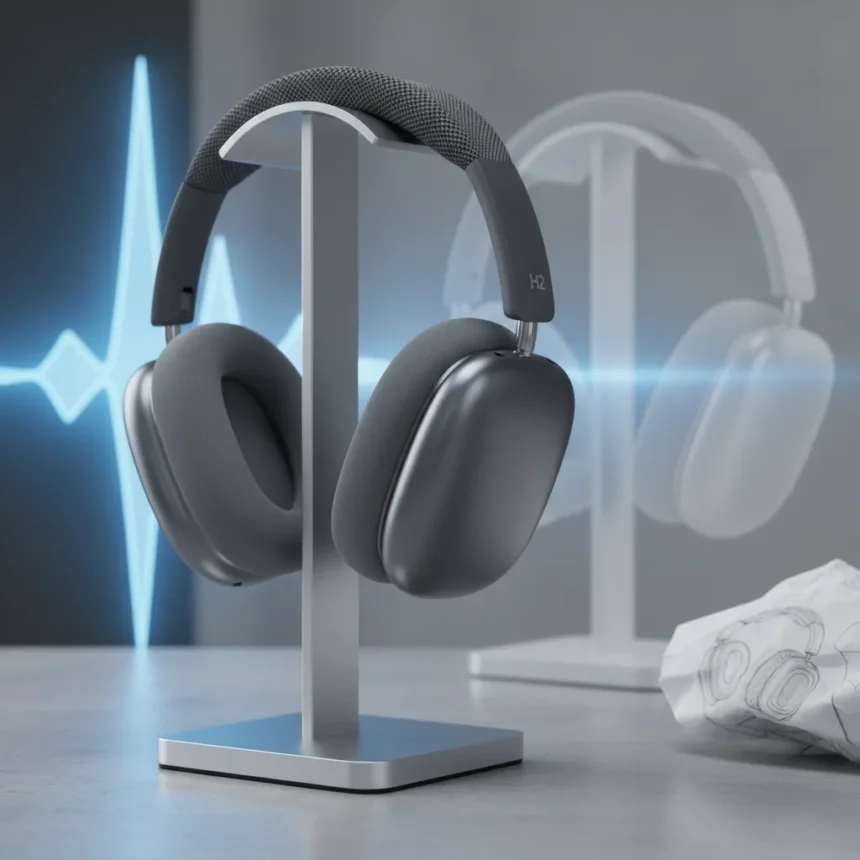
Apple AirPods Max 2 finally arrived on March 16, 2026, six years after the original launch—and the upgrade is genuinely exciting and genuinely frustrating in equal measure. The new flagship wireless headphones pack Apple’s H2 chip, promising up to 1.5x more effective Active Noise Cancellation and a suite of audio features borrowed directly from AirPods Pro. Yet the physical design remains unchanged, and at £499/$549/AU$999, the price hasn’t budged. The real question isn’t whether Apple improved the headphones—it clearly did. It’s whether those improvements justify another flagship purchase when the original AirPods Max already dominated the luxury segment.
Key Takeaways
- Apple AirPods Max 2 use the H2 chip for 1.5x more effective ANC and improved spatial audio with better instrument localization
- New features include Adaptive Audio, Conversation Awareness, Voice Isolation, and Live Translation, bringing AirPods Pro capabilities to the flagship
- Design is unchanged—same over-ear form factor, five colors, 20-hour battery life, and USB-C port from the 2024 refresh
- Pricing remains £499/$549/AU$999, with pre-orders starting March 25, 2026, and shipping from early April
- Original AirPods Max (2020) and 2024 USB-C refresh are now the obvious budget alternatives for buyers on tighter budgets
The H2 Chip Actually Matters for Daily Listening
The H2 processor is the centerpiece of this upgrade, and it delivers where it counts. Apple claims up to 1.5x more effective ANC compared to the original H1 chip. That is not marketing fluff—the jump from H1 to H2 already proved itself in AirPods Pro, and applying it to the over-ear form factor makes sense. Larger drivers and a bigger acoustic chamber mean the Max 2 should suppress ambient noise more aggressively than its predecessor, especially on flights or in open offices where passive isolation alone falls short.
Beyond raw ANC power, the H2 enables a new high dynamic range amplifier that Apple says delivers cleaner, richer sound with improved acoustic detail. The spatial audio system has also been refined—instruments now localize more precisely, bass sits more consistently across the frequency range, and mids and highs sound more natural. These are the kinds of refinements that matter during long listening sessions, even if they do not grab headlines.
The addition of Personalized Spatial Audio is particularly welcome. Unlike the original AirPods Max, which offered spatial audio as a fixed feature, the Max 2 adapt to your ear geometry and listening preferences. For content creators, film lovers, and gamers, this is a meaningful leap forward.



New Features Borrowed from AirPods Pro Create a Compelling Ecosystem
Apple AirPods Max 2 now include Adaptive Audio, Conversation Awareness, Voice Isolation, and Live Translation—capabilities that previously lived exclusively in AirPods Pro. Adaptive Audio automatically blends ambient sound with your music when someone speaks to you, so you do not have to remove the headphones. Conversation Awareness pauses playback and amplifies voices when you need to engage with others. Voice Isolation cleans up your voice during calls by filtering out background noise. Live Translation works in real-time for supported languages, turning the Max 2 into a portable translation device.
These features matter because they close a feature gap that existed between the flagship over-ear headphones and the Pro earbuds. If you live in Apple’s ecosystem—iPhone, Mac, iPad—the Max 2 now function as a more complete audio hub. The studio-quality audio recording capability via USB-C is another addition that appeals to podcasters and content creators who want to use the headphones as a portable recording solution.



The reduced wireless audio latency and Bluetooth 5.3 support are solid engineering touches, though neither will be noticeable to most listeners. Camera remote via Digital Crown is a nice-to-have for travelers and content creators, letting you trigger the iPhone camera without touching the phone.
Design Stagnation Is the Real Problem
Here is where the excitement deflates. Apple AirPods Max 2 look, feel, and fit exactly like the original AirPods Max from 2020. Same over-ear design. Same five color options—Midnight, Starlight, Blue, Purple, Orange. Same Smart Case. Same 20-hour battery life with ANC enabled. The USB-C port arrived in the 2024 refresh, so that is not new either.
Six years between flagship launches and the industrial design has not evolved. The original AirPods Max were already a controversial design—some praised the minimalist aesthetic and premium build quality, others found them bulky and impractical for travel. A refresh in 2026 should have addressed these criticisms. A lighter design. Better folding or collapsing capability. Improved case portability. Instead, Apple shipped the same headphones with a faster chip inside.
This matters because the original AirPods Max and the 2024 USB-C refresh are still excellent headphones. If you already own them, the Max 2 are not a must-upgrade. If you are in the market for flagship wireless headphones, the choice between the Max 2 and used or refurbished original Max units becomes purely about whether you need Adaptive Audio and Live Translation badly enough to justify the cost of new hardware.


Pricing Raises Questions About Value
Apple AirPods Max 2 cost £499 in the UK and $549 in the US—the same price as the 2024 USB-C refresh and only £50 less than the original launch price in 2020. In Australia, the price actually rose to AU$999 from AU$899. That is a premium positioning that demands either revolutionary audio quality or a dramatic feature leap. The Max 2 deliver neither.
The H2 chip and new software features are meaningful upgrades, but they are not so transformative that they justify a full-price repurchase for existing owners. For new buyers, the Max 2 are the obvious choice over the original model or 2024 refresh—but the entry price remains eye-watering. At this price point, the Max 2 compete not just with older AirPods Max units but with the entire luxury headphone market. Sennheiser, Bose, and Sony all offer flagship models at similar or lower prices with different sonic signatures and feature sets. Apple’s ecosystem advantage matters, but it is not infinite.
Pre-Orders Start March 25, 2026—Shipping Begins Early April
Apple AirPods Max 2 opened pre-orders on March 25, 2026, on apple.com and the Apple Store app in the US and 30+ countries. Initial US deliveries are arriving as soon as April 1-3, with broader availability ramping through early April. If you want the Max 2 at launch, order within the first few days—supply constraints are typical for premium Apple hardware in the first weeks after release.
Is the Apple AirPods Max 2 worth buying if I already own the original?
If you own the original AirPods Max or the 2024 USB-C refresh, the Max 2 are not a must-upgrade. The H2 chip and new features are nice, but the unchanged design and battery life mean you are not gaining a dramatically different listening experience. Wait for reviews of real-world ANC performance before deciding.
What is the main difference between Apple AirPods Max 2 and the original?
The H2 chip delivers up to 1.5x more effective ANC, improved spatial audio, and new features like Adaptive Audio, Conversation Awareness, Voice Isolation, and Live Translation. The design, colors, battery life, and form factor are identical to the 2020 original.
Can I use Apple AirPods Max 2 with non-Apple devices?
Yes. The Max 2 connect via Bluetooth 5.3, so they work with any Bluetooth-enabled device—Android phones, Windows laptops, gaming consoles, and more. However, many of the new features like Live Translation and Conversation Awareness require iOS 18 or later, so you lose functionality on non-Apple platforms.
The Apple AirPods Max 2 are the best flagship wireless headphones Apple has ever made—but they are also the most cautious flagship upgrade in the company’s audio history. The H2 chip and new features justify a purchase for new buyers and those coming from older headphones. For existing owners, the unchanged design and price tag make this a hard sell. Apple played it safe when the market was waiting for something bold.
Edited by the All Things Geek team.
Source: What Hi-Fi?