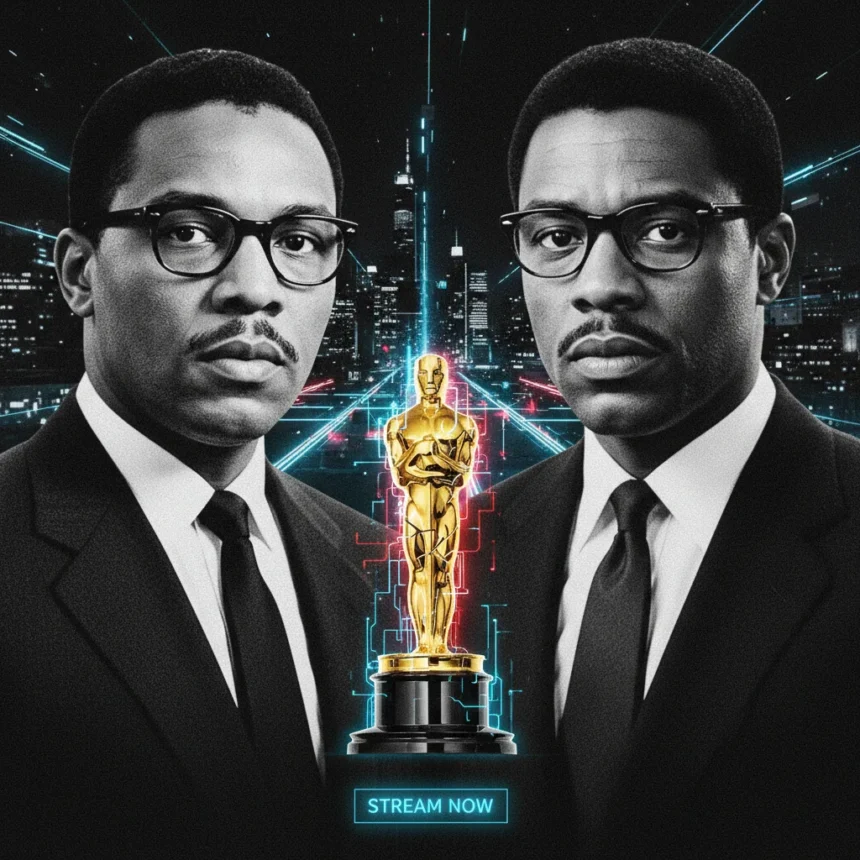
The Malcolm X 1992 biopic remains one of cinema’s most contentious Oscar losses, with director Spike Lee calling Denzel Washington’s snub “one of the most egregious” decisions in Academy history. Released by Warner Bros. on November 18, 1992, and directed and co-written by Spike Lee, the film stars Washington as the iconic African-American activist, alongside Angela Bassett, Albert Hall, Al Freeman Jr., and Delroy Lindo, with cameos from Nelson Mandela, Rev. Al Sharpton, and Bobby Seale.
Key Takeaways
- Denzel Washington lost Best Actor at the 1993 Academy Awards to Al Pacino for Scent of a Woman
- Washington won the New York Film Critics Circle Award for his Malcolm X performance the same year
- Spike Lee argued the Academy prioritized Pacino’s long snub history over Washington’s merit
- The film was selected for the National Film Registry in 2010 as culturally and historically significant
- Actress Phyllis Yvonne Stickney claimed the subject matter—Islam and civil rights—made the Academy uncomfortable
The Malcolm X 1992 Biopic Oscar Snub That Sparked Debate
At the 65th Academy Awards in 1993, the Malcolm X 1992 biopic earned two nominations: Best Actor for Washington and Best Costume Design for Ruth E. Carter. Washington lost to Al Pacino, who won for his role as a blind retired Army officer in Scent of a Woman. The decision sparked immediate backlash. Lee didn’t mince words about what he saw as a fundamental injustice—Washington delivered a towering, transformative performance that defined the film, yet the Academy handed the statue to Pacino instead.
The timing matters. Pacino had been snubbed five times before: for The Godfather, The Godfather Part II, Serpico, and Dog Day Afternoon. The Academy appeared to be making a correction—but at Washington’s expense. Washington himself had won a supporting Oscar for Glory in 1989, a fact the Academy seemed to weigh against him. Lee’s frustration was rooted in a simple truth: the better performance lost.
Why the Malcolm X 1992 Biopic Performance Deserved the Award
Washington’s portrayal of Malcolm X is a masterclass in transformation and conviction. He captures the activist’s intellectual evolution across decades, from street hustler to Nation of Islam minister to independent voice challenging the establishment. The performance required Washington to embody not just a historical figure but a philosophy—the internal conflict, the moral clarity, the defiance. He won the New York Film Critics Circle Award for Best Actor that same year, recognition from critics who recognized the depth and power of his work.

Spike Lee later reframed the loss through a basketball metaphor, suggesting the Academy logic was flawed: Pacino had been benched (snubbed) repeatedly, so they put him in the game. Washington already had his ring (Glory), so he didn’t need another. The reasoning was about Academy politics, not merit. That calculus has aged poorly. Decades later, film historians and critics overwhelmingly regard Washington’s Malcolm X performance as the superior work.
The Malcolm X 1992 Biopic and the Subject Matter Question
Some observers offered a darker explanation for the snub. Actress Phyllis Yvonne Stickney suggested the Academy was uncomfortable with the film’s subject matter itself. “Because it was about Malcolm X and the powers that be are still the powers that be,” she said, “they just weren’t ready for those kinds of conversations… Islam… It would open up too much dialogue”. Whether this theory holds weight remains debatable, but it reflects a real tension: the Malcolm X 1992 biopic challenged America to confront uncomfortable truths about race, faith, and resistance.



The film was eventually vindicated by cultural institutions. In 2010, the Library of Congress selected it for preservation in the National Film Registry, recognizing it as “culturally, historically, or aesthetically significant”. That honor—reserved for films deemed worthy of preservation for future generations—is arguably more meaningful than any single Oscar.
Where to Stream the Malcolm X 1992 Biopic
The Malcolm X 1992 biopic remains accessible to audiences today, though specific streaming availability varies by region and platform. The film’s enduring presence in the cultural conversation reflects its power and importance. Spike Lee’s vision, anchored by Washington’s extraordinary performance, deserves to be seen by anyone interested in American cinema, activism, or the complexities of historical biography.
Did Denzel Washington deserve the Oscar for Malcolm X?
Yes, according to most film critics and historians. Washington’s performance was transformative and earned him the New York Film Critics Circle Award, among other recognitions. Al Pacino’s win is widely regarded as a makeup call for his previous snubs rather than a judgment on merit.
Has Spike Lee ever discussed the Oscar loss?
Yes. Lee has called Washington’s loss “one of the most egregious” Academy decisions, arguing the Academy prioritized Pacino’s snub history over Washington’s superior performance. He later noted that Washington eventually won an Oscar for Training Day, though Lee implied this felt like a delayed correction rather than justice for Malcolm X.



Why was the Malcolm X 1992 biopic controversial?
Some observers argued the Academy was uncomfortable with the film’s subject matter—Malcolm X, Islam, and civil rights—topics that could spark difficult conversations. However, this remains a theory rather than confirmed fact.
Thirty years later, the Malcolm X 1992 biopic endures as a landmark film and a reminder that Oscar outcomes don’t always reflect artistic merit. Denzel Washington’s performance remains the gold standard—the one that got away, the one the Academy should have honored when it had the chance.
Where to Buy
MGM+ free trial through Prime Video
Edited by the All Things Geek team.
Source: Tom's Guide