





RCS Business Messaging is a Rich Communication Services protocol that replaces SMS and MMS with interactive features including rich media, branded profiles, read receipts, typing indicators, suggested replies, carousels, buttons, images, videos, maps, and location cards. After launching in 2017, RCS gained significant momentum in 2025 and enters 2026 as the decisive year for global scaling and adoption, driven by Apple’s support and Google Wallet integration.
Key Takeaways
- RCS Business Messaging combines SMS reach with app-like visuals, rich media, and email personalization without requiring app downloads.
- 79% of consumers find verified logos and checkmarks more trustworthy than plain text messages.
- Apple’s integration and Google Wallet support enable universal cross-platform adoption, ending the Android-only perception.
- RCS supports conversational commerce, payments, measurable interactions, and AI-powered agents for natural customer conversations.
- 2026 marks the transition from SMS as the default business channel to RCS as the premium, high-value standard.
Why RCS Business Messaging Matters Right Now
Phone calls get screened. Emails get buried. Plain-text SMS feels impersonal and untrustworthy. RCS Business Messaging solves all three problems by delivering the immediacy of SMS with the richness of email and the interactivity of apps—without forcing customers to download anything. Calls are getting blocked, but texts are getting read, and RCS transforms those reads into engagement.
The timing is critical. 2025 was RCS’s takeoff year; 2026 is when it becomes the norm. Apple’s arrival in RCS, combined with Google Wallet integration, means businesses can now reach customers on both iOS and Android with the same rich, branded experience. This is the moment SMS loses its default status.
How RCS Business Messaging Beats SMS, Email, and Apps
SMS is limited to 160 plain characters, offers no trust signals, and works only one-way. Email gets filtered and forgotten. Apps require downloads and maintenance. RCS works natively in the phone’s messaging app, combining SMS immediacy with visual richness. Verified branding—logos, checkmarks, and business profiles—builds trust in ways plain text never can.


The trust factor is measurable. According to Sinch’s 2025 State of RCS in customer communications report, 79% of consumers said logos and verification checkmarks make messages feel more trustworthy. That’s not a minor edge; it’s the difference between a message that gets ignored and one that drives action.
RCS Business Messaging also enables conversational commerce, measurable interactions (opens, clicks, responses), and AI-powered agents that feel like talking to a real person. SMS can’t do any of that. Apps require friction. RCS removes friction entirely.


RCS Business Messaging Use Cases Across Industries
Brand engagement, marketing automation, e-commerce, customer service, transactional flows, order status updates, and rewards programs all benefit from RCS. A retailer can send an order confirmation with a product image, a link to track the shipment, and a suggested reply button asking if the customer wants to modify the order—all in a single RCS message.
Transactional messages like one-time passwords (OTPs) gain trust from verified branding. Customer service teams can handle inquiries conversationally without escalating to voice or email. E-commerce businesses can show product carousels, accept payments, and gather feedback—all within the native messaging app.
Insurance, automotive, healthcare, and financial services see RCS as a premium channel for sensitive communications where trust and clarity matter most. The ability to embed maps, location cards, and rich cards reduces back-and-forth and speeds resolution.
The Global Scaling Challenge and 2026 Outlook
RCS Business Messaging will be globally available in 2026 via native Android and iOS apps as Apple support rolls out and full business adoption scales. The challenge is interoperability—ensuring messages flow smoothly across telecom operators and regions. Providers like Digital Virgo work with telecom operators to solve this infrastructure problem.
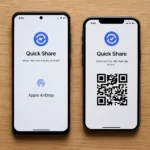

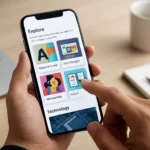
The vision is clear: RCS will become the next-generation messaging standard for customer communication—a richer, more interactive, and trusted channel than SMS. Whether that vision fully materializes depends on telecom operator adoption and business readiness, but the trajectory is set.
How to Transition From SMS to RCS Business Messaging
Start by evaluating your market and customer channel preferences, then assess your technical readiness. Adopt RCS for interactive, rich media capabilities and two-way conversations where SMS falls short. Begin with transactional and customer service use cases—these are lower-risk entry points. Build consent and opt-out mechanisms, and plan SMS fallbacks for customers whose devices or carriers don’t yet support RCS.
Leading with RCS or SMS based on audience, and reserving voice for warm transfers or scheduled callbacks, creates a channel strategy that maximizes engagement while respecting customer preference. The transition is not about abandoning SMS overnight; it’s about using RCS where it creates value and SMS where it still serves a purpose.
What Does RCS Business Messaging Cost?
RCS services are available through providers like TXTImpact, Twilio, Infobip, Sinch, Apten.ai, and GoAnswer, with options ranging from affordable entry-level offerings to custom developer builds. Specific pricing varies by provider, volume, and feature set. The business case for RCS is not about lower cost per message—it’s about higher engagement, conversion, and trust, which justify the investment.
Is RCS Business Messaging replacing SMS entirely?
No. SMS remains a fallback for devices and carriers that don’t yet support RCS, and it will coexist with RCS for years. However, RCS is becoming the default channel for customer engagement where trust, interactivity, and rich media matter. SMS will shift toward a backup role rather than the primary channel.
Can I use RCS Business Messaging on iPhone?
Yes. Apple’s integration of RCS support, combined with Google Wallet integration, enables universal cross-platform adoption. Both iOS and Android users can now receive and interact with RCS Business Messaging natively without downloading a separate app.
RCS Business Messaging is not hype—it is infrastructure. 2026 is when businesses that ignored it in 2025 will realize they are behind. The channel is here, the devices support it, and consumer trust in verified branding is proven. The only question left is whether your business moves first or follows.
Edited by the All Things Geek team.
Source: TechRadar




