






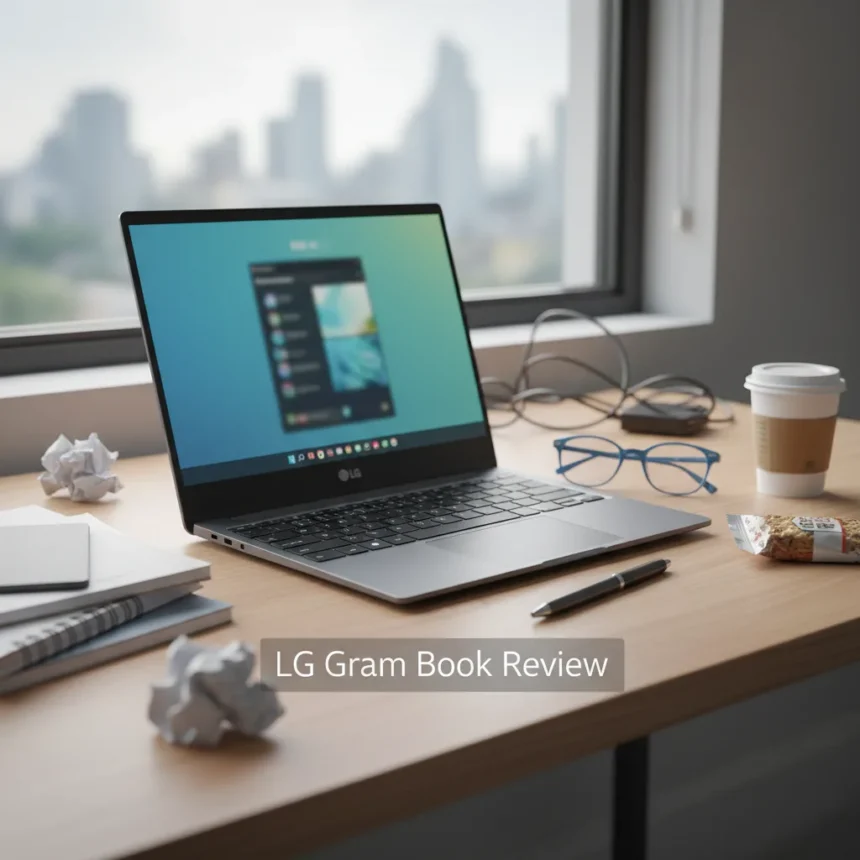
The LG Gram Book is an ultrabook that promised to deliver sensible pricing and solid performance for work and school users, but the execution stumbles in ways that undermine its core appeal. This lightweight laptop looked like it could fill a genuine gap in the market—affordable, portable, and capable—yet in practice, it reveals frustrating compromises that make competing options feel like better bets.
Key Takeaways
- The LG Gram Book targets budget-conscious users seeking portability and work-class performance
- Significant design and performance compromises limit its appeal despite reasonable pricing
- The ultrabook category offers stronger alternatives with better value trade-offs
- Thermal and noise issues undermine the lightweight design philosophy
- School and office work demands reveal critical weaknesses in real-world use
What Is the LG Gram Book?
The LG Gram Book is a lightweight ultrabook designed for students and professionals seeking a portable machine that does not sacrifice work-class capability. It emphasizes portability and reasonable pricing in a category where many competitors charge premium prices for marginal improvements. The device sits in the crowded middle ground between budget laptops and high-end ultrabooks, which is precisely where it struggles to establish a clear identity.
LG’s Gram lineup has built a reputation around weight and portability—the brand’s earlier models proved that ultralight laptops could handle serious tasks without feeling like compromises. The Gram Book was supposed to extend that philosophy to a more affordable segment. Instead, it reveals why that segment remains sparsely populated: the trade-offs required to hit a lower price point often undercut the very benefits that make ultrabooks worth buying in the first place.
Where the LG Gram Book Fails to Deliver
The core problem with the LG Gram Book is that it makes too many concessions simultaneously. A laptop can be cheap or ultralight or powerful—picking two of those three is the eternal trade-off. The Gram Book attempts all three and succeeds at none. Thermal performance is poor, with the machine running hot during sustained workloads and generating audible fan noise that becomes distracting in quiet environments like libraries or offices. For a device marketed on portability and everyday usability, excessive heat and noise are deal-breakers.



Build quality feels compromised as well. The chassis exhibits flex in ways that suggest cost-cutting in materials and design. Keyboard feedback is mushy, making extended typing sessions feel imprecise. The trackpad is undersized and lacks the responsiveness expected even at this price point. These are not minor annoyances—they are the daily friction points that accumulate into genuine frustration when you use the machine for eight hours straight.
Performance is adequate for basic tasks but unremarkable. The processor handles email, web browsing, and office documents without complaint, but rendering work, video editing, or any moderately demanding software reveals the limitations of the silicon. You are not getting a performance bargain here; you are getting a performance compromise dressed up as affordability.



LG Gram Book vs. Better Alternatives
Competing ultrabooks in similar price ranges offer better execution across the board. Devices from manufacturers like Dell, Asus, and Lenovo deliver superior thermal management, quieter operation, and more durable build quality for comparable money. If you step up slightly in budget, you unlock machines that do not force you to choose between portability and usability. The market has moved on from the era when lightweight automatically meant compromised—modern competitors prove this point repeatedly.
The Gram Book’s positioning is the real issue. It is too expensive to compete with genuinely budget laptops that accept their limitations upfront. It is too compromised to compete with true ultrabooks that charge more but deliver the experience they promise. It sits in the worst possible middle ground: expensive enough to expect better, cheap enough that you are clearly paying for corners cut.
Should You Buy the LG Gram Book?
No. If portability is your priority, save for a proper ultrabook that delivers the quiet, cool operation that ultralight design should enable. If budget is your priority, buy a conventional laptop at a lower price point and accept that it will weigh more. The LG Gram Book asks you to compromise on both fronts without delivering clear advantages on either. There are better paths forward for students and professionals alike.
Is the LG Gram Book worth buying for school work?
Not really. The thermal and noise issues make it problematic for quiet study environments, and the keyboard and trackpad quality will frustrate you during long writing sessions. Budget alternatives offer better keyboards at lower prices, while slightly more expensive ultrabooks deliver quieter, cooler operation that is far less distracting in libraries and classrooms.



How does the LG Gram Book compare to other lightweight laptops?
The LG Gram Book is lighter than traditional laptops but heavier than true ultrabooks, without offering the thermal efficiency or build quality of either category. Competitors deliver better performance-per-pound and superior daily usability, making the Gram Book a compromise that satisfies no one.
The LG Gram Book had the ingredients for success but failed in execution. It is a reminder that affordability and portability alone do not make a laptop compelling—you need the daily experience to match the promise. This machine does not deliver that experience, and better alternatives exist at every price point.
Edited by the All Things Geek team.
Source: TechRadar