





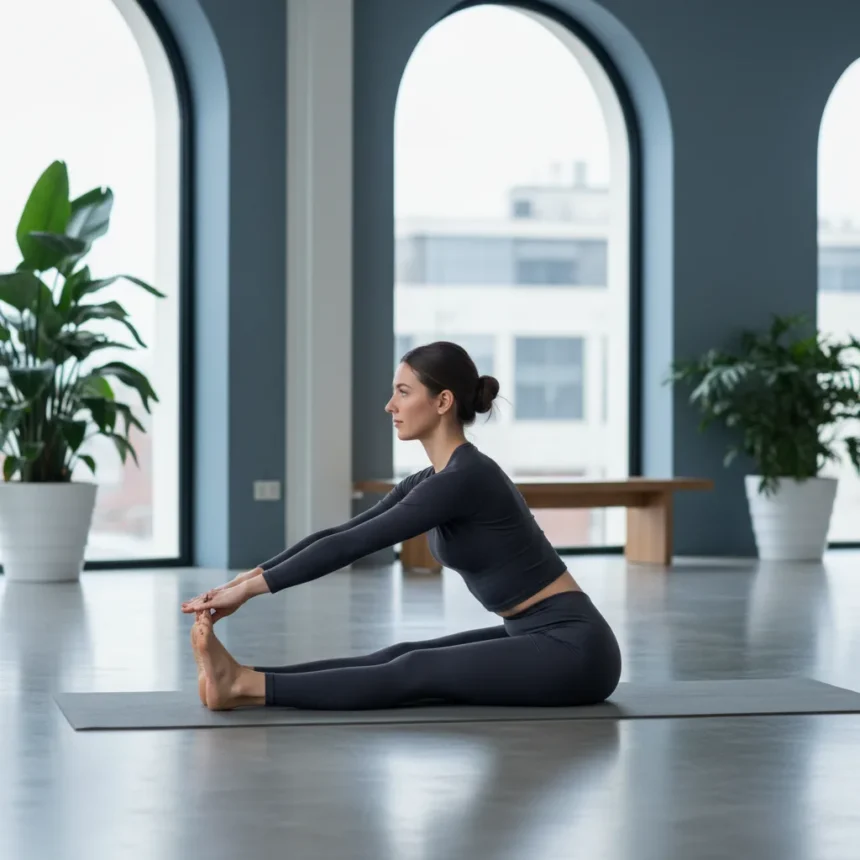
The Pilates butterfly exercise is a deceptively simple bodyweight movement that strengthens deep core muscles, pelvic floor stability, and hip mobility without requiring any equipment. Unlike traditional core work such as planks, sit-ups, and crunches, the Pilates butterfly exercise targets stabilizer muscles and pelvic floor engagement often overlooked in conventional fitness routines. This approach has gained attention particularly among postpartum fitness enthusiasts and anyone seeking spinal stability through deep abdominal work.
Key Takeaways
- The Pilates butterfly exercise engages deep core stabilizers, obliques, and pelvic floor muscles in a single movement.
- No equipment is required; optional yoga mat provides comfort on hard surfaces.
- Slower movement tempo increases difficulty and muscle activation.
- Pelvic floor strengthening supports bladder and bowel function during daily activities.
- Proper form is essential—hip wobbling indicates reduced range of motion is needed.
What the Pilates butterfly exercise targets
The Pilates butterfly exercise works muscles that most traditional core routines miss entirely. It engages the pelvic floor, deep abdominals, obliques, and deep stabilizer muscles throughout the movement. These deeper layers provide essential support for the lower back during everyday activities like carrying heavy objects or twisting motions. Surface-level abs exercises like crunches activate only the rectus abdominis, leaving stabilizer strength underdeveloped—a gap the Pilates butterfly fills.
Pelvic floor strength is particularly significant for long-term spinal health and functional fitness. This muscle group supports bladder and bowel function, yet remains largely ignored in standard gym routines. The Pilates butterfly exercise directly targets this area, making it valuable for anyone seeking comprehensive core development beyond visible abdominal definition.
How to perform the Pilates butterfly exercise correctly
Proper form determines whether the Pilates butterfly exercise delivers results or simply wastes time. Start by lying in a comfortable position where one knee opens to the side in a controlled manner. The key is moving slowly—speed reduces the difficulty and muscle engagement. Slower repetitions force deep abdominals and pelvic floor muscles to work harder throughout the entire range of motion.



If you struggle to feel hip movement during the Pilates butterfly exercise, place your hands on your hip bones to monitor for wobbling. Hip bone movement indicates your pelvis is shifting, which reduces stability and decreases effectiveness. When wobbling occurs, decrease your range of motion—opening the knee less far—until you can maintain a stable pelvis throughout the movement. This modification is not a weakness; it is proper progression. Building stability at a smaller range of motion creates a stronger foundation than rushing through larger movements with poor control.
Pilates butterfly exercise vs. traditional core work
The Pilates butterfly exercise differs fundamentally from planks, sit-ups, and crunches in both mechanics and muscle activation. Planks demand sustained isometric tension but engage mainly surface-level core muscles. Sit-ups and crunches create spinal flexion, which can strain the lower back if form degrades, and they bypass pelvic floor engagement entirely. The Pilates butterfly exercise maintains a stable spine while activating the pelvic floor and deep stabilizers—a combination traditional exercises rarely achieve simultaneously.



For postpartum recovery specifically, the Pilates butterfly exercise offers distinct advantages. Pregnancy weakens the pelvic floor and deep core through hormonal changes and physical strain. Conventional core exercises can actually increase pelvic floor dysfunction if performed before adequate stabilizer strength returns. The Pilates butterfly exercise rebuilds this foundation gradually and safely, addressing the root of postpartum core weakness rather than surface symptoms.
Why tempo matters in the Pilates butterfly exercise
Speed is not your friend in the Pilates butterfly exercise. Slower movement increases the time under tension for deep abdominal and pelvic floor muscles, forcing them to work harder. A controlled, deliberate pace—perhaps two to three seconds to open the knee and two to three seconds to close it—creates significantly more muscle engagement than rushing through repetitions. This principle applies across all Pilates work: the slower you move, the harder your stabilizers must work to maintain control.
This tempo-based difficulty progression means you can intensify the Pilates butterfly exercise without adding weight or complexity. Simply slowing down transforms the movement from moderate to challenging. For beginners, a natural pace builds confidence. For advanced practitioners, near-glacial tempos provide an intense workout using only bodyweight.
Is the Pilates butterfly exercise suitable for everyone?
The Pilates butterfly exercise works for most people, but individual results vary based on body mechanics and current fitness level. What works for one person might not suit another—listen to your body and adjust accordingly. Beginners should start with a smaller range of motion and focus on maintaining pelvic stability before attempting deeper knee openings. Those recovering from pelvic floor dysfunction or postpartum should consult a qualified physical therapist before beginning any new exercise routine, as personalized guidance prevents setbacks.



How often should you perform the Pilates butterfly exercise?
Daily practice is feasible because the Pilates butterfly exercise requires minimal recovery time and no equipment. Many practitioners incorporate it into morning routines or evening wind-downs. Start with 10-15 repetitions per side and adjust based on how your body responds. Consistency matters more than volume—daily practice with proper form builds strength faster than sporadic high-rep sessions.
Can the Pilates butterfly exercise improve posture?
Improved pelvic stability from the Pilates butterfly exercise indirectly supports better posture. A stable pelvis allows the spine to stack properly, reducing compensatory tension in the lower back and shoulders. However, posture involves multiple muscle groups—hip flexors, thoracic spine mobility, and shoulder stability all play roles. The Pilates butterfly exercise addresses one critical piece of this puzzle: deep core and pelvic floor stability that prevents postural collapse.
The Pilates butterfly exercise deserves a place in any well-rounded fitness routine, not as a replacement for all other core work but as a targeted addition addressing the deep stabilizers and pelvic floor that planks and crunches leave behind. Its simplicity is deceptive—mastering proper form and tempo reveals why this movement has become a staple for anyone serious about functional core strength and long-term spinal health.
Where to Buy
65% OFFKEEPKeep Pilates Ball Small$6.99$19.99shop now | Amazon BasicsAmazon Basics Neoprene Dumbbells$9.44shop now | GaiamGaiam Essentials Thick Yoga Mat$24.40shop now | BalaBala Bangles Wrist & Ankle Weight$55shop now
Edited by the All Things Geek team.
Source: Tom's Guide