




The Leica Leitz Phone 1 is a rebranded Xiaomi 14 Ultra featuring Leica camera optics and tuning, now available globally outside the United States. A direct portrait comparison between this smartphone and a $3,000 mirrorless camera with professional lens reveals something unsettling for camera enthusiasts: the gap between phone and dedicated gear has nearly vanished. The question is no longer whether smartphones can match mirrorless cameras—it is whether most photographers need the extra weight and cost.
Key Takeaways
- Leica Leitz Phone 1 portrait results are visually indistinguishable from a $3,000 mirrorless setup in side-by-side tests.
- The phone combines Xiaomi hardware with Leica optics and software tuning for professional-grade image processing.
- Mirrorless cameras still excel at high-resolution output and specialized use cases, but lack the smartphone’s computational advantages.
- Chinese camera phones like Xiaomi 15 Ultra and Huawei Pura 80 Ultra are pushing 1-inch sensors as standard, raising the bar industry-wide.
- For portrait work specifically, smartphone processing and Leica color profiles deliver results that challenge the traditional camera hierarchy.
Leica Leitz Phone 1 portrait capabilities explained
The Leica Leitz Phone 1 combines formidable camera hardware with Leica’s optical and software expertise. The device is based on the Xiaomi 14 Ultra, which means it inherits a sophisticated multi-lens system tuned for Leica color science and processing algorithms. In portrait mode, the phone’s computational photography—blending multiple sensor inputs, intelligent depth mapping, and Leica’s signature color grading—produces images that read as professional-grade to the human eye. What matters in portrait photography is not megapixel count alone; it is color accuracy, bokeh quality, and tonal range. The Leica Leitz Phone 1 delivers on all three, leveraging software to achieve what dedicated cameras accomplish through optics and sensor size.
The key advantage of a smartphone approach is real-time processing. Every frame is analyzed, color-corrected, and optimized before it hits your gallery. A mirrorless camera captures raw data; you then spend hours in post-production adjusting white balance, contrast, and color grading. The Leica Leitz Phone 1 compresses that workflow into milliseconds. For portrait work, where skin tone accuracy and flattering light rendering are non-negotiable, this computational edge is substantial.
How mirrorless cameras compare to smartphone portrait results
A $3,000 mirrorless camera paired with a professional lens represents the traditional benchmark for portrait quality. Cameras in this price tier—such as Sony’s high-resolution models—emphasize hardware over software, relying on 61-megapixel sensors and optical excellence to capture detail that survives large prints and aggressive cropping. They excel at technical metrics: dynamic range, color bit depth, and native RAW file quality that grants photographers maximum post-production flexibility. However, in a direct portrait comparison, the mirrorless camera’s advantages narrow considerably.
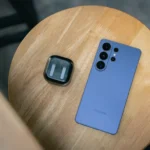

The critical difference is use case. A mirrorless setup wins when you need extreme resolution for billboard-sized prints, require specialized lenses for specific focal lengths, or demand RAW files for extensive color grading. For standard portrait work—social media, portfolios, prints up to 16×20 inches—the Leica Leitz Phone 1 produces results that are visually indistinguishable from the mirrorless output. The phone’s Leica color profiles, including black-and-white options, deliver a signature look that rivals dedicated camera processing. Mirrorless cameras do not offer equivalent computational photography; they rely on the photographer’s skill in post-production to achieve similar aesthetics.
Why Chinese camera phones are reshaping portrait photography
The Leica Leitz Phone 1 is not an outlier. It reflects a broader shift in smartphone camera design, particularly among Chinese manufacturers. The Xiaomi 15 Ultra, the Leitz Phone’s successor, features a 1-inch main sensor—larger than the sensors in flagship phones from Apple, Samsung, and Google—paired with Leica lenses and a Pro mode offering full exposure controls and Leica color profiles. The Huawei Pura 80 Ultra pushes further, featuring a 1-inch main sensor at 50MP with a variable f/1.6-4 aperture and switchable telephoto options, potentially offering more versatility than any competing smartphone.


This hardware escalation matters because it narrows the sensor-size gap between phones and mirrorless cameras. A 1-inch sensor in a phone approaches the size of smaller mirrorless sensors, enabling better light gathering and shallower depth-of-field control. Combined with Leica optics and computational photography, these devices are eliminating the traditional advantage of dedicated cameras for most shooting scenarios. Portrait photographers specifically benefit because shallow depth-of-field and accurate color rendering—the two pillars of portrait quality—are now achievable through smartphone hardware and software working in concert.
Portrait results: can you spot the difference?
The core premise of the Leica Leitz Phone 1 comparison is simple: place a portrait shot on the phone next to one from the $3,000 mirrorless setup and see if you can reliably identify which is which. For most viewers, the answer is no. The phone’s bokeh rendering is smooth and natural. Skin tones are flattering and accurate. The background separation is convincing. Colors pop without appearing oversaturated. These are the hallmarks of a quality portrait, and the Leica Leitz Phone 1 delivers them without requiring the photographer to own three lenses, a tripod, and a degree in post-production.
What the mirrorless camera offers instead is flexibility and insurance. The RAW files contain more data, allowing aggressive adjustments without quality loss. The larger sensor and fixed lens provide uncompressed optical information. If a portrait is slightly out of focus—a risk with any camera—the mirrorless setup’s higher resolution may allow cropping and reframing in post-production. The Leica Leitz Phone 1, by contrast, offers no second chances. What you see in-camera is what you get, because the phone has already processed and finalized the image. This is both its greatest strength and its only real weakness.
Should you abandon your mirrorless camera for the Leica Leitz Phone 1?
The answer depends entirely on your photography goals. If you shoot portraits for social media, client portfolios, or personal projects, the Leica Leitz Phone 1 is sufficient and arguably superior due to its convenience and computational advantages. The phone is always in your pocket, always ready, and always producing Leica-tuned results without post-production labor. If you need extreme resolution for large prints, require specialized lenses for specific focal lengths, or demand RAW files for color-critical work, a mirrorless camera remains necessary. The $3,000 mirrorless setup is also a better choice if you shoot multiple genres—landscapes, sports, macro work—where specialized optics matter more than computational photography.



For portrait specialists, however, the Leica Leitz Phone 1 represents a genuine inflection point. It is the first smartphone that makes a credible claim to matching dedicated camera quality in a specific, high-value use case. That is remarkable, and it signals a broader trend: as phone sensors grow larger and Leica’s optical and software expertise deepens, the practical advantage of owning a mirrorless camera for portraits alone continues to shrink.
What does the Leica Leitz Phone 1 cost compared to mirrorless alternatives?
The Leica Leitz Phone 1 is a premium smartphone, pricing it well below a $3,000 mirrorless camera plus lens combination. Exact pricing varies by region, but the phone positions itself as a luxury device—comparable in positioning to flagship phones from Apple and Samsung, not budget alternatives. The value proposition is compelling: a single device that handles portraits, landscapes, video, and daily tasks, versus a $3,000 camera that does one thing exceptionally well. For photographers who want one tool that covers everything, the Leica Leitz Phone 1 is far more cost-effective.
Can smartphone processing ever truly replace RAW files?
Not entirely. RAW files contain unprocessed sensor data, allowing photographers to recover detail in blown highlights or crushed shadows during post-production. The Leica Leitz Phone 1 processes every image in-camera, locking in exposure, color, and contrast decisions. If a portrait is slightly overexposed, you cannot recover detail the way you could with a mirrorless RAW file. However, for most portrait work, the phone’s processing is conservative and flattering, making exposure errors rare. The trade-off—instant, professional results versus maximum post-production flexibility—favors the phone for photographers who prioritize speed and consistency over technical control.
Is the Leica Leitz Phone 1 available in the United States?
No. The Leica Leitz Phone 1 is globally available outside the US market. This regional restriction limits accessibility for American photographers, though the Xiaomi 14 Ultra—the phone on which the Leitz Phone is based—offers similar camera capabilities in certain regions. For US-based photographers interested in flagship smartphone portrait capabilities, alternatives like the latest iPhone or Google Pixel models remain the primary options, though they lack Leica’s optical tuning and color profiles.
The Leica Leitz Phone 1 represents a watershed moment for smartphone photography. It proves that for portrait work, the gap between phones and mirrorless cameras has closed to the point of irrelevance for most photographers. Whether you choose a $3,000 mirrorless setup or a premium smartphone now depends on your shooting style, not on image quality alone. For portrait specialists, that is a radical shift in the calculus of camera ownership.
Where to Buy
This article was written with AI assistance and editorially reviewed.
Source: TechRadar