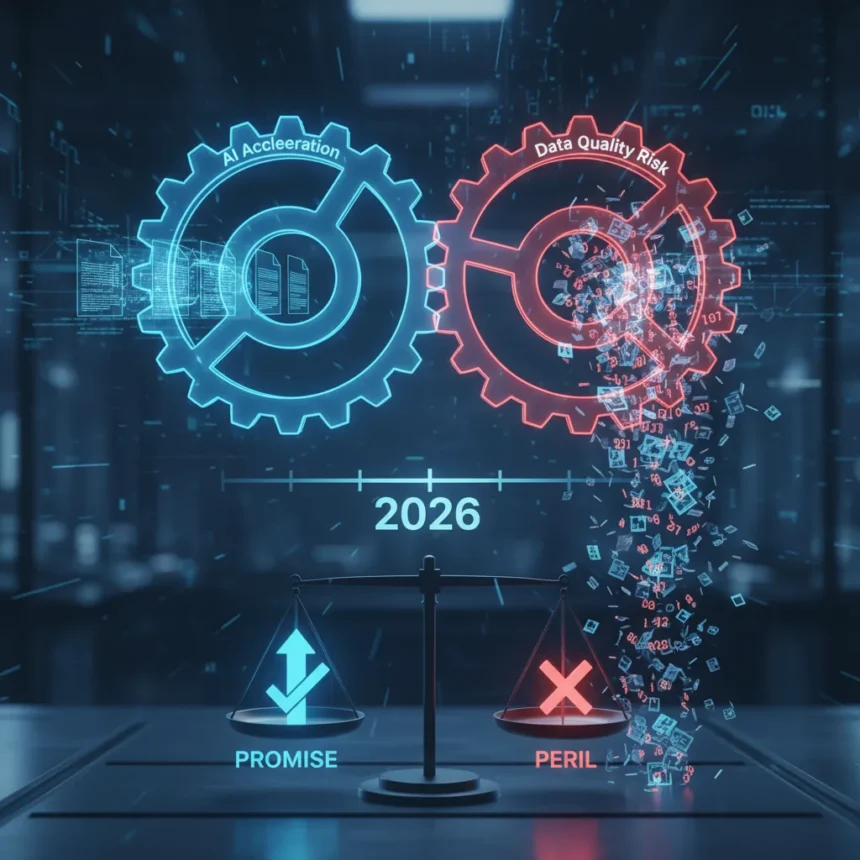
AI and R&D tax credits have become entangled in a risky marriage. As generative AI reshapes software development workflows—introducing “vibe coding” and “agentic coding” practices—the IRS faces a fundamental challenge: how do these new development paradigms fit within Section 41’s four-part qualification test (Permitted Purpose, Technological in Nature, Elimination of Uncertainty, Process of Experimentation)? Meanwhile, businesses are deploying AI tools to automate credit identification and narrative generation, but the technology is amplifying errors as often as it is catching them.
Key Takeaways
- AI can ingest R&D data and identify qualifying projects per IRS four-part test, but cannot evaluate intent or defend claims under audit.
- IRS shifted to requiring contemporaneous granular data per qualified business component as of September 2023 Form 6765 changes.
- Poor input data causes AI to amplify errors: misclassified expenses, vague activity records, missing evidence.
- AI R&D credits in the AI industry can offset up to 22% of qualifying costs, varying by state.
- IRS likely to audit AI-generated credits post-2024, following ERC enforcement patterns.
The promise is straightforward: AI analyzes time metadata without timesheets or interviews, generates technical narratives, and accelerates the identification of qualifying projects. The peril is equally clear. An Ohio CPA summarized the core problem bluntly: “The simple fact is that when it comes to complex tax matters such as with R&D and ERC, AI does not have the necessary human judgement required.”
How AI Claims R&D Credits (And Where It Fails)
AI tools ingest existing project data, identify activities matching the IRS four-part test, calculate qualified time from metadata, and generate IRS-compliant narratives. This workflow addresses a genuine pain point: traditional R&D credit challenges include determining qualification, tracking time spent, and writing defensible narratives. The IRS, however, has raised the bar. Since September 2023, Form 6765 changes require granular contemporaneous data per qualified business component—not summaries, not reconstructed timesheets, but real-time records.
Here is where AI’s speed becomes a liability. When input data is vague, misclassified, or missing contemporaneous evidence, AI does not flag the problem—it amplifies it. An expense coded as “R&D” but lacking detail fails the IRS scrutiny test. AI’s narrative generation might make that vague record sound plausible, but it does not make it defensible. The tool has no way to know whether the employee was actually experimenting or simply maintaining an existing system. It cannot interview the engineer. It cannot evaluate intent.



The IRS Taxpayer Advocate has warned against sole reliance on AI for tax advice: “Despite efforts to ensure accuracy, these AI assistants may encounter difficulties interpreting complex tax laws correctly or considering unique circumstances that could impact a taxpayer’s return. As a result, taxpayers should not solely rely on AI generated tax advice.” This is not a suggestion—it is a liability warning.
AI as Force Multiplier, Not Replacement
The responsible view of AI in R&D credits treats the technology as a force multiplier, not a substitute for experts. Exactera, a credits platform, frames AI as transformative when guided by human experts. Massie Tax Credits similarly positions AI as supporting subject-matter expert (SME) engagement, but only when structured expert input drives the analysis.



The distinction matters. AI can accelerate data collection and summarization. It cannot replace SME interviews, engineering judgment, legal analysis, or audit defense. When a business deploys AI to generate a credit claim without human expert review, it is not saving time—it is creating audit exposure. The IRS has already signaled this risk. In July 2024, the IRS sought summary judgment denying Kyocera AVX a $1.3 million Section 41 R&D credit prepared by PricewaterhouseCoopers. If even Big Four expertise cannot guarantee IRS acceptance, an AI-only claim stands little chance.
The New Complexity: AI Development and Section 41
Software development is changing faster than tax law can accommodate. Generative AI integration—”vibe coding” and “agentic coding” workflows—challenges traditional Section 41 eligibility determinations. When an AI model generates code, who performed the experimentation? Was there genuine uncertainty about the technical approach, or was the model simply executing a known pattern? These questions have no clear answers yet, and AI tools cannot resolve them.
Businesses in the AI industry can offset up to 22% of qualifying costs (supplies, cloud computing) through R&D credits, though the percentage varies by state. That incentive is real, but it also attracts IRS scrutiny. Post-ERC enforcement, the IRS is likely to audit AI-generated credits aggressively. A business claiming credits for AI-powered development without contemporaneous, detailed records—and without expert human review—is essentially volunteering for an examination.
What Happens When Data Quality Fails?
Garbage in, garbage out. AI does not fix bad data; it disguises it. If R&D team records are vague (“worked on project optimization”), lack contemporaneous timestamps, or misclassify routine maintenance as experimental work, AI will transform those records into a polished narrative that the IRS will reject. The business then faces not just a denied credit but also penalties for negligence or accuracy-related issues.


The path forward requires discipline. Businesses should use AI to accelerate the identification and summarization of qualifying projects, but only after ensuring data quality. Contemporaneous records must be granular, timestamped, and specific about the technical challenge being addressed. AI narratives should be reviewed and validated by tax professionals and engineers before submission. And crucially, the business must retain the ability to defend the claim under IRS scrutiny—which means having engineers available to explain the technical decisions, not just having AI-generated summaries.
Can AI Really Replace Expert Judgment?
No. AI excels at pattern matching and summarization. It fails at qualification judgment, intent evaluation, and audit defense. A business relying solely on AI for R&D credits is accepting significant risk for marginal time savings.
What happens if the IRS audits an AI-generated R&D credit claim?
The IRS will examine the contemporaneous records supporting the claim. If those records are vague, misclassified, or lack detail, the credit will be denied. The business will then face penalties unless it can demonstrate reasonable cause—which is difficult when the claim was generated by an automated tool without expert review. Post-2024, IRS audit rates for AI-generated credits are expected to rise.
How much can AI development offset through R&D credits?
Businesses in the AI industry can offset up to 22% of qualifying costs—including supplies and cloud computing—though the exact percentage depends on state tax law. This applies only to costs that meet the IRS four-part test and are supported by contemporaneous records.
The verdict is clear: AI is a useful tool for accelerating R&D credit workflows, but it is not a substitute for expert judgment, data quality discipline, or audit readiness. Businesses deploying AI should treat it as a research assistant, not a decision-maker. The IRS will hold you accountable for every claim, regardless of whether an algorithm generated it. In 2026, that accountability is only getting stricter.
Edited by the All Things Geek team.
Source: TechRadar