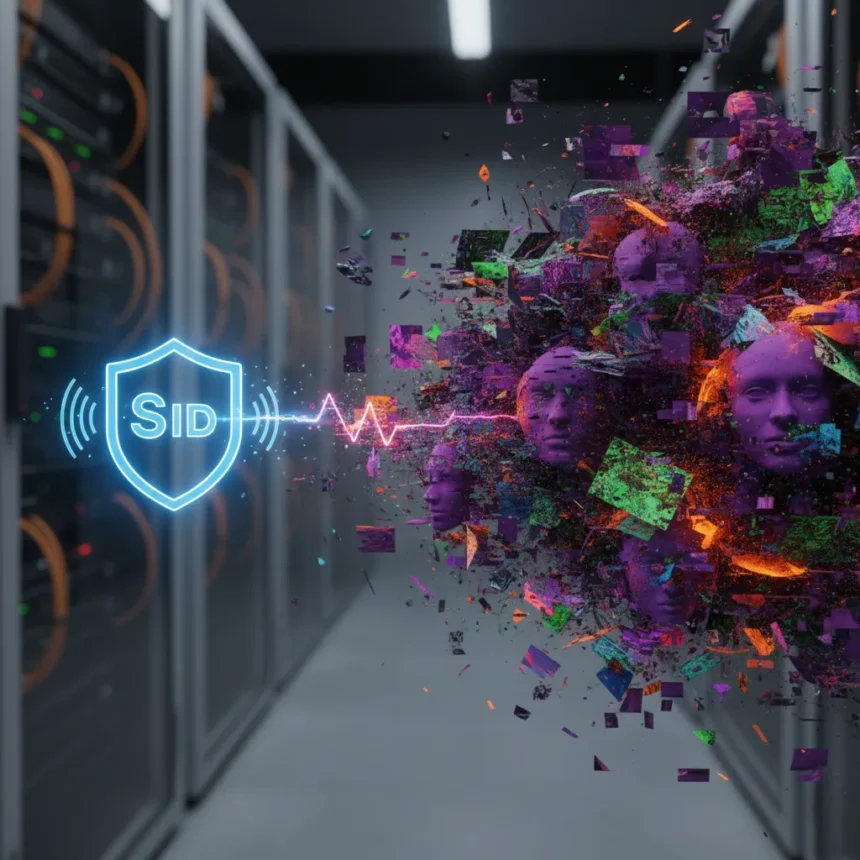
AI watermarking generative content represents Google’s attempt to police a problem it helped create. The company is rolling out SynthID, a watermarking approach designed to identify AI-generated material and establish provenance for synthetic content. Yet the same technological momentum that powers increasingly convincing generative models suggests watermarking alone cannot solve the misinformation crisis.
Key Takeaways
- Google’s SynthID watermarking aims to identify AI-generated content and establish digital provenance.
- The core tension: companies building truth-bending AI models also must police fake content they enable.
- Generative AI’s rapid improvement suggests watermarking will always lag behind synthesis capability.
- The arms race between detection and generation appears structurally unwinnable for detection.
- Technical safeguards alone cannot outpace generative AI’s ability to produce convincing synthetic content.
Google’s Watermarking Approach Addresses a Real Problem
SynthID represents Google’s technical response to a legitimate crisis. As generative AI systems produce increasingly convincing text, images, audio, and video, distinguishing human-created from machine-generated content has become urgent. Watermarking embeds invisible markers into synthetic output, allowing downstream tools to flag AI-generated material. The approach sounds logical: mark the content at creation, verify the mark at consumption, problem solved.
But this framing assumes a static threat landscape. It assumes that the companies building generative models will cooperate with watermarking standards, that users will adopt verification tools, and that bad actors cannot simply strip or spoof watermarks. None of these assumptions hold in practice. Watermarking is a band-aid on a structural problem: the same companies racing to build more powerful generative models have weak incentives to make detection foolproof.
The Generative AI Power Problem Makes Detection Obsolete
The real issue is asymmetry. Building generative models is computationally expensive but fundamentally straightforward—train on data, scale up, improve outputs. Detection requires not just identifying watermarks but understanding semantic content, context, and intent. A watermark is a technical signal; misinformation is a social problem.



Consider the gap between what generative systems could do three years ago and what they can do today. That velocity of improvement applies equally to synthesis and to circumvention. Researchers will find ways to remove, corrupt, or forge watermarks faster than new watermarking schemes can be deployed. The architecture of the problem favors the attacker: you only need one successful bypass method; defenders must anticipate all possible attacks.
Why Companies Building AI Models Cannot Police Their Own Output
Here lies the fundamental conflict: Google, OpenAI, Anthropic, and other generative AI builders profit from model capability and scale. Watermarking and detection slow deployment, complicate product integration, and invite regulatory scrutiny. The economic incentive is to ship features fast, not to ship foolproof safeguards. SynthID is window dressing on a business model built on scale, not on responsible release.



This is not cynicism—it is structural economics. If Google implements watermarking but a competitor does not, the competitor gains a speed advantage. If watermarking reduces user experience quality (latency, output fidelity), adoption suffers. Voluntary technical standards fail when compliance is expensive and non-compliance is profitable. The companies that created the generative AI mess cannot unilaterally clean it up because their incentives point elsewhere.
The Watermarking Arms Race Is Already Lost
Watermarking advocates often compare the problem to digital rights management (DRM) in music and video. But DRM failed for a reason: once content is decoded by a legitimate user, it can be copied. Similarly, once a watermark exists in a generated sample, adversaries can study it, reverse-engineer it, and develop removal techniques. The cat-and-mouse game between watermark designers and watermark breakers will repeat endlessly, with breakers always one step behind—until they are not.
The deeper problem is that watermarking assumes detection is the goal. But detection is not the goal; preventing harm is. A watermark tells you a text was AI-generated. It does not tell you whether the content is false, whether it was generated to deceive, or whether the watermark itself is forged. Watermarking is a metadata layer, not a truth layer. Misinformation is not solved by labeling—it is solved by changing incentives, funding fact-checking, and building media literacy. None of those are technical problems that watermarking addresses.
What Watermarking Actually Solves (and What It Doesn’t)
SynthID is useful for narrow cases: verifying that an image in a news article was or was not AI-generated, confirming the provenance of a document, or detecting obvious synthetic media in high-stakes contexts. These are real, valuable use cases. But they represent perhaps 5 percent of the misinformation problem. The other 95 percent involves semantic deception—plausible-sounding but false claims, out-of-context real information repurposed to mislead, and sophisticated social engineering. Watermarking does nothing for these.


Generative AI’s power makes it clear we will never stay ahead of synthetic content through technical detection alone. The models improve too fast, the attack surface is too broad, and the incentives for bad actors are too strong. Watermarking is a useful tool for specific forensic cases, but it is not a solution to generative AI misinformation. It is a comforting fiction that allows companies to appear responsible while continuing to ship increasingly powerful and increasingly risky systems.
Can Watermarking Standards Ever Become Universal?
For watermarking to work at scale, it would need to become an industry standard adopted by every generative AI provider, embedded in every model, and verified by every platform. This has never happened voluntarily in technology. Standards emerge when regulators mandate them or when network effects make adoption inevitable. Right now, neither condition exists. Watermarking is optional, unevenly implemented, and easily circumvented.
Is SynthID enough to prevent AI-generated misinformation?
No. SynthID is a useful technical tool for verifying content provenance in controlled contexts, but it cannot prevent misinformation because misinformation is primarily a social and economic problem, not a technical one. Watermarks can be stripped, forged, or ignored. Bad actors will find workarounds faster than new watermarking schemes can be deployed. Real solutions require funding for fact-checking, media literacy education, and regulatory pressure on platforms to reduce algorithmic amplification of false content.
Will watermarking slow down generative AI development?
Watermarking standards could add latency and computational overhead to model inference, but companies have weak incentives to prioritize watermarking over speed and capability. Unless regulators mandate watermarking as a requirement for deployment, adoption will remain voluntary and inconsistent. The competitive pressure to ship faster will outweigh the pressure to mark content more thoroughly.
Google’s SynthID is a genuine attempt to address a real problem, and watermarking has legitimate forensic applications. But the headline truth remains: the same companies building increasingly powerful generative models cannot also police their outputs effectively. The asymmetry between generation and detection, combined with weak incentives for cooperation, means watermarking will always lag behind the threat it is designed to counter. Technical safeguards are not a substitute for regulatory oversight, media literacy, and structural changes to how AI systems are deployed and governed.
Edited by the All Things Geek team.
Source: TechRadar