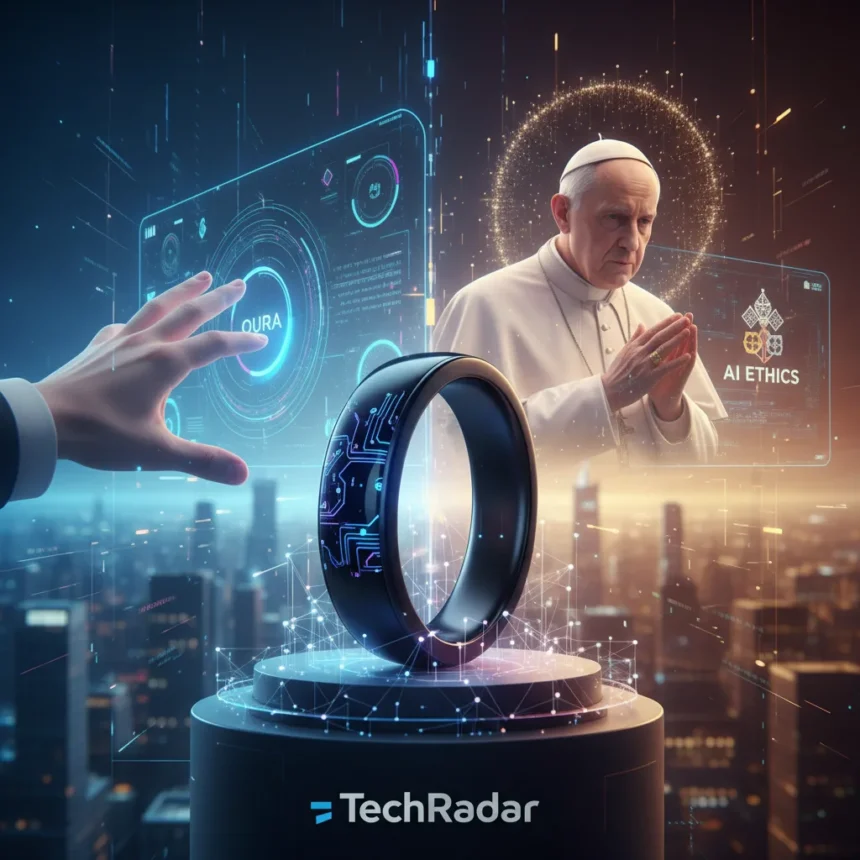
The biggest tech stories of the week span two of the industry’s hottest themes: wearable innovation and artificial intelligence policy. TechRadar’s latest roundup captures eight significant developments from a frenetic week of tech news, making it easy to catch up on what matters without scrolling through days of coverage.
Key Takeaways
- Eight major tech stories dominated the week’s coverage across hardware and policy
- Oura’s new smart ring represents the latest wearable innovation pushing health tracking forward
- The Pope’s perspective on AI signals growing institutional scrutiny of artificial intelligence
- This roundup format lets readers stay current without deep-dive research into each story
- Wearables and AI ethics emerged as the week’s defining themes across tech media
Wearable Tech Continues Its Momentum
Oura’s new smart ring announcement highlights the ongoing race to embed sensors and health-tracking capabilities into smaller, less intrusive devices. The wearables category has matured beyond fitness bands and smartwatches into rings, patches, and embedded accessories that promise similar functionality with minimal lifestyle disruption. This shift reflects a broader industry recognition that consumers want health insights without the visual footprint of a traditional wearable.
The smart ring category competes directly with smartwatch makers like Apple and Samsung, which dominate the wearables market through brand recognition and ecosystem integration. However, rings offer a distinct advantage: they remain invisible during professional settings, formal events, or situations where a watch might feel out of place. Oura’s entry into this space signals that health tracking is becoming a baseline expectation rather than a premium feature, pushing the entire category toward miniaturization and seamless integration into daily life.
AI Ethics Enters the Mainstream Conversation
The Pope’s take on artificial intelligence represents a significant moment: when institutional leadership outside the tech industry begins weighing in on AI policy, it signals that the conversation has moved beyond Silicon Valley into broader cultural and ethical territory. Religious and philosophical perspectives on AI development add a dimension that pure technical debate often misses—questions about human dignity, labor displacement, and the moral implications of creating increasingly autonomous systems.



This intersection of AI ethics and institutional authority reflects growing public concern about how artificial intelligence should be governed. Tech companies have faced mounting pressure from governments, advocacy groups, and now religious leaders to address potential harms before they scale. The Pope’s involvement underscores that AI regulation and ethics are no longer niche topics for computer scientists—they are now matters of public policy and moral philosophy that demand input from diverse perspectives.
Why This Week Mattered
Rounding up the biggest tech stories of the week serves a practical purpose: it acknowledges that the pace of tech news has become overwhelming. Readers who miss a single day of coverage can fall behind on multiple significant developments. TechRadar’s format addresses this by filtering signal from noise, identifying which announcements, launches, and policy developments actually shape the industry versus which ones are routine product refreshes or incremental updates.



The breadth of this week’s stories—from consumer hardware to institutional perspectives on AI—reflects how tech now touches every sector of society. A smart ring and papal commentary on artificial intelligence would have seemed unrelated five years ago. Today, they both represent the same underlying shift: technology is becoming so embedded in human life that its implications extend far beyond engineering and into ethics, spirituality, and governance.
What These Stories Signal About Tech’s Future
When the biggest tech stories of the week span both new consumer devices and institutional scrutiny of artificial intelligence, it reveals where the industry’s attention is focused. Wearables continue advancing because they represent the next frontier of personal computing—moving sensors from your wrist to your finger, your clothing, or directly into your body. Meanwhile, AI governance remains unsettled, with no clear regulatory framework and growing calls from religious, political, and academic leaders for stronger oversight.
These parallel trends suggest that 2025 will be defined by two competing forces: the relentless miniaturization and proliferation of connected devices, and the growing institutional push to govern how those devices collect data and how AI systems process it. Companies launching new wearables must now contend with questions about data privacy, algorithmic bias, and ethical use that barely existed a few years ago. The biggest tech stories of the week reflect this tension between innovation velocity and governance maturity.
Why Catch-Up Roundups Matter Now
Tech news moves too fast for any single reader to follow every development. A roundup format acknowledges this reality and adds value by doing the editorial work upfront—deciding which stories deserve your attention and why. TechRadar’s selection of eight major stories from a week suggests editorial judgment about what will have lasting impact versus what is temporary noise.


The decision to highlight both Oura’s smart ring and the Pope’s views on AI also reflects a publication’s editorial philosophy. Some outlets would lead with benchmark scores and technical specifications; TechRadar’s framing suggests that the broader implications—wearable miniaturization as a trend, AI ethics as an urgent policy question—matter more than any single product announcement. This approach serves readers who want context and analysis, not just a list of what happened.
Can a smart ring replace a smartwatch?
Not entirely. Smart rings excel at discreet health tracking and notifications but sacrifice screen real estate and input methods compared to smartwatches. A ring works best for users who prioritize battery life and invisibility; a watch remains superior if you need quick access to apps, navigation, or complex interactions. Most users benefit from owning both, using the ring for baseline health data and the watch for active engagement.
What does the Pope’s AI position mean for tech regulation?
When institutional leaders outside tech begin commenting on artificial intelligence, it accelerates the shift from industry self-regulation toward formal governance. The Pope’s perspective adds moral and ethical weight to calls for AI oversight, potentially influencing how governments approach regulation. It signals that AI is no longer a purely technical matter but a societal one requiring input from diverse sectors including religion, philosophy, and ethics.
How should I stay on top of weekly tech news?
Roundup formats like TechRadar’s weekly recap are designed for exactly this purpose—they compress the week’s signal into a single read. Following a publication’s weekly recap, setting news alerts for specific topics you care about, and checking tech news aggregators 2-3 times weekly keeps you current without the overwhelm of checking feeds constantly. The key is choosing sources that do editorial filtering rather than just listing everything that happened.
The biggest tech stories of the week matter because they reveal where the industry is heading. This week’s focus on wearable miniaturization and AI ethics governance tells us that 2025 will be defined by devices getting smaller and more intrusive, paired with growing pressure to ensure those devices respect privacy and ethical boundaries. Staying current on these trends helps you understand not just what’s launching next, but why it matters.
Edited by the All Things Geek team.
Source: TechRadar