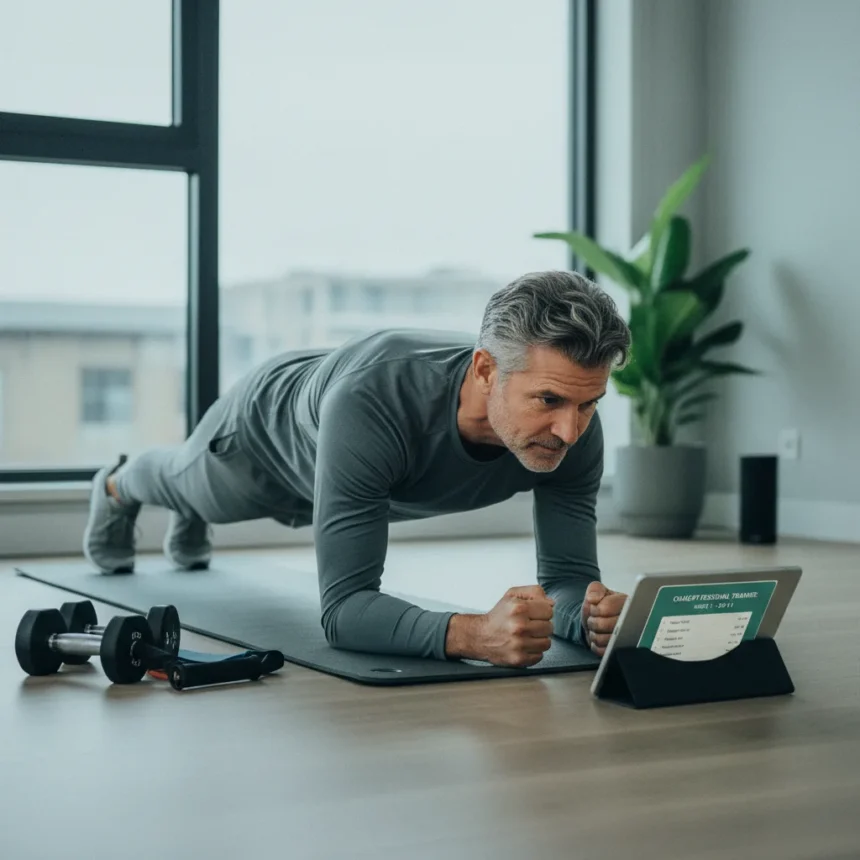
Can ChatGPT design a realistic weekly workout that actually works for a 54-year-old body? One TechRadar writer asked the AI to build a home-based fitness plan and found it sustainable enough to keep doing for two weeks—a rare outcome for most people who start fitness routines with enthusiasm and abandon them by week three.
Key Takeaways
- ChatGPT generated a realistic weekly workout tailored specifically to a 54-year-old body, not a generic gym plan.
- The writer adhered to the plan for two weeks, suggesting the AI-designed routine was sustainable and realistic.
- The experiment demonstrates a practical use case for generative AI: personalized fitness advice that matches real-world constraints.
- AI-generated fitness guidance requires verification and individual testing before adoption.
- The success hinged on the workout being home-based and designed for realistic adherence, not extreme results.
Why This Matters: AI Meets Real-World Fitness
Most fitness articles target either elite athletes or beginners willing to overhaul their lives overnight. The gap between Instagram fitness and actual 54-year-old bodies is vast. ChatGPT‘s ability to generate a realistic weekly workout suggests AI can fill that gap by producing advice tailored to specific ages, fitness levels, and constraints. The writer’s two-week adherence is noteworthy because it indicates the plan avoided the common pitfalls of generic fitness routines: unrealistic time commitments, exercises requiring equipment the user doesn’t own, or intensity levels that discourage continuation.
Generative AI systems like ChatGPT can synthesize fitness principles and adapt them to user input, but the output still requires scrutiny. Research on AI-generated content emphasizes that while such systems can be useful, they may contain inaccuracies and always need fact-checking. In the context of fitness, this means ChatGPT’s workout suggestions should be tested on a small scale before full commitment and ideally reviewed by a qualified fitness professional if the user has existing injuries, medical conditions, or is returning from a long period of inactivity.
The Realistic Weekly Workout Advantage
A realistic weekly workout differs fundamentally from viral fitness challenges or 30-day transformation plans. It prioritizes consistency over intensity, sustainability over shock value. The TechRadar experiment suggests ChatGPT understood this distinction when generating the plan. The writer kept doing it—a metric that matters far more than whether the routine produced visible muscle gain or weight loss in two weeks. Most people fail fitness routines not because the exercises are wrong but because the routine doesn’t fit their actual lives: work schedules, energy levels, family obligations, and existing aches and pains.



Home-based design was likely critical to the plan’s success. It eliminated friction—no commute to a gym, no intimidation factor, no equipment purchases required upfront. ChatGPT‘s ability to specify exercises that require minimal or no equipment, and to structure them around typical home schedules, demonstrates a practical strength of AI-assisted fitness planning. The AI can ask clarifying questions about available space, time, and equipment, then generate a plan that fits those constraints.
Comparing AI-Generated Plans to Traditional Fitness Advice
Conventional fitness routines come from personal trainers, fitness apps, or generic programs found in magazines. A personal trainer offers real-time feedback and adjustment but costs money and requires scheduling. Fitness apps provide consistency but often lack personalization beyond basic input fields. Generic programs ignore individual variation entirely. A realistic weekly workout generated by ChatGPT occupies a middle ground: it is personalized to the user’s stated age and constraints, it is free or low-cost (depending on ChatGPT access), and it can be adjusted if the user reports back that something isn’t working. The downside is that ChatGPT cannot observe form, cannot adjust in real time, and cannot account for medical history or injuries unless the user explicitly mentions them.



Safety Considerations for AI-Generated Fitness Plans
Before starting any new exercise routine, especially at age 54 or if returning from a period of inactivity or recovering from injury, consult a qualified healthcare provider or certified fitness professional. This is particularly important if you have existing joint pain, cardiovascular conditions, or any medical concerns. ChatGPT-generated plans are a starting point, not a substitute for professional guidance. The AI cannot see your movement quality, cannot correct form errors that might lead to injury, and cannot account for individual biomechanics or limitations.
If you have been sedentary for an extended period, are pregnant or postpartum, or are managing a chronic condition, professional oversight is essential. A physical therapist or certified personal trainer can review the ChatGPT plan, suggest modifications, and provide real-time feedback that the AI cannot.
What Made This Experiment Work
The TechRadar writer’s success with the realistic weekly workout likely stemmed from several factors the AI got right. First, the plan was tailored to a specific age group rather than generic. Second, it was home-based, removing logistical friction. Third, it was realistic in scope—two weeks of adherence suggests the plan did not demand 90 minutes daily or equipment the user lacked. Fourth, the writer tested it, found it workable, and continued. This is how AI-generated advice should be used: as a starting point that the user validates through small-scale testing before full adoption.
The experiment also highlights a limitation: two weeks is a short timeline. True adherence is measured over months. A realistic weekly workout that feels manageable in week one might become tedious by week eight, or life circumstances might intervene. The TechRadar piece documents the honeymoon phase, not long-term sustainability. That said, getting past week three is a genuine hurdle that most fitness routines fail to clear.


Can ChatGPT Replace a Personal Trainer?
No. ChatGPT can generate a reasonable starting plan, but it cannot replace the real-time feedback, form correction, and adaptive coaching that a trainer provides. However, ChatGPT can replace a generic fitness app or magazine routine for users who want something personalized and free. The AI excels at listening to constraints (age, equipment, time available) and generating a plan that fits. It fails at observation and real-time adjustment. For a 54-year-old with no injuries looking for a sustainable home routine, ChatGPT is a useful tool. For someone with movement limitations, chronic pain, or complex medical history, professional guidance is non-negotiable.
Is a two-week test enough to prove a realistic weekly workout works?
Two weeks proves the plan is tolerable and fits the user’s schedule, but not whether it produces lasting results or remains sustainable long-term. True fitness adherence is measured in months and years. The TechRadar writer’s two-week success is encouraging but preliminary. To fully validate the realistic weekly workout, the plan would need to be followed for at least 8-12 weeks while tracking consistency, perceived difficulty, and any injuries or pain that emerge.
Should I ask ChatGPT to design my fitness routine?
Yes, as a free starting point—but test it on a small scale first and have a professional review it if you have any existing injuries, medical conditions, or concerns. ChatGPT can generate a personalized, realistic weekly workout that fits your constraints. Use it to create a baseline plan, try it for one week, and adjust based on how your body responds. If the plan feels sustainable and causes no pain, continue. If something feels wrong, stop and consult a fitness professional before proceeding.
The TechRadar experiment demonstrates that AI can generate practical fitness advice when given clear constraints and when the user tests it before full commitment. A realistic weekly workout from ChatGPT is neither a miracle solution nor a waste of time—it is a tool that works best when used thoughtfully, verified through personal testing, and adapted as needed. For middle-aged users seeking sustainable fitness that fits real life, not Instagram fantasy, it is worth trying.
Edited by the All Things Geek team.
Source: TechRadar