





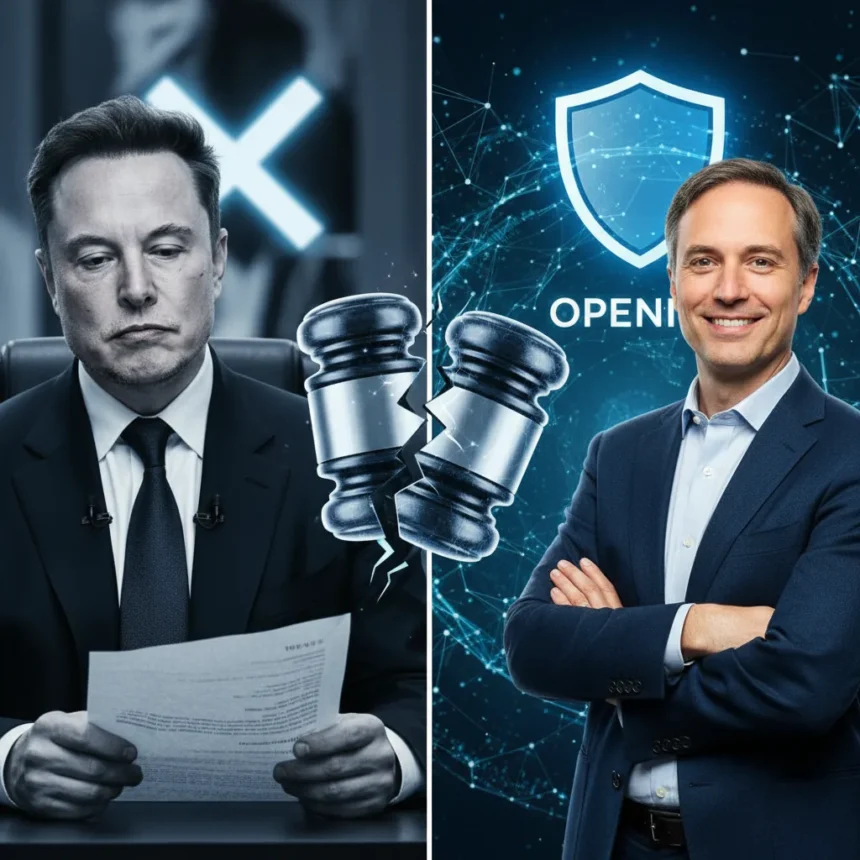
Elon Musk’s high-profile legal battle with OpenAI and CEO Sam Altman has ended in defeat, marking a major victory for the AI company and its leadership. A jury ruled against Musk in the lawsuit, a decision that could reshape how the industry approaches AI power structures, profit incentives, and regulatory oversight.
Key Takeaways
- Elon Musk lost his lawsuit targeting OpenAI and Sam Altman in a jury decision
- The ruling is a significant win for Sam Altman and OpenAI’s current leadership
- The case centered on disputes over OpenAI’s mission, governance, and commercial direction
- The outcome may influence future debates about AI company accountability and regulation
- The verdict signals how courts view disputes between founders and their successors at major tech firms
What the Elon Musk OpenAI lawsuit was really about
Musk’s legal challenge centered on fundamental disagreements about OpenAI’s direction and priorities. Musk had alleged that OpenAI had abandoned its founding mission to benefit humanity and instead become focused primarily on revenue generation. He also claimed the company had effectively become a closed-source subsidiary of Microsoft, contradicting its original commitment to open research and transparency.
The lawsuit represented more than a personal dispute between two tech figures. It embodied a broader ideological conflict about how AI companies should balance commercial success with public benefit, how research should be shared versus proprietary, and who should control the trajectory of increasingly powerful AI systems. Musk sought to force OpenAI to return to its founding principles, including publicizing research findings and technological advances rather than keeping them behind commercial walls.
Why this ruling matters for AI’s future
The jury’s decision against Musk sends a clear signal about how courts view disputes between founders and the leadership that succeeds them. Sam Altman and OpenAI’s current direction have now been validated by legal judgment, even as Musk continues to voice concerns about the company’s path. This outcome may discourage similar legal challenges from other AI industry figures who disagree with corporate governance decisions at major firms.



Beyond the immediate parties involved, the ruling has implications for how AI companies will be regulated and held accountable. If courts are unwilling to intervene in disputes about company mission and profit allocation, the responsibility for oversight falls more heavily on regulators, shareholders, and the public. This could accelerate calls for new legislation governing AI company practices and transparency standards.
The broader context of AI governance disputes
Musk’s lawsuit was one of several high-profile conflicts in recent years over how AI companies should operate. The dispute reflects genuine tension in the industry between those who prioritize rapid commercialization and those who emphasize safety, transparency, and public benefit. OpenAI’s transformation from a nonprofit research organization into a for-profit entity has been controversial precisely because it raises questions about whether commercial incentives can coexist with the mission to develop AI safely and responsibly.



The loss does not necessarily end Musk’s public criticism of OpenAI or his efforts to shape AI policy through other channels. However, it does remove his primary legal tool for forcing institutional change at the company. Going forward, debates about AI governance will likely continue through regulatory bodies, industry standards, and public discourse rather than through courtroom battles.
What happens next for OpenAI and Sam Altman?
With the lawsuit resolved in their favor, OpenAI and Sam Altman have greater freedom to continue their current strategic direction without legal interference. The company can pursue partnerships, commercialization strategies, and research priorities without the distraction of ongoing litigation. This clarity may accelerate OpenAI’s expansion and product development in the coming months.
However, the ruling does not eliminate the underlying concerns that motivated Musk’s challenge. Questions about AI safety, research transparency, and corporate accountability remain live issues in the industry and in regulatory discussions worldwide. OpenAI will continue to face scrutiny from policymakers, competitors, and the public about how it balances profit with responsibility.
Could Musk appeal or pursue other legal action?
While the jury has ruled against Musk in this particular lawsuit, legal options may remain available depending on the specific terms of the judgment and applicable appeals law. However, the fact that a jury sided against him suggests that a higher court might view the case similarly, making appeals a risky and costly strategy.



What does this mean for AI regulation going forward?
The lawsuit’s outcome highlights a gap in how AI companies are currently governed. If courts are not the primary venue for resolving disputes about AI company missions and practices, then legislatures and regulatory agencies must step in. This verdict may accelerate calls for new AI governance frameworks that address transparency, accountability, and the balance between commercial and public interests.
Elon Musk’s loss in court does not settle the underlying debate about how AI should be developed and deployed. Instead, it shifts the battleground from the courtroom to the legislature, the regulatory agency, and the marketplace. The future of AI governance will likely be determined by all of these forces working in concert, not by any single legal judgment.
Edited by the All Things Geek team.
Source: Tom's Guide




