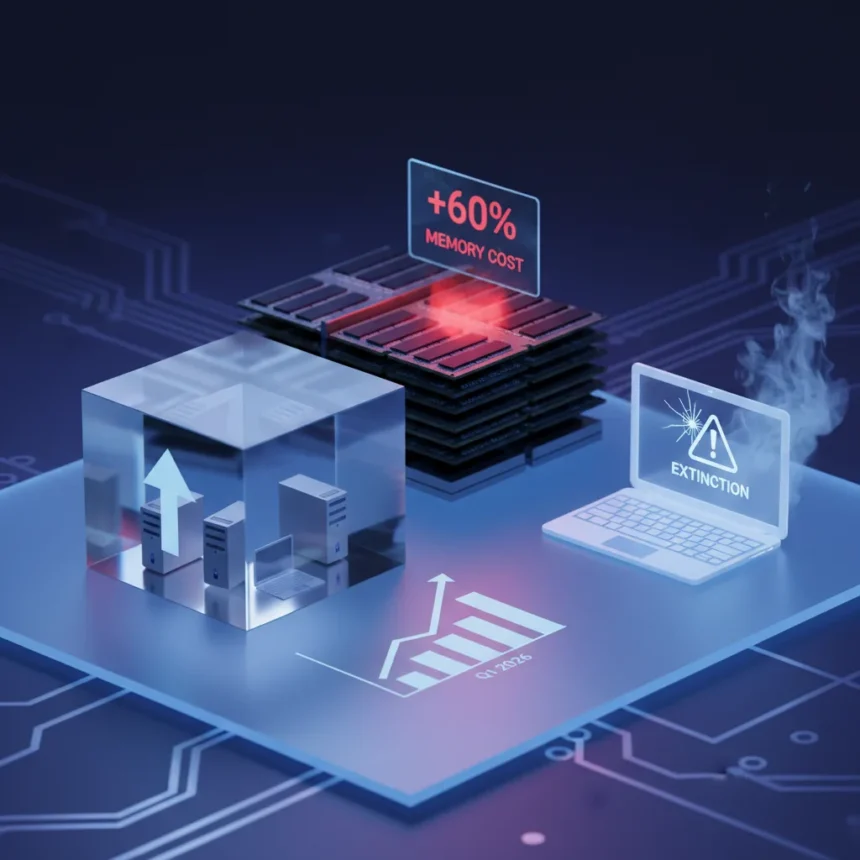
Global PC shipments Q1 2026 grew for the first time in years, according to Counterpoint Research data, but the headline masks a market in structural decline. This is not recovery. It is the final gasp of a Windows 10 refresh cycle before a 13% shipment collapse hits the US market in 2026, driven by memory and storage shortages that have already inflated component costs by 40–70% since 2025.
Key Takeaways
- Global PC shipments grew in Q1 2026, ending a prolonged decline driven by Windows 10 commercial upgrades and inventory buildup.
- Memory and storage costs are projected to rise 60% in Q1 2026, with shortages expected to worsen through 2026.
- Omdia forecasts a 13% year-on-year decline in US PC shipments for 2026 as component availability tightens.
- Entry-level PC makers face the steepest pressure, with smaller vendors at risk of market exit due to margin compression.
- AI data center demand is diverting memory manufacturing away from consumer PCs, creating a structural supply crisis.
Why Q1 2026 Growth Is Not a Victory
The Q1 2026 global PC shipments growth tells a story of temporary demand, not renewed market health. The surge stems from three factors: Windows 10 commercial refresh cycles pushing organizations to upgrade before support ends, holiday demand carryover from Q4 2025, and retailers front-loading inventory ahead of anticipated memory and storage shortages. None of these drivers are sustainable. Once the Windows 10 migration completes and holiday demand normalizes, the underlying supply crisis takes over.
Omdia’s forecast of a 13% year-on-year decline in US PC shipments for 2026 contradicts any bullish reading of Q1 growth. The US market grew 3% year-on-year in Q4 2025 to 18.2 million units, but that figure reflects the same pre-shortage inventory buildup that inflated Q1 2026 numbers. When those stockpiles deplete and component costs remain elevated, shipments will contract sharply. Asia-Pacific faces similar pressures, with comparable shortages expected to suppress demand across the region.
The Memory Crisis That Will Reshape PC Markets
Memory and storage costs have already surged 40–70% since 2025, and mainstream PC components are projected to rise another 60% in Q1 2026. This is not a temporary spike. The cost increase reflects a structural shift in memory manufacturing priorities. AI data centers—powered by Microsoft, NVIDIA, and other hyperscalers—are hoarding RAM and storage capacity for training and inference workloads, leaving consumer PC makers with constrained supply and higher prices.



Smaller PC vendors are being squeezed out entirely. As thinner margins and lower allocation priority constrain the low-end market, smaller vendors are especially at risk of being squeezed out of the market, according to Omdia analyst Jessop. Entry-level PCs, already competing on razor-thin margins, cannot absorb a 60% component cost increase without pricing themselves out of reach for budget-conscious buyers. The result is a market bifurcation: premium and mid-range machines survive, while the affordable segment withers.
Entry-Level PCs Face Potential Extinction
The long-term threat is even starker. Memory manufacturers are prioritizing sales to AI businesses for higher profits, potentially eliminating entry-level PCs by 2028. This is not hyperbole. If memory suppliers continue diverting capacity to hyperscalers and abandon the low-margin consumer segment, the entry-level PC category could cease to exist as a viable market. Students, small businesses, and emerging markets that depend on affordable machines will have nowhere to turn.



This shift represents a fundamental reordering of the PC industry. For decades, entry-level machines subsidized innovation and volume for PC makers. If that segment disappears, the entire market structure changes. Vendors who built their business on volume and affordability will exit. The PC market will shrink to a premium-focused ecosystem serving professionals and enthusiasts, leaving billions of potential users without access to affordable computing.
What Q1 2026 Global PC Shipments Really Tell Us
Global PC shipments Q1 2026 growth should be read as a warning, not a victory lap. The numbers reflect temporary demand factors—Windows 10 migrations, holiday carryover, and defensive inventory stocking—not a return to healthy market conditions. Underneath, the real story is one of component scarcity, cost inflation, and AI-driven supply diversion that will suppress shipments for years.
The PC market is not recovering. It is being reshaped by forces beyond traditional demand cycles. Until memory manufacturing rebalances away from AI data centers, or until alternative supply chains emerge, PC makers and consumers should expect continued pressure on availability and pricing. Q1 2026 growth is the last echo of the Windows 10 era before the market enters a much harder phase.
Will US PC shipments decline in 2026?
Yes. Omdia forecasts a 13% year-on-year decline in US PC shipments for 2026, driven by memory and storage shortages. The Q1 2026 growth reflects temporary demand factors that will not sustain through the year. Once inventory stockpiles deplete and component costs remain elevated, shipments will contract sharply.


Why are memory and storage costs rising so much?
AI data center demand is diverting memory manufacturing capacity away from consumer PCs. Memory manufacturers are prioritizing sales to hyperscalers for higher profit margins, leaving PC makers with constrained supply and inflated costs. This structural shift means component costs will remain elevated throughout 2026 and beyond.
Are entry-level PCs disappearing?
Entry-level PC makers face extreme pressure from margin compression and low supplier allocation priority. If memory manufacturers continue prioritizing AI businesses, entry-level PCs could be eliminated by 2028. Smaller vendors are already at risk of market exit due to unsustainable cost pressures.
Global PC shipments Q1 2026 growth is a false dawn. The market faces a structural crisis driven by AI-driven supply diversion, component scarcity, and cost inflation. Celebrate the Q1 numbers if you must, but prepare for a much harder 2026 ahead.
Edited by the All Things Geek team.
Source: Windows Central