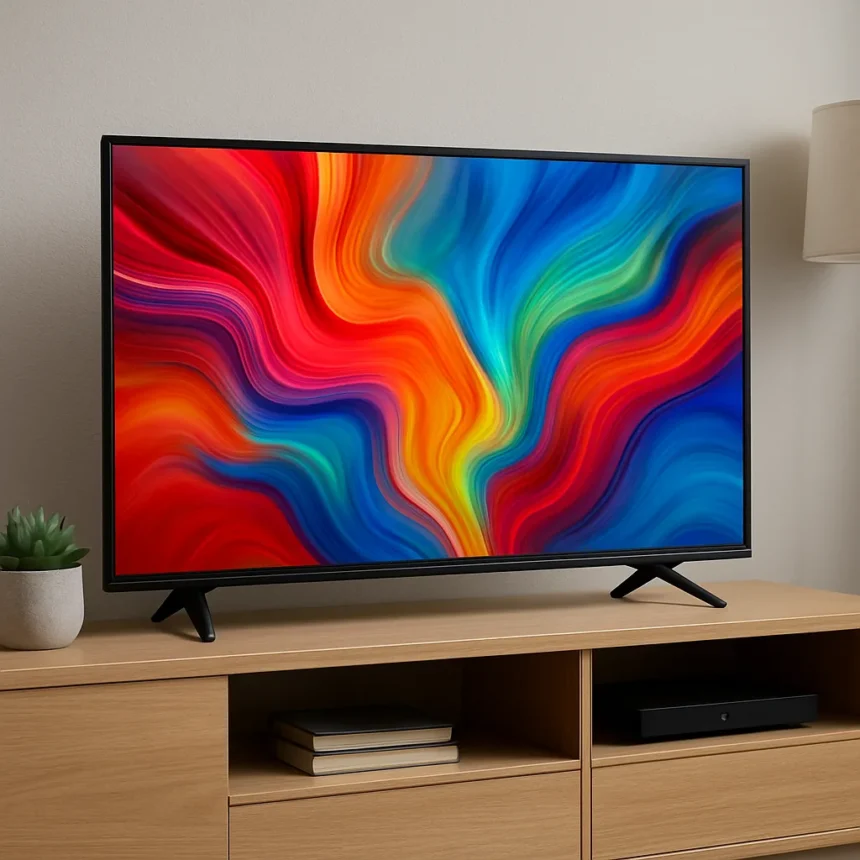
The Amazon Fire TV Omni QLED is a budget-oriented smart television made by Amazon, designed to bring QLED panel technology and deep Alexa integration to buyers who don’t want to spend flagship money on a living room screen. The question isn’t whether Amazon can build a cheap TV — it’s whether this one is cheap in the right ways or the wrong ones.
TL;DR: The Amazon Fire TV Omni QLED offers genuine QLED picture quality and one of the most capable smart TV interfaces available, but picture processing limitations and variable build quality mean it works best for casual viewers rather than home cinema enthusiasts.
What Makes the Amazon Fire TV Omni QLED Worth Considering
The Amazon Fire TV Omni QLED’s strongest selling point is the combination of a QLED panel with Amazon’s Fire TV operating system — a pairing that gives you snappy app performance and a genuinely well-organised streaming interface at a price point where most rivals are still pushing LCD panels with sluggish software.
Amazon’s Alexa integration goes deeper here than on most smart TVs. You can control smart home devices, pull up content by voice, and manage playback without picking up the remote. For households already embedded in Amazon’s ecosystem — Echo speakers, Ring doorbells, the whole stack — this TV slots in with a naturalness that Google TV and Roku-based sets can’t easily match.


The QLED panel itself delivers noticeably better colour saturation than standard LED-LCD alternatives at this price tier. Bright, colourful content — streaming series, sports, animated films — looks genuinely vibrant. That’s not a given at this end of the market.
Where the Amazon Fire TV Omni QLED Falls Short
The picture processing is where this TV shows its budget origins most clearly. Dark scenes lack the depth you’d get from an OLED panel, and the local dimming implementation — while present — doesn’t always handle high-contrast scenes with the precision that more expensive QLED sets manage. If you watch a lot of dark thrillers or HDR-heavy film content in a dimmed room, you’ll notice the limitations.



Motion handling is adequate for casual viewing but not competitive with mid-range sets from Samsung or TCL at similar price points. Fast sports content and action sequences can show softness that more capable processors handle cleanly. Amazon is clearly prioritising the software experience over squeezing the last drop of picture performance from the panel.
Build quality is functional rather than impressive. The stand design is basic, the bezels are visible, and the overall aesthetic reads as utilitarian. None of that matters if the TV is mounted on a wall, but it’s worth knowing this isn’t a premium-looking piece of hardware.
How Does the Fire TV Omni QLED Compare to Budget Rivals?
Against Roku-powered budget TVs, the Fire TV Omni QLED wins on smart features and Alexa depth, though Roku’s interface remains cleaner and less ad-heavy for viewers who find Amazon’s content promotion intrusive. Against TCL’s budget QLED range, the picture performance gap narrows considerably — TCL’s processing at similar price points is competitive, and TCL doesn’t push its own content ecosystem as aggressively.
The honest comparison is that Amazon is selling you a software platform with a TV attached, not a TV with software on top. Whether that’s a good deal depends entirely on how much you value Fire TV’s content discovery and Alexa integration versus raw display performance. For Samsung or LG loyalists used to flagship picture quality, this will feel like a step down regardless of price.


Should You Buy the Amazon Fire TV Omni QLED?
The Amazon Fire TV Omni QLED makes the most sense for buyers who are already invested in Amazon’s ecosystem, want a capable streaming interface without paying for a flagship, and watch mostly bright daytime content or streaming series rather than cinema-grade HDR material. It’s a strong second-room TV or a solid primary screen for casual viewers.
It’s a harder sell for anyone who cares deeply about picture accuracy, motion performance, or dark-room viewing. At this price tier, you’re making a trade-off — and Amazon’s trade-off prioritises software over hardware. That’s a legitimate choice, but buyers should go in with clear eyes about what they’re getting.
Is the Amazon Fire TV Omni QLED good for gaming?
The Amazon Fire TV Omni QLED supports 4K resolution and HDMI inputs suitable for console gaming, but its input lag and motion handling are not optimised for competitive gaming. Casual gaming on PS5 or Xbox is workable, but dedicated gaming monitors or higher-end TVs with low-latency modes will serve serious gamers better.
How does the Fire TV Omni QLED handle dark room viewing?
Dark room performance is one of this TV’s weaker areas. The local dimming system reduces black levels compared to a standard LED panel, but it can’t match the deep blacks of OLED displays or the more refined dimming found on premium QLED sets. Viewers who regularly watch in a dark room may find the contrast performance underwhelming.
Does the Amazon Fire TV Omni QLED work without an Amazon account?
The Fire TV operating system is tightly integrated with Amazon’s services, and full functionality requires an Amazon account. Basic setup and some streaming apps can be accessed without one, but core features including Alexa voice control, Prime Video, and personalised content recommendations require signing in to an Amazon account.
The Amazon Fire TV Omni QLED is a competent, ecosystem-first television that delivers real value for the right buyer — but it’s not trying to be the best TV at its price. It’s trying to be the best Amazon device that happens to be a TV. If that distinction excites you, it’s worth serious consideration. If you want picture quality to come first, look elsewhere.
Where to Buy
£999.99 at Amazon | £999.99 at Amazon | 152 Amazon customer reviews
Edited by the All Things Geek team.
Source: What Hi-Fi?