





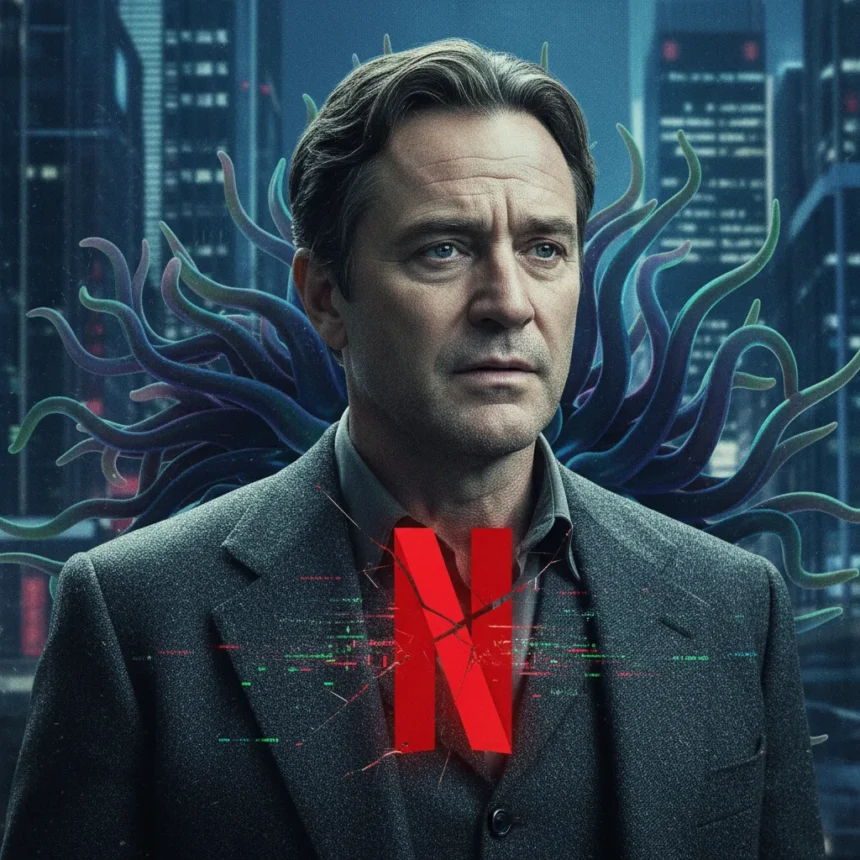
Anemone Daniel Day-Lewis is a 2025 psychological drama directed by Ronan Day-Lewis in his feature directorial debut, marking Daniel Day-Lewis’ return to acting after his eight-year retirement following Phantom Thread in 2017. The film premiered at the New York Film Festival and received a limited theatrical release in October 2025 before arriving on Netflix on March 28, 2026. Despite the prestige of its star and the novelty of his comeback, Anemone underperformed at the box office and with critics—and the streaming release will not change that fundamental problem.
Key Takeaways
- Daniel Day-Lewis stars as Ray Stoker, a troubled recluse reuniting with his estranged brother (Sean Bean) at an isolated English cabin
- Directed by his son Ronan Day-Lewis and co-written by both, marking the younger director’s feature debut
- Premiered October 2025 in limited US release; expanded nationwide October 10; UK release November 7; Netflix debut March 28, 2026
- Box office gross of $1.48 million worldwide against a $14 million budget, making it a commercial failure
- Critics praised Day-Lewis’ magnetism but faulted the film’s narrative cohesion and dramatic structure
Why Anemone Daniel Day-Lewis Disappointed at the Box Office
The film’s theatrical run was a disaster by any measure. A $14 million production budget against $1.48 million in worldwide gross represents a catastrophic mismatch between ambition and execution. The limited October release should have been a platform for strong word-of-mouth, especially given Day-Lewis’ star power and the story of an acclaimed actor’s son directing him in a comeback vehicle. Instead, the film failed to generate momentum even in its expansion to nationwide theaters. This was not a case of bad timing or poor marketing—it was a case of audiences and critics sensing something was fundamentally off about the film itself.
The box office failure is particularly telling because it came after significant anticipation. When Day-Lewis announced his return to acting in September 2024, the industry and media treated it as major news. A legendary actor breaking retirement should have been a box office draw. That Anemone could not capitalize on this goodwill suggests the film itself was the limiting factor, not audience indifference to Day-Lewis.
What Critics Actually Got Right About Anemone Daniel Day-Lewis
The critical consensus was not wrong—it was accurate. Rotten Tomatoes critics noted that Anemone succeeds as a showcase for Day-Lewis’ magnetism and Ronan Day-Lewis’ stylistic direction, but fails as a cohesive drama. This is not dismissive; it is precise. The film has individual strengths that do not cohere into a satisfying whole. Day-Lewis delivers a committed performance as Ray Stoker, a recluse confronted by his estranged brother (Sean Bean) at an isolated English cabin, exploring the complex ties between brothers, fathers, and sons. The supporting cast includes Samantha Morton and Samuel Bottomley, adding weight to the ensemble. Yet these elements—strong performances, directorial ambition, thematic depth—do not guarantee a functional narrative.



The film ranks among Day-Lewis’ lowest-rated works on Rotten Tomatoes, sitting behind only The Ballad of Jack and Rose and Nine in his Tomatometer score. This is not a case of unfair criticism or misunderstood art. The film simply does not work as drama, regardless of its individual components. Netflix’s streaming release will expose this reality to a far larger audience than theatrical ever could, which may actually accelerate the film’s critical reassessment downward rather than upward.
Does Netflix’s Release Change Anything for Anemone Daniel Day-Lewis?
Streaming platforms often rescue films that underperformed theatrically, giving them second lives among audiences who would never have paid for a cinema ticket. Netflix’s March 2026 debut for Anemone could theoretically find the film a new audience. However, the streaming advantage applies primarily to genre films and accessible content—not to challenging, narratively fragmented dramas that already failed to engage critics and audiences once. A viewer scrolling Netflix’s catalog will see the title, recognize Day-Lewis’ name, and click. They will watch a film that, by critical consensus, does not deliver on its promise. That is not a second chance; that is a broader disappointment.



The film’s 125-minute runtime and R rating position it as prestige drama, not comfort viewing. Streaming does not change the underlying structural issues that made Anemone underperform. If anything, the casual viewing environment of home streaming—where distractions abound and commitment to difficult narratives is lower—may make the film’s narrative fragmentation even more apparent to viewers than it was in theaters.
Is Anemone Worth Watching for Day-Lewis Fans?
If you are a devoted Daniel Day-Lewis fan, Anemone is mandatory viewing simply because it is his only new performance in nearly a decade. His magnetism and commitment to the role of Ray Stoker are evident, and watching him work opposite Sean Bean in an intimate family drama has inherent value for completists. However, do not expect a comeback performance that rivals his best work. This is Day-Lewis returning to acting, not Day-Lewis at his peak. The film’s inability to harness his talent into a cohesive narrative is the real disappointment.
How Does Anemone Compare to Phantom Thread?
Phantom Thread, Day-Lewis’ 2017 retirement film, was a tightly controlled psychological study with Paul Thomas Anderson’s directorial mastery at its center. It was difficult, sometimes cryptic, but always intentional. Anemone, directed by Day-Lewis’ son in his feature debut, lacks that directorial confidence. Ronan Day-Lewis shows stylistic flair and ambition, but the film does not achieve the same level of thematic clarity or narrative precision. Phantom Thread was a fitting capstone to a career. Anemone reads as a misstep in his return.
Will Netflix’s Anemone Find a Bigger Audience Than Theaters?
Absolutely. Netflix’s global reach and the sheer number of subscribers will expose Anemone to millions more viewers than its limited theatrical run ever could. Whether that audience will be satisfied is another question. The film’s critical shortcomings will become even more apparent when watched by casual viewers who are not primed by prestige marketing or critical discourse. Netflix’s algorithm may push the film to Day-Lewis fans and drama enthusiasts, but word-of-mouth will likely be mixed at best, limiting its staying power on the platform’s trending lists.



Should You Watch Anemone on Netflix?
If you are curious about Daniel Day-Lewis’ return to acting or interested in seeing a director’s son work with his father on a feature debut, yes—the film is worth 125 minutes of your time. Go in expecting individual moments of excellence rather than a fully realized drama. The performances are solid, the cinematography is competent, and the themes are worth considering. Just do not expect the film to justify the eight-year wait or the $14 million investment. Anemone is a showcase, not a triumph, and Netflix’s release does not change that fundamental reality.
The streaming platform’s addition of Anemone on March 28, 2026, gives the film a final chance at an audience, but the critical consensus was sound from the start: the film succeeds in parts but fails as a whole. Daniel Day-Lewis’ magnetism alone cannot carry a narrative that does not hold together, no matter what screen you watch it on.
Edited by the All Things Geek team.
Source: Tom's Guide




