
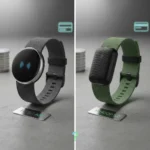






The Pixel Watch 5 may be heading toward a significant hardware shift, if a bizarre ocean-sourced leak is genuine. According to recent reporting, an alleged Pixel Watch 5 device surfaced from the ocean with specifications visible on it, exposing details about Google’s potential custom wearable Tensor chip strategy. This marks one of the strangest leaks in Google’s smartwatch history—not a render or code snippet, but a physical device pulled from the sea.
Key Takeaways
- The Pixel Watch 5 allegedly leaked with details about a custom Google Tensor wearable chip codenamed NPT
- The NPT chip reportedly features one ARM Cortex-A78 core and two ARM Cortex-A55 cores
- Google envisioned the custom chip design as early as 2023, suggesting years of development
- The chip would likely use a 3nm manufacturing node, matching latest smartphone processors
- Fitbit patents hint at potential blood pressure monitoring and arterial stiffness data features, though patents don’t guarantee final products
Google’s Custom Wearable Tensor Strategy
The Pixel Watch 5 appears to be pushing Google toward silicon independence in the wearable space. Rather than relying on Qualcomm’s Snapdragon platform, Google has reportedly been developing a custom Tensor chip specifically for this device. The leaked specifications describe a processor codenamed NPT, with a configuration designed around efficiency rather than raw power—one high-performance ARM Cortex-A78 core paired with two energy-efficient ARM Cortex-A55 cores. This architecture mirrors the approach Google took with its smartphone Tensor chips, prioritizing specialized workloads over peak performance.
The timing of this development is telling. Google reportedly conceived the NPT chip design in early 2023, meaning the company has had roughly three years to refine the design before any potential 2026 launch window. A 3nm manufacturing process would position the Pixel Watch 5’s silicon at the same technological node as flagship smartphone processors, suggesting Google is serious about wearable performance parity.
How Pixel Watch 5 Stacks Against Galaxy Watch Rivals
Google’s custom chip approach directly challenges Samsung’s strategy with the Galaxy Watch 7, which uses the Exynos W1000 SoC. Samsung’s custom wearable chip proved that manufacturers can move away from Qualcomm’s dominance, and Google appears to be following suit. The philosophical difference is subtle but important: both companies are betting that wearable-specific silicon matters more than adopting off-the-shelf mobile processors.


Qualcomm, meanwhile, has been positioning itself as the alternative path forward. The company partnered with Google to bring RISC-V-compatible CPUs to Wear OS, offering a third architectural direction beyond ARM-based designs. If Google commits to the NPT chip for the Pixel Watch 5, it signals confidence that custom silicon delivers better battery life and performance tuning than generic wearable platforms.
Fitbit Integration and Health Features
The Pixel Watch 5 may inherit advanced health monitoring capabilities from Fitbit, Google’s wearables subsidiary. Patents associated with Fitbit hint at blood pressure monitoring and arterial stiffness data collection, features that would elevate the Pixel Watch 5 beyond typical smartwatch health sensors. However, patents don’t guarantee final products—Google holds thousands of wearable patents that never reach consumers. The real question is whether Google prioritizes these sensors in the actual device or treats them as future possibilities.



Health monitoring features would give the Pixel Watch 5 a competitive edge if executed well. Current smartwatches offer heart rate, SpO2, and basic sleep tracking, but blood pressure monitoring remains a differentiator. If Google integrates these Fitbit innovations with a custom Tensor chip optimized for real-time processing, the Pixel Watch 5 could set a new standard for wearable health capabilities.
When Will the Pixel Watch 5 Actually Launch?
The ocean leak and the NPT chip details suggest the Pixel Watch 5 remains in development, with no confirmed launch date publicly announced by Google. The fact that the chip was envisioned in early 2023 indicates a long development cycle, consistent with how Google approaches major hardware revisions. Without an official announcement, any 2026 timeline remains speculative.
Should I wait for the Pixel Watch 5 or buy now?
If you need a smartwatch immediately, current options like the Pixel Watch 4 or Galaxy Watch 7 deliver solid performance today. If you can wait and prefer Google’s ecosystem, the Pixel Watch 5’s rumored custom chip and Fitbit health features could be worth the patience. Google’s hardware cycles typically span two to three years between major releases, so a 2026 arrival would align with that pattern.
What makes the Pixel Watch 5’s custom chip different from Qualcomm’s approach?
Custom chips like the rumored NPT allow Google to optimize silicon specifically for Wear OS, prioritizing battery efficiency and AI processing over raw speed. Qualcomm’s RISC-V partnership offers flexibility but remains a more general-purpose solution. Google’s approach mirrors what Apple does with the S-series chips in the Apple Watch—designing silicon around the software’s actual needs rather than adapting software to generic hardware.



The Pixel Watch 5 leak from the ocean is bizarre, but the underlying story is serious. Google is signaling that it intends to compete in wearables not just through software and services, but through custom silicon engineered for the task. If the NPT chip delivers on its architectural promise, the Pixel Watch 5 could force Qualcomm and Samsung to rethink their own strategies. For now, the smartwatch market waits for Google to make this rumor official.
Edited by the All Things Geek team.
Source: Android Central


