





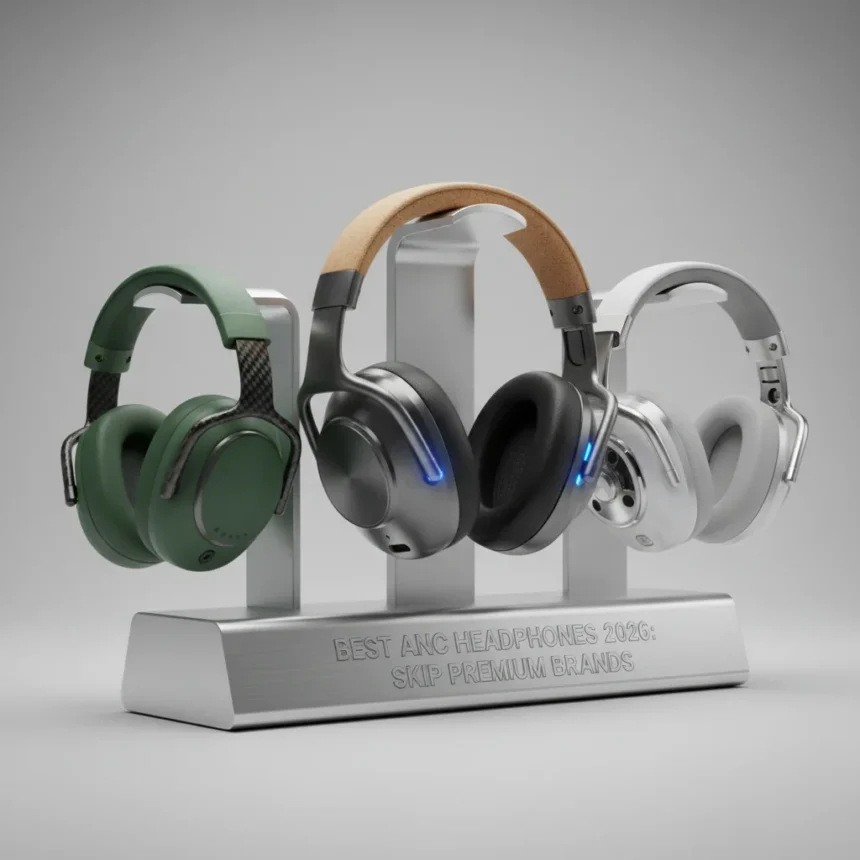
The best noise-cancelling headphones aren’t always the most expensive ones. After testing over 20 models across standardized noise environments—hair dryer, microwave, traffic, and café noise—a clearer picture emerges: Apple AirPods Max and Bose’s pricier models don’t justify their cost when superior alternatives exist at lower prices.
Key Takeaways
- Sony WH-1000XM6 delivers best-in-class ANC (score 28/30) and natural sound at mid-premium pricing.
- 1More Sonoflow HQ51 outperforms headphones costing twice as much, scoring 22/30 ANC at under $100.
- Budget options like Amazon Basics ($37) achieve competitive ANC against $200+ models through smart engineering.
- Apple AirPods Max (ANC 26/30, $429) suffer from short 20-hour battery and 386g weight—poor value proposition.
- Bose QuietComfort Ultra tops ANC charts at 29.5/30 but costs $100+ more than equally capable alternatives.
Why the best noise-cancelling headphones have nothing to do with brand prestige
The testing methodology here matters. Each model faced identical acoustic scenarios: 3.5 to 5 points per noise type, totaling a maximum 30-point ANC score. Sony WH-1000XM6 scored 28/30, matching or beating Bose’s QuietComfort Ultra (29.5/30) in real-world performance while costing significantly less. The gap between top performers and mid-range options has collapsed. Budget models like 1More Sonoflow HQ51 now achieve 22/30—nearly matching headphones priced at $200 or more.
What separates the best noise-cancelling headphones from premium hype is this: ANC performance has plateaued at the high end. When Bose QuietComfort Ultra and Sony WH-1000XM6 differ by just 1.5 points across 30, the deciding factors become comfort, battery life, and price. Apple AirPods Max weighs 386 grams and lasts only 20 hours—disadvantages that no amount of brand loyalty erases.
The three best noise-cancelling headphones worth your money
Sony WH-1000XM6 remains the best overall choice. It scores 28/30 in ANC testing and delivers natural sound isolation without the hollow, over-processed feel of some competitors. At current market pricing (typically $200 or less during sales), it represents the sweet spot between performance and value. The WH-1000XM6 handles both commute noise and office distractions without fatigue.



1More Sonoflow HQ51 is the revelation. At $69 (frequently discounted from $89), it scores 22/30 ANC and massively outperforms headphones costing twice as much. The 65-hour battery life is genuinely useful for frequent travelers, and at 246 grams, it feels lighter than bulkier competitors. This is where budget audio makers have cracked the code: solid engineering at prices that make premium alternatives look absurd.
For those wanting the absolute best ANC regardless of price, Bose QuietComfort Ultra (first or second generation) scores 29.5/30—the highest in testing. However, the $100+ premium over Sony WH-1000XM6 buys only marginal ANC improvement. Unless you specifically need that 1.5-point ANC advantage, the Sony delivers 95% of the performance at 70% of the cost.



Why Apple and Bose don’t make the cut
Apple AirPods Max scored 26/30 in ANC testing, placing them below both Sony and Bose flagships. The real problem: $429 price tag paired with 20-hour battery life and 386-gram weight. That’s heavier than most over-ear headphones and lighter on endurance than competitors costing half the price. For frequent flyers and commuters, AirPods Max becomes a liability—you’ll need to charge them mid-trip.
Bose QuietComfort Ultra sits at 29.5/30 ANC, but the price premium ($100+ over Sony) is difficult to justify when real-world performance differences are minimal. Bose’s QuietComfort Headphones (non-Ultra), meanwhile, score 27/30 and cost less—making it a smarter mid-range pick if you prefer Bose’s sound signature.
Budget breakthroughs that challenge everything
Amazon Basics noise-cancelling headphones cost $37 and score competitively in ANC testing despite their price. They won’t match Sony’s refinement, but they beat headphones costing five times more in raw noise blocking. For students and budget-conscious commuters, they’re a legitimate option.
OneOdio Focus A1 Pro ($35) and Soundcore Q30 (under $60) represent the emerging wave of sub-$100 ANC headphones that have forced premium makers to justify their pricing. These aren’t toys—they’re engineering solutions that prioritize ANC and battery life over unnecessary features.



Best noise-cancelling headphones: How they compare to each other
Sony WH-1000XM6 edges Bose QuietComfort Ultra on natural sound and ANC responsiveness, scoring 28/30 versus 29.5/30. The 1.5-point difference is audible only in controlled testing; real-world usage feels nearly identical. Bose’s advantage lies in consistent tuning across generations and stronger integration with Apple devices—but neither justifies the price gap.
1More Sonoflow HQ51 versus Sony WH-1000XM6 is the real value comparison. The 1More loses 6 points in ANC (22 vs. 28) but costs $130 less and includes triple the battery life (65 hours vs. Sony’s typical 30 hours). For casual listeners and budget shoppers, that trade-off wins every time.
What about Bose QuietComfort Headphones (non-Ultra)?
Bose QuietComfort Headphones score 27/30 in ANC testing, placing them between Sony and 1More. They cost less than the Ultra version while delivering nearly identical noise blocking. If you prefer Bose’s sound signature and don’t need the absolute highest ANC score, this is the smarter Bose option.
Should you buy the best noise-cancelling headphones right now?
Yes, if you commute regularly or work in open offices. ANC technology has matured enough that even budget models (1More, Amazon Basics, OneOdio) deliver meaningful isolation. The question isn’t whether to buy—it’s which tier fits your budget. Sony WH-1000XM6 remains the safest recommendation for anyone wanting flagship performance without flagship pricing.
Are expensive noise-cancelling headphones worth it?
Not always. Bose QuietComfort Ultra’s 29.5/30 ANC score beats Sony WH-1000XM6’s 28/30, but the $100+ price premium buys only a 5% improvement in an already excellent product. For most listeners, Sony’s 28/30 performance is imperceptibly different. Premium pricing is justified only if you prioritize that final 5% or have specific ecosystem needs (like tight Apple integration).
Why does 1More Sonoflow HQ51 cost so little?
1More prioritizes ANC and battery life over premium materials and brand marketing. The 22/30 ANC score is respectable, the 65-hour battery is genuinely useful, and the $69 price reflects efficient manufacturing rather than compromised engineering. It’s the headphone equivalent of buying last year’s flagship specs at this year’s budget price.
The best noise-cancelling headphones in 2026 aren’t about logos or prestige—they’re about honest performance at honest prices. Sony WH-1000XM6 sets the standard for balanced performance and value. 1More Sonoflow HQ51 proves that premium pricing is increasingly indefensible. And Apple AirPods Max? They’re a design statement that costs too much for too little endurance. Skip the hype, trust the test scores, and save your money.
Where to Buy
View the full Amazon Big Spring Sale | Sony WH-1000XM6: | 1More Sonoflow Pro HQ51: | Bowers & Wilkins Px7 S3: | Sony WH-1000XM6
Edited by the All Things Geek team.
Source: TechRadar




