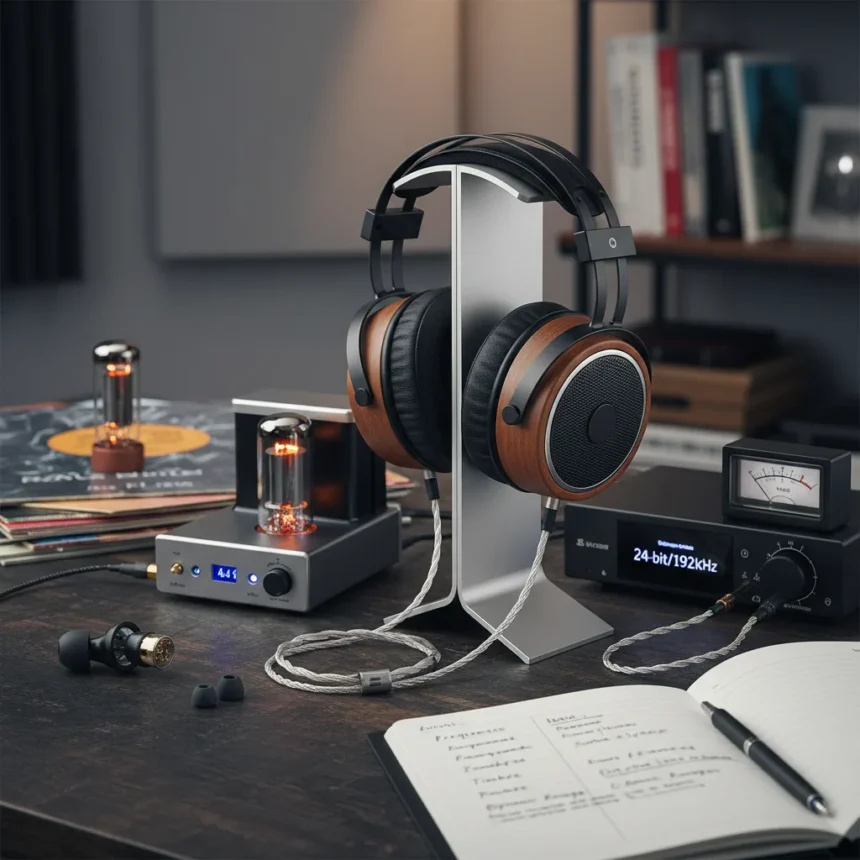
Finding the best-sounding headphones requires moving past marketing claims and understanding what actually drives audio quality. Sound is deeply personal—what sounds pristine to one listener may feel thin or boomy to another—yet certain design principles and technical choices separate genuinely excellent headphones from mediocre ones.
Key Takeaways
- Sound quality depends on driver design, frequency response, and tuning, not just brand reputation.
- Best-sounding headphones balance technical performance with comfort for extended listening sessions.
- Testing methodology matters—real-world listening tests reveal more than marketing specifications alone.
- Budget options can deliver excellent audio quality when engineered thoughtfully.
- Personal preference in sound signature (warm, neutral, bright) determines the best fit for individual listeners.
What Defines Best-Sounding Headphones
Best-sounding headphones combine accurate driver performance, thoughtful frequency response tuning, and engineering that minimizes distortion across the audible spectrum. The quality of sound reproduction depends on how faithfully the drivers convert electrical signals into acoustic waves without coloration or loss of detail. A headphone that sounds excellent must handle both delicate high-frequency detail and deep bass without either dominating the mix or disappearing entirely.
Audio engineers achieve this balance through careful tuning of the driver’s acoustic chamber, the materials used in the ear cup, and the electrical crossover design. Different headphones intentionally emphasize different parts of the frequency spectrum—some lean warm and bass-forward for casual listening, others aim for neutral reproduction that serves mixing and mastering work. Neither approach is inherently superior; the best-sounding headphones for you match your intended use and personal preference.
Testing Methodology Reveals Real Performance
Evaluating best-sounding headphones requires extended listening across diverse music genres and content types. Reviewers who test dozens of models over months develop an ear for consistency, revealing which headphones maintain clarity at low volumes, handle dynamic peaks without distortion, and preserve instrument separation in complex mixes. This real-world approach uncovers weaknesses that spec sheets miss—a headphone might measure well on paper yet sound fatiguing after an hour of listening, or lack the spatial imaging that makes music engaging.


Professional testing involves listening to reference tracks that expose specific audio qualities: acoustic recordings reveal driver accuracy, electronic music exposes bass response and clarity, and orchestral pieces test whether the headphone can handle complex layering without muddying details. A headphone that excels across all these categories, and remains comfortable during extended sessions, deserves consideration as among the best-sounding options available.
Budget Does Not Determine Sound Quality
The relationship between price and audio quality is nonlinear. Some premium headphones sound worse than carefully engineered budget models because they prioritize brand prestige over acoustic performance. Conversely, the cheapest options often compromise on driver quality and tuning to hit a price point. The sweet spot for best-sounding headphones typically exists in the mid-range, where manufacturers can invest in quality drivers and tuning without inflating costs for luxury materials or excessive marketing spend.



Real-world testing consistently uncovers affordable models that deliver surprising audio quality when their design choices are sound. A headphone engineered with a quality driver, proper acoustic damping, and thoughtful frequency response tuning will outperform an expensive model built primarily for aesthetics. This reality means listeners searching for best-sounding headphones should focus on measured performance and user feedback rather than price alone.
Wireless vs. Wired: Sound Quality Trade-offs
Wireless headphones introduce additional complexity into the audio chain—the codec (AAC, aptX, LDAC) used to compress audio before transmission, the Bluetooth chipset’s stability, and the battery’s power delivery all influence final sound quality. Wired headphones eliminate these variables, delivering the full signal directly from the source to the drivers. For listeners prioritizing absolute best-sounding headphones performance, wired connections remain technically superior because they avoid compression losses inherent to wireless protocols.
However, modern wireless codecs like LDAC can transmit high-resolution audio with minimal perceptible loss for most listeners, and the convenience of wireless operation often outweighs the marginal audio quality advantage of wired connections. The best-sounding headphones choice between wireless and wired depends on whether you prioritize ultimate fidelity or practical usability in daily life.
Comfort and Fatigue Factor Into Real-World Sound Quality
A technically excellent headphone that causes ear fatigue after 30 minutes fails to deliver the best-sounding headphones experience because listeners stop using it. Comfort encompasses ear cup fit, headband pressure, weight distribution, and even the psychological effect of appearance—if you feel self-conscious wearing a headphone, you’ll use it less. Extended listening reveals whether a headphone’s tuning remains engaging or becomes tiring; some models sound brilliant for the first hour then fatigue the ears with excessive presence peaks or harsh treble.


The best-sounding headphones for serious listening must be headphones you’ll actually wear for hours without discomfort. This is why professional reviewers test models over weeks rather than days—genuine sound quality assessment requires understanding how a headphone behaves during the long sessions where audio quality truly matters.
Frequency Response Tuning Shapes Perceived Sound
Different frequency response profiles create distinct sonic signatures. A headphone with a lifted bass region and recessed midrange sounds dramatically different from a neutral, flat response, even if both are technically well-engineered. Best-sounding headphones aren’t necessarily the flattest—they’re the ones whose tuning matches the music you listen to and your listening environment. Bass-forward headphones excel with hip-hop and electronic music in noisy environments; neutral headphones serve mixing work and classical music appreciation; bright headphones highlight detail in acoustic recordings.
Understanding your own preference for sound signature helps identify which best-sounding headphones will satisfy your ears. A headphone that sounds perfect to a mixing engineer might sound thin to someone who loves bass-heavy pop music. Neither listener is wrong—they simply have different needs from their audio equipment.
FAQ: Best-Sounding Headphones Questions
Can budget headphones sound as good as expensive models?
Yes, when they’re engineered thoughtfully. A well-designed driver, proper acoustic tuning, and quality materials at any price point can deliver excellent sound. The key is focusing on acoustic engineering rather than brand prestige or luxury finishes.
What makes a headphone sound fatiguing?
Listening fatigue typically results from excessive presence peaks in the upper midrange (around 3-5 kHz), harsh treble that lacks smoothness, or unnatural frequency response that emphasizes certain instruments unnaturally. Extended listening tests reveal fatigue that short auditions miss.
Should I prioritize best-sounding headphones for music production or casual listening?
The answer depends on your use case. Production work requires neutral, accurate headphones that reveal problems in your mix. Casual listening benefits from headphones tuned to sound engaging and fun with the music you enjoy most. Choose best-sounding headphones that match your primary listening activity.
Finding the best-sounding headphones ultimately means listening to multiple models in real-world conditions, understanding your personal sonic preferences, and recognizing that the most expensive option rarely delivers the best audio quality. The headphones that sound best are the ones you’ll use consistently, that remain engaging after hours of listening, and whose frequency response aligns with the music you care about most. Sound quality is measurable but also personal—the best-sounding headphones for you are the ones your ears prefer, not the ones with the highest price tag or most prestigious brand name.
Edited by the All Things Geek team.
Source: TechRadar