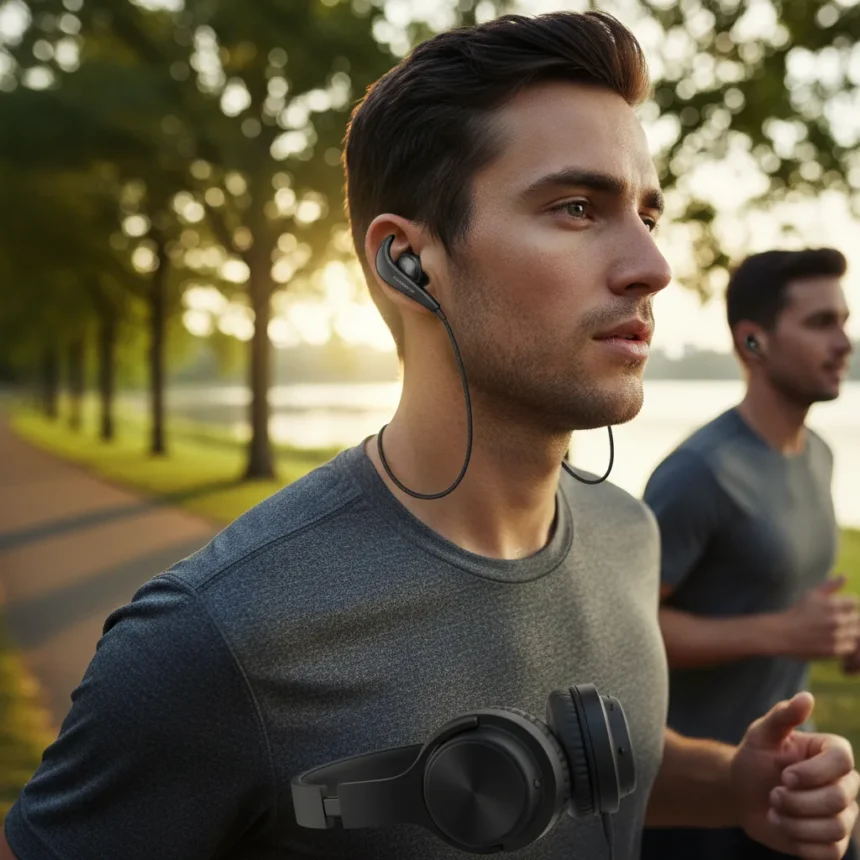
The best sports earbuds for running are wireless in-ear designs engineered for stability and sweat resistance, not the bulky over-ear headphones that dominate casual listening. A proper running earbud stays locked in place during impact, resists moisture at IPX4 rating or higher, and delivers the energetic sound profile that drives workouts forward.
Key Takeaways
- Wireless in-ear earbuds outperform over-ear headphones for running stability and comfort.
- IPX4+ sweat resistance is essential; hooks or secure fit design prevents slipping during impact.
- Soundcore AeroFit Pro ($180) offers balanced sound and long battery life for all-day training.
- JBL Endurance Peak 3 delivers unshakeable fit and durability under $100.
- Shokz open-ear bone-conduction models provide situational awareness without blocking the ear canal.
Why in-ear wireless beats over-ear for runners
Over-ear headphones bounce and slip during running. They trap heat, create pressure points on the head, and add bulk that distracts from form and pace. In-ear wireless earbuds eliminate these problems entirely. They nestle into the ear canal, stay put through impact, and weigh almost nothing. The trade-off is comfort during extended wear—but for runs under two hours, in-ear designs win decisively.
Wired neckband options like Beats Flex exist as a secondary choice, but they sacrifice the wireless freedom that runners demand. A cable flapping against your chest or tangling in your arms kills focus. Wireless in-ear is the category standard.
Best sports earbuds for running: top contenders
Beats Powerbeats Pro lead the secure-fit category thanks to flexible ear hooks that lock onto the ear’s upper ridge. The hooks distribute pressure evenly and prevent slipping during fast runs or hard pivots. They’re sweat-resistant and deliver the punchy bass that many runners prefer for motivation.



Soundcore AeroFit Pro ($180) represents the all-around choice. They pack balanced sound (not just bass-heavy), a packable design for travel, and battery life that extends through multiple training sessions. For runners who care equally about audio quality and durability, this model closes the gap between budget and premium.
JBL Endurance Peak 3 proves that security and value coexist. Under $100, these earbuds deliver an unshakeable fit, long battery endurance, and robust build quality designed for outdoor punishment. They lack the premium audio refinement of pricier models but excel at their core job: staying in your ears while you run.



Shokz OpenRun Pro and OpenSwim Pro take a different approach entirely. These bone-conduction earbuds sit on the cheekbone rather than inserting into the ear canal, so they won’t budge on rough terrain and preserve situational awareness—critical for outdoor runners who need to hear traffic or trail hazards. The trade-off is that bone conduction produces thinner, less immersive sound than traditional in-ear models.
Sweat resistance and durability matter more than you think
An IPX4 rating means the earbuds survive splashes and light sweat. IPX5 and IPX6 ratings handle heavier moisture and even brief submersion. For runners, IPX4 is the minimum; anything less risks moisture damage after a few sweaty sessions. Check the spec sheet before buying.
Durability extends beyond water resistance. Look for reinforced cables (if any), solid charging case construction, and materials that won’t degrade after months of salt-sweat exposure. Jabra Elite 8 Active secure fit without hooks and deliver excellent gym sound, proving that hook-free designs can still anchor firmly if the fit is engineered correctly.
Budget options without compromising security
JLab GO Air Sport and JBL Endurance Peak 3 both sit under $100 and refuse to compromise on the fundamentals. Budget earbuds often sacrifice sound quality or comfort, but these models prioritize what runners actually need: fit, sweat resistance, and battery life. Sound quality is decent rather than premium, but adequate for motivation during runs.



Open-ear alternatives for awareness
Runners who train on roads or trails benefit from open-ear designs. Shokz models use bone-conduction technology to deliver sound through vibration on the cheekbone, leaving the ear canal completely open. This approach sacrifices some audio immersion but preserves your ability to hear approaching cyclists, cars, or trail hazards. For solo outdoor runners, this trade-off is worth making.
What makes a running earbud actually stay put?
Secure fit depends on three factors: earbud shape, ear hook design (if present), and the size of the ear tip. Beats Powerbeats Pro use flexible hooks that conform to individual ear anatomy. Jabra Elite 8 Active rely on a contoured shape and multiple tip sizes to achieve a snug seal without hooks. Shokz bone-conduction models sit on the cheekbone and don’t insert into the ear at all. No single approach is universal—what locks into one runner’s ears might slip out of another’s. Test before committing if possible, or buy from retailers with easy return policies.
Sound profile for running
Runners don’t want neutral, reference-grade audio. They want peppy, energetic sound that energizes effort. Bass-heavy profiles suit high-intensity workouts. Balanced profiles work for steady-state distance runs. Avoid earbuds tuned for classical music or podcasts—they’ll feel flat during exercise. Soundcore AeroFit Pro strike a middle ground with balanced sound that doesn’t feel thin, while Beats models lean into bass for motivation.
Bluetooth multipoint: train with dual devices
Some premium models support Bluetooth multipoint, allowing simultaneous connection to a phone and smartwatch. This matters if you run with both devices and want to switch audio sources without manual reconnection. Budget models typically skip this feature, but it’s increasingly common in mid-range options.
Should I choose wired neckbands over wireless earbuds?
Wired neckbands avoid the charging hassle and battery anxiety of wireless earbuds. However, the cable creates drag, tangles, and distraction during runs. Wireless earbuds charge quickly and hold battery for multiple sessions, making the convenience trade-off worthwhile for most runners. Neckbands serve as a backup option if you forget to charge, but shouldn’t be your primary choice.
How do I know if an earbud will stay in my ears?
Fit is individual. Ear canal shape, earbud weight, and hook design all influence security. Buy from retailers with return policies, test in-store if possible, or read reviews from runners with similar ear anatomy. Multiple ear tip sizes help—larger tips grip better for some ears, smaller tips for others. No review can predict fit perfectly for your unique ears.
What’s the difference between IPX4 and IPX5 sweat resistance?
IPX4 earbuds survive splashes and moderate sweat. IPX5 earbuds handle water jets and heavy sweating. For running, IPX4 is sufficient unless you train in rain or sweat exceptionally heavily. IPX6 adds brief submersion tolerance, useful for pool runners or open-water swimmers. Check the spec sheet—manufacturers highlight this clearly.
The best sports earbuds for running balance three priorities: secure fit that survives impact, sweat resistance that outlasts your training cycles, and sound quality that motivates rather than distracts. Wireless in-ear designs win this equation decisively over bulky over-ear headphones. Whether you prioritize budget, premium audio, or open-ear awareness, the models above deliver across every price tier and use case.
Where to Buy
17% OFFBoseQuietComfort Ultra Earbuds (2nd gen)£249£299shop now | 21% OFFBeatsFit Pro£159£200shop now | Apple AirPods Pro 3£219shop now
Edited by the All Things Geek team.
Source: What Hi-Fi?