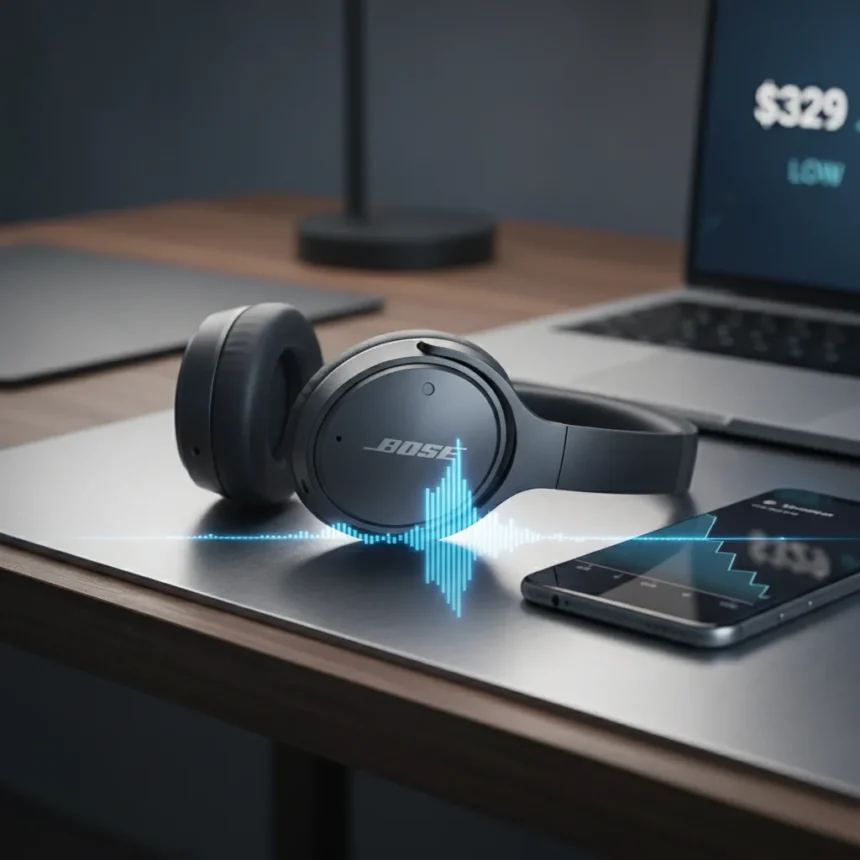
The Bose QuietComfort Ultra are premium active noise cancelling headphones that deliver competitive performance at a fraction of their original $429 price, now available at a record low of $329 on Amazon US. At this price point, they represent genuine value for anyone serious about blocking out the world without dropping $500 on newer flagships.
Key Takeaways
- Bose QuietComfort Ultra hit record low of $329 USD (was $429), matching or beating pricier competitors on noise cancellation
- Joint-top ANC performance with Bose QuietComfort Ultra 2nd Gen, marginally beating Sony WH-1000XM6 in tests
- Battery life of 24 hours is below average compared to competitors offering 30 hours
- Available in multiple colors including Black, White, Blue, and Deep Plum across major retailers
- Regularly discounted to around $300, offering $100-150 savings versus newer models
Why the Bose QuietComfort Ultra Matter Right Now
Premium noise-cancelling headphones have become a luxury tax. Most flagship models demand $400 or more for performance that, frankly, plateaued years ago. The Bose QuietComfort Ultra break that pattern. At $329, they deliver on every single front—design, sound, and active noise cancellation technology—without the premium markup of newer iterations. They’re described as fun, comfortable, smart, portable, and phenomenal-sounding, sitting so close to perfect that the compromises feel trivial. This is the deal that makes premium ANC accessible to people who don’t want to mortgage their audio budget.
The timing matters. Whether you’re prepping for holiday travel, shopping for early gifts, or simply tired of mediocre earbuds leaking sound to your entire office, $329 is the price that makes these headphones a no-brainer. They’ve been known to drop to around $300 regularly, but this record low represents the sweet spot where performance-per-dollar finally tips in your favor.
Bose QuietComfort Ultra vs. Competitors: The Real Story
Here’s where the Bose QuietComfort Ultra confound expectations. In independent testing, they achieve joint-top noise-cancellation performance alongside the Bose QuietComfort Ultra 2nd Gen, and they marginally beat the Sony WH-1000XM6—headphones that typically cost around $100 more. The Sony offers 30-hour battery life versus the Ultra’s 24 hours, a meaningful difference for frequent travelers. The newer Bose QuietComfort Ultra 2nd Gen matches the original’s ANC but extends battery to 30 hours, yet costs significantly more—making the original Ultra a smarter buy if you’re willing to charge every 24 hours.


Budget shoppers have an alternative: the Bose QuietComfort Headphones (non-Ultra) deliver noise cancellation that’s 95% as good at $199 to $299, depending on sales. If you’re price-sensitive and don’t demand absolute top-tier ANC, the cheaper model makes sense. But at $329, the Ultra represent the inflection point where you get the best thing without paying for the newest thing.
The One Real Weakness: Battery Life
The Bose QuietComfort Ultra’s 24-hour battery is the only genuine compromise. That’s below average for premium headphones in 2025. Competitors like the Sony WH-1000XM6 and Bose QuietComfort Ultra 2nd Gen stretch to 30 hours, meaning you’ll charge the originals more often. For office workers and casual users, 24 hours is fine—a weekly charge is reasonable. For travelers who pack for a week without access to USB-C, this becomes annoying. It’s not a dealbreaker at $329, but it’s the reason to pause if you’re comparing it to the newer Ultra 2nd Gen at a smaller price gap.



Pricing Across Regions: What to Expect
The record low varies by region. US buyers see $329 at Amazon, down from $429. UK shoppers find £329 (lowest to date, was £449) at Amazon UK, also a record low. Australian pricing is more aggressive: AU$350.06 with an exclusive Bose code (was AU$649), AU$399.95 on Amazon and Bose, and AU$359.95 on Bose directly. The headphones are available in Black, White, Blue, and Deep Plum across these regions, though color availability varies by retailer.
These deals are tied to seasonal events—Black Friday, Prime Day, end-of-financial-year sales, and winter flash sales. If you miss this window, expect the price to climb back toward $379-399, though history suggests another discount will arrive within weeks. The record low at $329 is worth acting on if you’ve been waiting for the right moment.
Should You Buy the Bose QuietComfort Ultra at This Price?
Yes, if you value noise cancellation above all else and don’t mind charging every 24 hours. The ANC performance is genuinely best-in-class, matching or beating headphones that cost more. The sound is described as phenomenal, and the design is comfortable enough for all-day wear. At $329, the value proposition is unambiguous—you’re getting premium performance without the premium price. Skip them only if you need 30-hour battery life or if the budget Bose QuietComfort (non-Ultra) at $199-299 fits your needs.
Is the Bose QuietComfort Ultra better than the Sony WH-1000XM6?
In noise cancellation, the Bose Ultra marginally outperforms the Sony, making them the better choice for blocking out sound. The Sony offers longer battery life (30 hours vs. 24), which matters for frequent travelers. Both are excellent; the Bose wins on ANC, the Sony wins on endurance. At $329 versus Sony’s higher price, the Bose Ultra tip the scales in their favor.



How long does the Bose QuietComfort Ultra battery last on a charge?
The Bose QuietComfort Ultra deliver 24 hours of battery life per charge, which is below average compared to competitors like the Sony WH-1000XM6 and the newer Bose QuietComfort Ultra 2nd Gen, both offering 30 hours. For daily office use or casual listening, 24 hours is sufficient; for week-long travel without charging access, it’s a limitation.
At $329, the Bose QuietComfort Ultra represent the rare moment when flagship performance aligns with fair pricing. They’re not perfect—the battery could stretch longer, and the newer model adds features—but they’re honest headphones that don’t demand a premium tax for being current. If noise cancellation is your priority and you’re tired of overpaying for marginal improvements, this is the deal that finally makes sense.
Edited by the All Things Geek team.
Source: TechRadar