





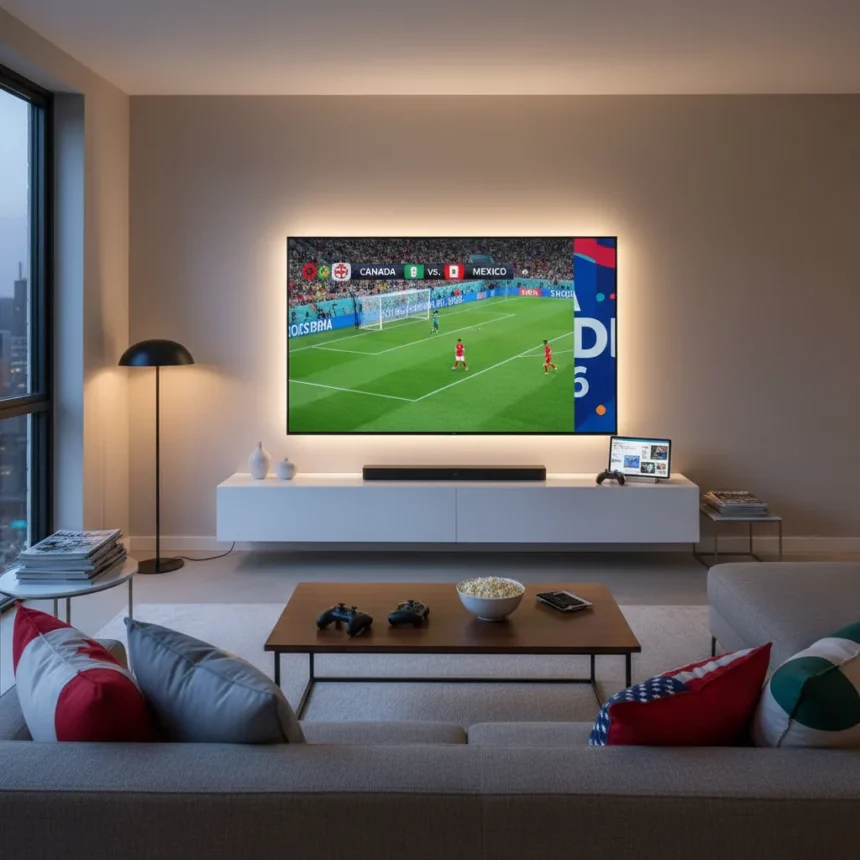
The budget TV buying guide has become essential as the FIFA World Cup 2026 approaches, with June 11 marking the tournament kickoff. Fans planning their viewing setups face a crucial decision: spend big on premium models or find affordable alternatives that still deliver the picture quality major sporting events demand. The answer increasingly lies in budget-friendly options featuring Mini LED technology, which bridges the gap between entry-level and flagship pricing.
Key Takeaways
- FIFA World Cup 2026 begins June 11, 2026, making now the ideal time to upgrade your TV setup
- Mini LED technology is now available in budget TV models, offering better contrast and brightness than traditional LED
- Budget TVs can deliver 4K resolution and quality sports viewing without flagship pricing
- A complete World Cup viewing system includes a TV, soundbar, and proper room setup
- Planning ahead avoids last-minute purchasing at inflated prices
Why Budget TVs Matter for the World Cup
Sports viewing demands specific TV capabilities that historically cost thousands. Fast-moving action, precise color accuracy, and bright picture quality separate an immersive World Cup experience from a frustrating one. Budget TV options have evolved dramatically, with manufacturers now offering 4K resolution and advanced panel technologies at mid-range price points. This shift means casual fans and serious enthusiasts alike can build competitive viewing setups without maxing out credit cards.
The timing is critical. With the tournament six months away, early buyers avoid the price inflation and stock shortages that plague major sporting events. Retailers typically mark up inventory as event dates approach, making advance planning a financial advantage. A budget TV buying guide helps buyers identify which features matter for sports and which are marketing noise.
Mini LED Technology: The significant shift for Budget Models
Mini LED represents the most significant advancement in affordable television recently. Unlike traditional LED backlighting, Mini LED uses thousands of tiny LEDs behind the screen, enabling precise brightness control across different picture areas. This creates deeper blacks, brighter highlights, and overall contrast that rivals much more expensive OLED TVs.



For World Cup viewing, Mini LED technology translates directly to better visibility of the ball, clearer player movements, and more natural grass color reproduction. Budget models now incorporating Mini LED technology provide the picture quality that broadcasters designed their feeds to showcase. The technology eliminates the flat, washed-out appearance that plagued older budget TVs, making every match visually compelling rather than a compromise.
The practical advantage extends beyond aesthetics. Mini LED’s superior brightness handles bright rooms without picture degradation, a critical factor for daytime World Cup matches in various time zones. Evening matches benefit from deeper blacks and better shadow detail, revealing action that inferior panels would render as murky darkness.



Building Your Complete World Cup Viewing System
A TV alone doesn’t guarantee great sports viewing. Audio quality dramatically impacts the experience, with commentary clarity and crowd noise adding emotional weight to matches. A complete World Cup viewing system pairs your budget TV with a quality soundbar, transforming the experience from acceptable to genuinely engaging. This layered approach lets you allocate budget strategically: invest in the TV’s picture quality, then add audio capability that matches the screen’s performance level.
Room setup matters equally. Seating distance from the screen, ambient lighting control, and speaker placement all influence how effectively your budget TV delivers the World Cup experience. A 55-inch 4K TV viewed from excessive distance wastes resolution; the same TV in an optimized room becomes genuinely immersive. Budget TV buying guides often overlook these fundamentals, focusing instead on specifications rather than real-world viewing conditions.
Planning your complete system now avoids the panic purchasing that happens in May 2026. Retailers stock inventory strategically for major events, and early buyers get first choice of models and configurations. Last-minute shoppers face limited selection and premium pricing on whatever remains.
Avoiding Common Budget TV Mistakes
Budget TV buyers frequently prioritize screen size at the expense of picture quality. A 75-inch TV with mediocre contrast and color accuracy creates a worse experience than a 65-inch model with superior panel technology. For sports viewing specifically, brightness and contrast matter far more than raw size. Mini LED budget models prove this principle: their superior picture quality makes them more compelling for World Cup viewing than larger traditional LED TVs at similar prices.



Refresh rate confusion also trips up buyers. While gaming-focused specs like 120Hz matter less for sports broadcasts (which transmit at 60Hz), response time and motion handling remain important for fast-action content. A budget TV with solid motion performance and Mini LED technology outperforms a cheaper model with higher refresh rate numbers but inferior panel quality.
What Budget TV Buying Guides Often Miss
Most TV guides focus on specifications without addressing real-world sports viewing. A budget TV buying guide should highlight which features actually impact World Cup viewing rather than listing every technical detail. Mini LED technology’s practical advantage for sports—superior brightness and contrast—matters more than processor speed or smart TV interface polish. Budget models with these priorities deliver better experiences than cheaper alternatives emphasizing unnecessary features.
Future-proofing also deserves consideration. A budget TV with solid current technology and reliable manufacturer support outlasts a cheaper model with latest specs but questionable longevity. For a purchase intended to handle World Cup 2026 and beyond, build reliability into your decision rather than chasing the absolute lowest price.
FAQ
When should I buy a budget TV for World Cup 2026?
Now through April 2026 offers the best pricing and selection. Waiting until May risks higher prices and limited inventory as the June 11 kickoff approaches. Early purchase also gives you time to optimize your room setup and test your complete viewing system before matches begin.
Is Mini LED technology worth the extra cost in budget models?
For sports viewing, yes. Mini LED’s superior contrast and brightness directly improve World Cup visibility compared to traditional LED panels. The technology gap between Mini LED budget models and cheaper traditional LED options is substantial enough to justify the price difference for event viewing.
Can a budget TV deliver 4K quality for World Cup broadcasts?
Absolutely. Budget 4K TVs handle World Cup broadcasts effectively, and many now include Mini LED technology that rivals much pricier models. The real question is whether your internet connection can stream or your cable provider can broadcast 4K—the TV capability is no longer the limiting factor.
A budget TV buying guide ultimately comes down to matching features to your actual viewing needs. For World Cup 2026, that means prioritizing picture quality technologies like Mini LED over raw specifications, building a complete system that includes audio, and planning your purchase before the tournament hype drives prices up. Smart shopping now means immersive viewing in June.
Where to Buy
30% OFFAmazonEmber QLED 65-inch£730£1,050shop now | 37% OFFLGC5 55-inch OLED£1,189£1,900shop now
Edited by the All Things Geek team.
Source: What Hi-Fi?




