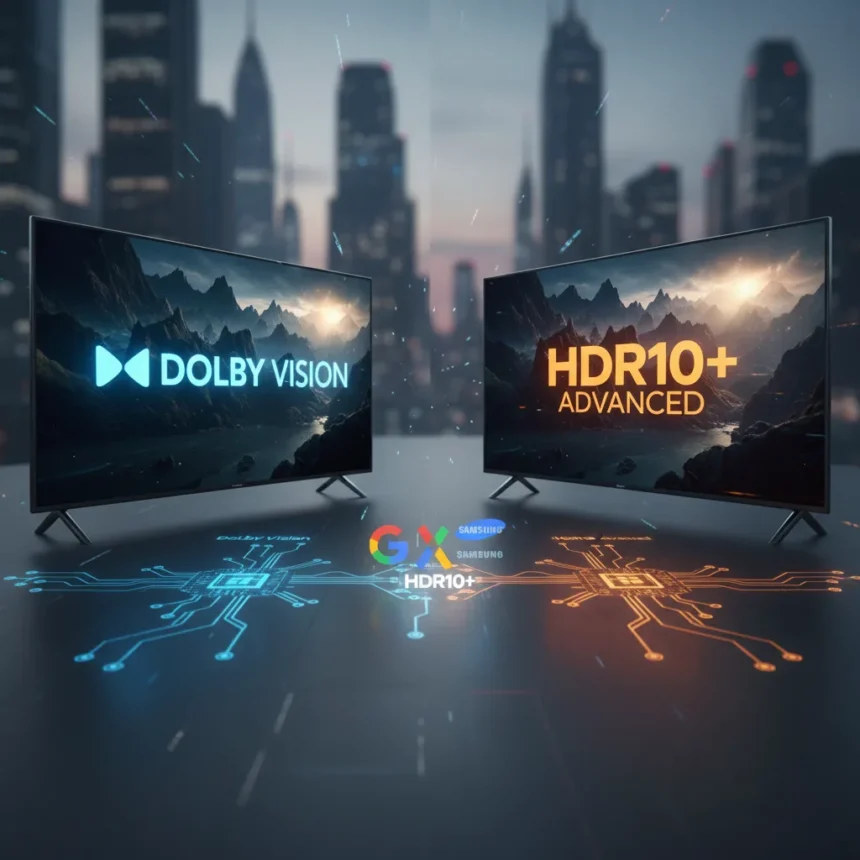
HDR10+ Advanced is a new premium HDR format developed by the HDR10+ Alliance in partnership with Google and Samsung, designed to compete directly with Dolby Vision’s stronghold in dynamic HDR playback. The move signals a significant shift in the HDR landscape, where the open-standard camp is finally mounting a credible challenge to Dolby’s proprietary dominance. But will it actually matter for the TV buyers who are already confused by a dozen overlapping format names?
Key Takeaways
- HDR10+ Advanced is a free, open-standard format backed by Google and Samsung, unlike Dolby Vision’s licensed model.
- Dolby Vision remains the more widespread dynamic HDR format in TVs and streaming content today.
- The new format uses dynamic metadata, matching Dolby Vision’s core technical advantage.
- HDR10+ is royalty-free for manufacturers, potentially lowering barriers to adoption.
- The broader HDR ecosystem already includes HDR10, HLG, and other competing standards.
Why HDR10+ Advanced Matters Right Now
For years, Dolby Vision has dominated premium HDR because it offers dynamic metadata—frame-by-frame brightness and color adjustments that adapt content to individual displays. This gives filmmakers precise control and viewers sharper, more vibrant images. HDR10+, the free alternative, has existed since 2017 but struggled to gain traction. Most TVs support it, but few streaming services prioritize it, and content availability remains thin. Google and Samsung’s backing changes the equation. Google controls YouTube and Android TV; Samsung controls roughly 20% of the global TV market. Together, they represent enough ecosystem weight to potentially shift how HDR content gets distributed and displayed.
The timing is crucial. Streaming services are increasingly asking manufacturers to support multiple HDR formats simultaneously, and TV buyers face decision paralysis. A consumer shopping for a new television encounters HDR10, HDR10+, Dolby Vision, and sometimes HLG all listed as features—with little understanding of what each actually does. HDR10+ Advanced attempts to simplify this by offering Dolby Vision’s dynamic capabilities without the licensing fees that inflate TV prices.
HDR10+ Advanced vs. Dolby Vision: The Format War Heats Up
The core technical difference is licensing. Dolby Vision requires manufacturers to pay royalties per TV unit sold, making it a premium feature reserved for higher-end models. HDR10+ is free and open, allowing any company to implement it without cost. This creates a natural tension: Dolby Vision has better market penetration and more streaming content, but HDR10+ has lower barriers to adoption and manufacturer goodwill.



Dolby Vision’s advantage is real but fragile. It appears on most flagship TVs and in streaming services like Netflix and Disney+, but this dominance depends on manufacturers accepting the licensing model. If Samsung and Google can demonstrate that HDR10+ Advanced delivers comparable or superior image quality without the cost burden, TV makers might pivot. LG, for instance, has already signaled willingness to support multiple standards rather than betting exclusively on Dolby. The question is not whether HDR10+ Advanced is technically capable—it uses the same dynamic metadata approach—but whether content creators and streaming platforms will prioritize it.
What This Means for TV Buyers
In the short term, very little changes. Your existing TV’s HDR support remains unchanged, and Dolby Vision content will continue to play on compatible devices. If you are shopping for a new television, you will likely see HDR10+ Advanced listed alongside Dolby Vision and HDR10 on spec sheets. The practical difference between formats is often invisible to casual viewers; most HDR content looks excellent on any modern TV regardless of which standard it uses. The real battle plays out behind the scenes, between streaming platforms deciding which formats to encode and TV manufacturers deciding which to support in firmware updates.



For premium TV buyers, this competition is healthy. It keeps licensing costs in check and forces format developers to innovate rather than rest on market dominance. For budget-conscious shoppers, HDR10+ Advanced’s free status means it could accelerate adoption on mid-range and entry-level TVs, where Dolby Vision licensing costs currently limit its presence.
Will HDR10+ Advanced Actually Displace Dolby Vision?
Probably not entirely, but it can definitely erode Dolby’s grip on premium HDR. Dolby Vision has built a fortress of content partnerships and TV support that took years to establish. Netflix, Disney+, and Apple TV+ all prioritize Dolby Vision encoding. Breaking that habit requires sustained effort from Google and Samsung, plus incentives for content creators to invest in HDR10+ Advanced encoding. The most likely scenario is a long transition period where both formats coexist, with HDR10+ Advanced gaining share in price-sensitive markets and on Android-based platforms where Google’s influence is strongest.
The real winner might be consumers, who benefit from format competition and the pressure it places on licensing fees. The real loser could be the dozens of minor HDR standards that clutter the specification sheets of modern TVs. If HDR10+ Advanced succeeds, it simplifies the landscape by offering a credible open-source alternative to Dolby’s proprietary model. If it fails, the HDR format fragmentation only gets worse.
Does HDR10+ Advanced require a new TV?
Not necessarily. Existing TVs with HDR10+ support could potentially receive the new standard through firmware updates, though this depends on manufacturer support. However, newer models, particularly from Samsung and other partners, will ship with native HDR10+ Advanced support built in.



How does HDR10+ Advanced compare to standard HDR10?
Standard HDR10 uses static metadata, meaning brightness and color adjustments are fixed for the entire scene. HDR10+ Advanced, like Dolby Vision, uses dynamic metadata that adjusts frame-by-frame, delivering more precise control and typically better visual results.
Will streaming services actually support HDR10+ Advanced?
That remains the critical unknown. YouTube, owned by Google, will likely prioritize it. Other services like Netflix and Disney+ have no announced plans yet. Adoption depends on whether the format proves popular enough to justify encoding costs, which brings us back to whether manufacturers will actually push it into living rooms.
HDR10+ Advanced represents the most serious challenge to Dolby Vision in years, but victory is far from assured. The format war will be won not by superior technology—both use dynamic metadata—but by ecosystem momentum. Google and Samsung have the reach to make it matter. Whether they have the patience to sustain a years-long push against entrenched Dolby partnerships is another question entirely.
Edited by the All Things Geek team.
Source: What Hi-Fi?