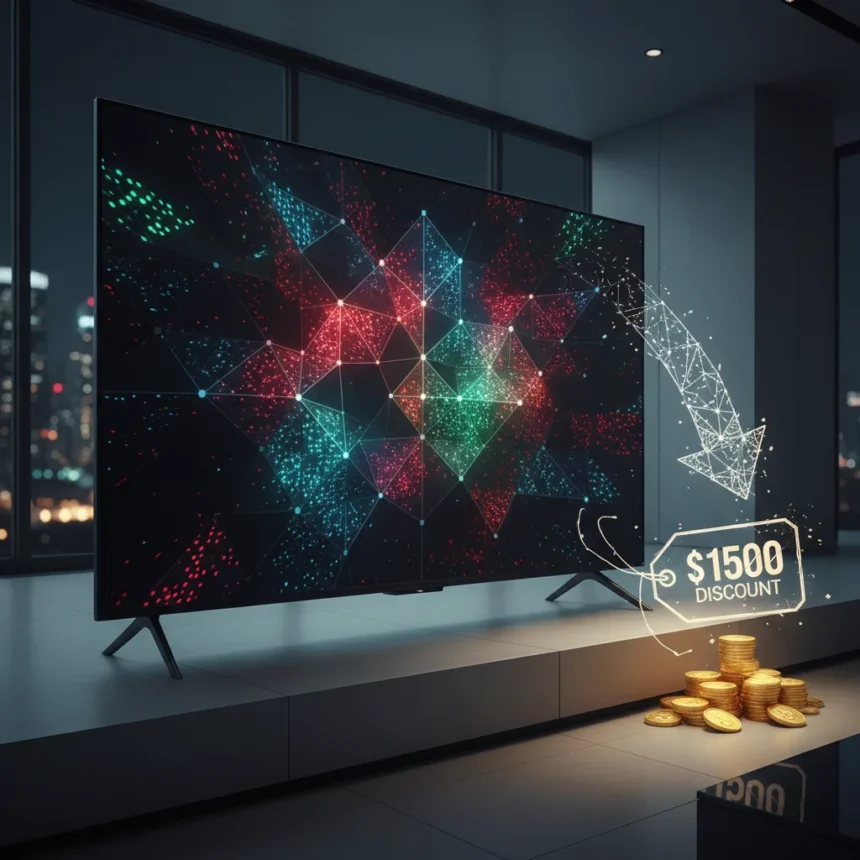
The Hisense UR9 RGB Mini-LED TV just experienced one of the fastest price collapses ever seen in flagship television pricing—a $1,500 discount that arrived almost immediately after launch. This aggressive markdown is not just a deal; it is a signal that competition in premium RGB Mini-LED displays has become genuinely fierce, forcing manufacturers to compete on price rather than wait for natural market maturation.
Key Takeaways
- The Hisense UR9 RGB Mini-LED dropped $1,500 at Best Buy, reaching $1,999.99 for the 65-inch model from its original $3,499.99 price
- RGB Mini-LED technology delivers superior color accuracy and contrast compared to standard LED displays
- Tom’s Guide testing revealed color balance issues and inconsistent performance that may justify the rapid discount
- The speed of this discount suggests manufacturers are under pressure from competitors like TCL and LG in the premium TV segment
- Native 180Hz performance on the UR9 targets gaming audiences but faces competition from established OLED models
Why the Hisense UR9 RGB Mini-LED Dropped So Fast
The Hisense UR9 RGB Mini-LED TV launched at $3,499.99 for the 65-inch model, but within weeks, Best Buy slashed the price to $1,999.99—a 43 percent reduction that arrived faster than typical flagship TV pricing cycles allow. This speed matters because it reveals something manufacturers rarely admit: the market for premium displays is overcrowded, and first-mover advantage no longer guarantees premium pricing windows.
Tom’s Guide’s review documented specific performance issues that likely accelerated the discount strategy. The UR9 exhibited color balance problems and inconsistent performance across different content types, weaknesses that competing models like the TCL QM8L Mini-LED and LG C6 OLED handle more reliably. Rather than wait for demand to naturally soften, Hisense appears to have chosen aggressive pricing to move inventory before consumers gravitated toward better-reviewed alternatives. This is a defensive move dressed up as a promotional opportunity.
RGB Mini-LED Technology and the Competitive Landscape
RGB Mini-LED represents a middle ground between traditional LED backlighting and full-array OLED displays. The technology uses red, green, and blue LED subpixels to achieve color accuracy and contrast control that standard LED cannot match, while remaining more affordable than OLED. The Hisense UR9 pairs this technology with native 180Hz performance, positioning it for gaming audiences who demand both visual quality and high refresh rates.

However, this positioning puts the UR9 in direct competition with established players who have already solved the engineering problems Hisense is still wrestling with. The TCL QM8L and LG C6 OLED both occupy the premium display space with proven track records. When a new entrant arrives with performance issues and premium pricing, competitors do not need to match the discount—they just need to wait while the market votes with its wallet. Hisense chose to accelerate that timeline instead.
What This Discount Reveals About Premium TV Market Dynamics
Rapid price collapses on flagship products are rare because they damage brand perception and cannibalize sales at higher price points. The fact that Hisense accepted this damage within weeks of launch suggests the company faced a choice between slow inventory bleed and fast repositioning. Fast repositioning won. This decision indicates that RGB Mini-LED competition is fiercer than manufacturers publicly acknowledge, and that first-generation products from newer entrants face steeper customer skepticism than legacy brands do.



The timing also matters. Premium TV buyers typically wait for Black Friday or holiday sales to purchase high-end displays. A $1,500 discount appearing in regular retail windows, not tied to a major shopping event, suggests the UR9 was not tracking toward sales targets at its launch price. Rather than blame the product or admit market miscalculation, Hisense framed the discount as a promotional opportunity. Readers searching for premium RGB Mini-LED options should recognize this for what it is: a manufacturer correcting course after overestimating demand.
Should You Buy the Hisense UR9 RGB Mini-LED at This Price?
At $1,999.99, the Hisense UR9 RGB Mini-LED becomes a more compelling value proposition than at $3,499.99, but only if you can overlook the documented performance issues. The color balance problems and inconsistent rendering that Tom’s Guide identified do not disappear because the price dropped. You are buying a first-generation product from a manufacturer still refining RGB Mini-LED implementation, not a mature alternative to TCL or LG’s proven solutions.
The native 180Hz performance appeals to gaming audiences, but gaming performance depends on more than refresh rate—it requires consistent image quality across different frame rates and content types. If the UR9 struggles with color balance in standard content, gaming performance may suffer similarly. Evaluate this TV only if you have seen it in person and confirmed that its performance meets your standards, regardless of the discount.
Is the Hisense UR9 RGB Mini-LED worth buying at the discounted price?
The discount improves the value equation significantly, but Tom’s Guide’s documented performance issues remain. At $1,999.99, the UR9 competes directly with proven alternatives from TCL and LG that may offer better reliability and color accuracy. The discount is worth considering only if you prioritize the RGB Mini-LED technology and native 180Hz gaming performance over the brand reputation and proven performance of competitors.


How does the Hisense UR9 RGB Mini-LED compare to OLED televisions?
RGB Mini-LED offers superior brightness and sustained color performance compared to OLED in bright room environments, while OLED delivers better contrast and black levels in dark viewing conditions. The Hisense UR9’s color balance issues complicate this comparison—a properly calibrated RGB Mini-LED should outperform OLED in color accuracy, but the UR9’s documented inconsistencies may negate this advantage. OLED models like the LG C6 have matured technology and proven reliability, factors that matter more than theoretical performance advantages.
Why did Hisense discount the UR9 so aggressively?
The rapid $1,500 markdown reflects performance issues identified in reviews, competitive pressure from established brands, and likely softer-than-expected initial demand. Rather than maintain premium pricing while waiting for demand to build, Hisense chose to reposition the UR9 as a value alternative. This strategy prioritizes market share and inventory movement over brand prestige—a calculated risk that reveals how competitive the premium TV market has become.
The Hisense UR9 RGB Mini-LED’s dramatic price correction is not a bargain waiting to be claimed—it is a window into how quickly premium products can lose positioning when they arrive with documented flaws in an overcrowded market. The discount proves that competition among flagship TV manufacturers is real and unforgiving. Buy this TV only if you have evaluated its performance against competitors and decided the RGB Mini-LED technology justifies accepting the risk of first-generation product issues. A lower price does not fix color balance problems; it just makes them more affordable to live with.
Edited by the All Things Geek team.
Source: Tom's Guide