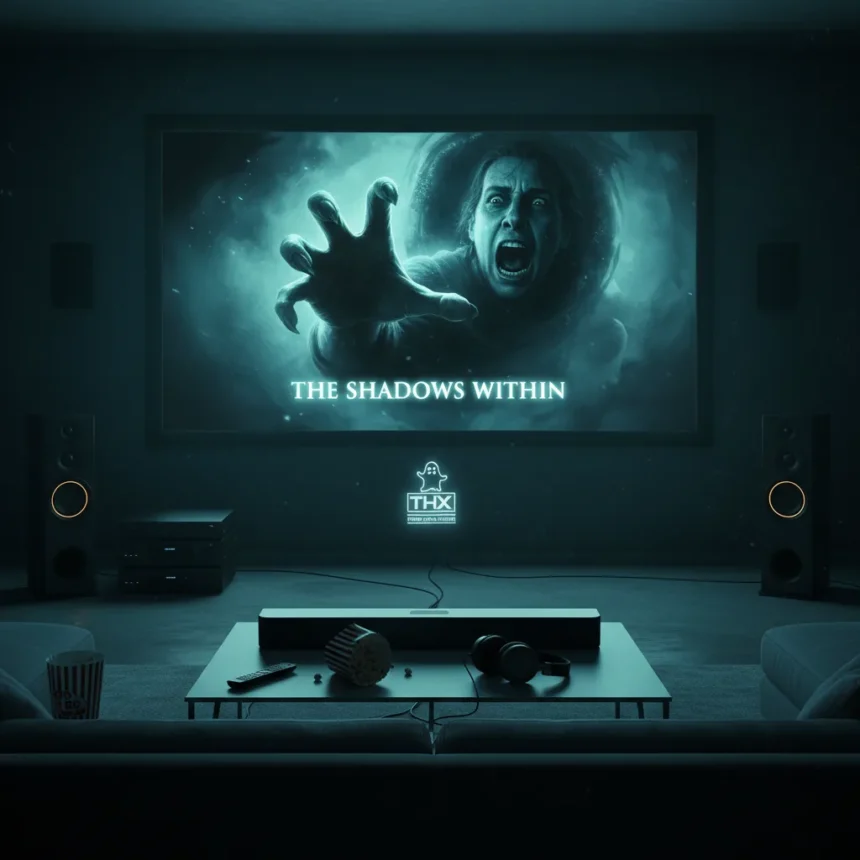
Horror movies home cinema testing has become essential for evaluating AV equipment, and one haunting film that missed Oscar recognition is now a benchmark in What Hi-Fi?’s test rooms. The movie delivers precisely what home cinema enthusiasts need: oppressive dark cinematography, strategic surround sound deployment, and an audio design that makes viewers feel genuinely threatened.
Key Takeaways
- Horror films excel at stress-testing Dolby Atmos due to 360-degree spatial sound effects and tension-building ambient noise.
- The featured film combines creepy isolation, convincing antagonists, and dark visuals with stellar audio that creates physical discomfort in key scenes.
- What Hi-Fi? uses horror titles like IT (2017), The Conjuring 2, and The Descent alongside prestige films to evaluate OLED contrast, night-scene detail, and surround performance.
- Fans of Hereditary, Midsommar, and Sinister will find this title delivers similar psychological tension and audiovisual craft.
- Horror’s strategic use of shadow, whisper, and ambient sound creates a superior test case for home cinema equipment than dialogue-heavy dramas.
Why horror movies home cinema testing outperforms prestige dramas
Horror films dominate AV test rooms because they demand precision from every component of a home cinema system. Unlike award-winning dramas that rely on dialogue and orchestral swells, horror cinema weaponizes silence, shadow, and spatial sound to generate sustained tension. The featured film achieves this through oppressive dark cinematography complemented by decent surround sound full of “bump in the night” scares that force your system to prove its worth. When a whisper moves across your listening space or a shadow deepens on screen, your TV’s contrast ratio and soundbar’s directional accuracy become immediately apparent. Prestige films often mask mediocre AV performance with narrative momentum. Horror exposes it.
What Hi-Fi?’s test room strategy reflects this reality. Alongside prestige titles like Little Women and Sinners, the publication benchmarks equipment using horror films that demand 360-degree spatial audio and extreme contrast handling. The anxiety-inducing watch featured in their recent rotation delivers exactly this combination: creepy haunted locale, isolated from help, a worryingly convincing antagonist, and dark cinematography that feels genuinely oppressive. The stellar use of audio genuinely makes viewers feel slightly sick in certain scenes, creating an unmistakable physical response that proves the system is working at full capacity.
Dolby Atmos horror scenes that stress-test your equipment
Dolby Atmos creates a dome of sound overhead and around the listener, making horror the genre most suited to demonstrating the technology’s power. What Hi-Fi? experts leverage specific scenes from established horror benchmarks to evaluate surround performance. The Conjuring 2 features the Crooked Man scene, where a ghostly voice moves through the room, testing whether your system can track a moving object convincingly across the 360-degree soundfield. IT (2017) includes the garage scene where Pennywise morphs and shifts, requiring seamless object-based audio panning. The Descent (2005) uses DTS-HD MA 5.1 cave atmospherics—dripping water, echoing screams, and spatial reverb—to stress-test surround speakers in ways that dialogue scenes cannot. The Shining employs diegetic heartbeat sounds in Room 237 that demand precise channel separation and subwoofer integration.


The featured film in What Hi-Fi?’s current test rotation follows this template. Its use of shadow and sound effects to leave viewers constantly feeling threatened means that every surround speaker earns its placement. Sweeping soundtracks, ambient noise layering, and morphing scenes create a sustained Atmos workout that reveals whether your system delivers genuine immersion or merely simulates it.
How horror cinematography tests OLED and high-contrast displays
Dark cinematography in horror cinema exposes every weakness in a TV’s black level performance, local dimming accuracy, and shadow detail preservation. The featured film’s wonderfully shot, dark cinematography that feels genuinely oppressive serves as a perfect litmus test for OLED panels and high-contrast displays. When a shadow moves across a haunted room, viewers immediately notice if the TV crushes blacks into featureless voids or preserves subtle texture. High-contrast night scenes demand that a display maintain shadow detail without blooming or haloing around bright objects. Prestige dramas rarely create these extreme contrasts; horror does so constantly.



What Hi-Fi?’s test room rotation includes horror titles specifically to evaluate picture quality under worst-case conditions. If a TV can render a creepy haunted locale with convincing shadow depth and precise black separation, it can handle any content. The anxiety-inducing watch currently in rotation delivers this challenge through sustained low-light scenes where atmospheric detail determines whether the viewing experience feels immersive or murky.
Horror recommendations for home cinema enthusiasts
If you’re building or upgrading a home cinema system, the featured film represents the type of content that will genuinely stress your equipment and reveal its capabilities. What Hi-Fi? recommends it for fans of Hereditary, Midsommar, and Sinister—films that combine psychological tension with audiovisual craft. These titles share an approach to tension-building that relies on spatial sound design and oppressive cinematography rather than jump scares or gore.
Beyond the featured film, What Hi-Fi? uses additional horror benchmarks for specific test scenarios. The Conjuring 2 evaluates voice directionality and object-based audio. The Descent stresses surround speakers and subwoofer integration through cave atmospherics. Suspiria tests synth-heavy soundtracks, drum impacts, and whispered dialogue. Each film targets a different aspect of home cinema performance, creating a comprehensive evaluation toolkit that prestige dramas simply cannot match.
Does horror really reveal more about AV equipment than other genres?
Yes. Horror’s reliance on spatial tension, extreme contrast, and strategic silence means that weak equipment becomes immediately obvious. A TV that crushes blacks or a soundbar that fails to localize objects will destroy the psychological impact that horror depends on. Prestige films mask these shortcomings through narrative engagement and emotional investment. Horror does not allow this escape—it forces the system to perform.


What makes the featured film better for testing than Oscar winners?
Oscar-winning films often prioritize narrative and performance over audiovisual challenge. The featured film prioritizes both, delivering psychological tension that demands precision from every component while offering the cinematic craft that awards recognize. Its non-Oscar status reflects Academy voting patterns, not audiovisual quality. For home cinema testing, this is precisely the film you want—one that challenges your system without the baggage of prestige expectations.
Which horror scenes are best for evaluating Dolby Atmos?
Scenes with moving objects (voices, sounds, environmental effects moving through the soundfield), ambient layering (wind, pagan festivities, whispers), and morphing scenes (characters shifting through space) all stress Atmos systems effectively. The featured film delivers all three, making it essential for anyone serious about evaluating their home cinema setup.
Horror movies home cinema testing has emerged as the gold standard for AV evaluation precisely because the genre refuses to hide equipment weakness behind narrative momentum. The featured film that missed Oscar recognition delivers everything your home cinema system needs to prove its worth—dark cinematography that exposes display limitations, strategic surround sound that stresses speaker placement, and audio design that creates genuine physical discomfort. For serious home cinema enthusiasts, this is the content that matters.
Edited by the All Things Geek team.
Source: What Hi-Fi?