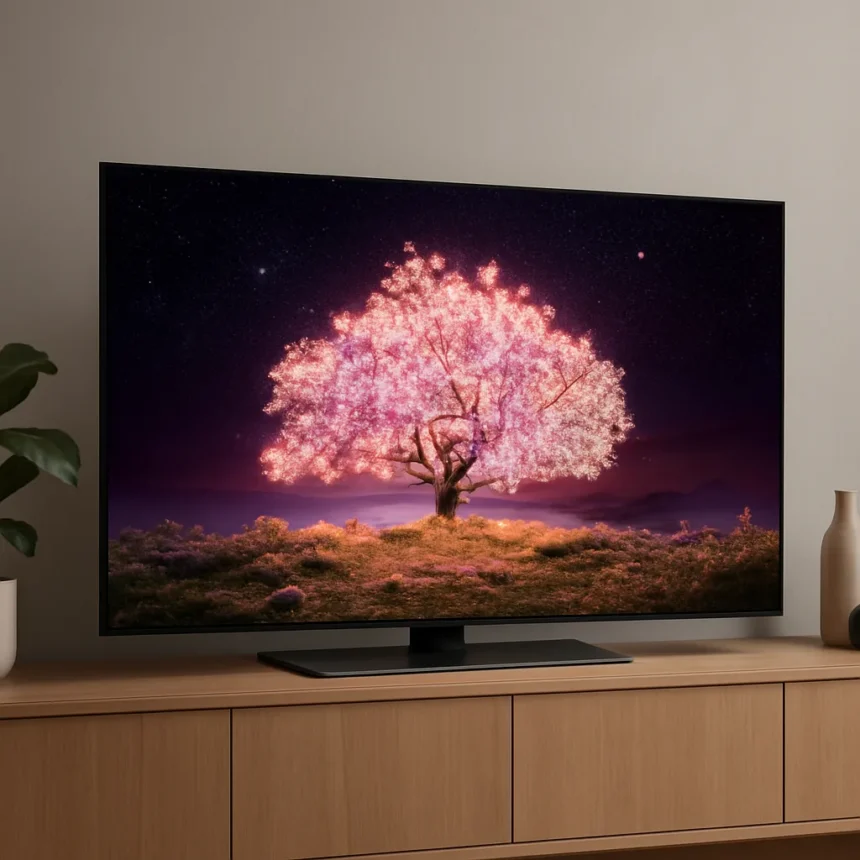
The LG C6 OLED TV has just become the new standard by which Samsung and Sony will be judged, according to What Hi-Fi?’s latest assessment. LG’s mid-range OLED offering for 2026 pairs modest hardware upgrades with an aggressively tuned AI processor that punches above its price point, forcing competitors to reconsider their own value propositions.
Key Takeaways
- LG C6 OLED TV features Alpha 11 AI Processor Gen3 with dual AI engine for upscaling and motion handling
- Available in 42, 48, 55, and 65-inch sizes; 65-inch model priced at $2,699.99 USD
- Standard C6 uses same panel as 2025 C5 (~1,180 nits peak); C6H variant offers Tandem RGB OLED 2.0 (~2,268 nits)
- Supports 120Hz native refresh with VRR up to 165Hz, four HDMI 2.1 ports, and Dolby Vision gaming
- What Hi-Fi? declares it the top mid-range OLED, pressuring Samsung and Sony to deliver more compelling upgrades
What Makes the LG C6 OLED TV the New Benchmark
The LG C6 OLED TV is a 4K self-lit OLED display with over 8.3 million individually controlled pixels, launched as LG’s mid-range OLED for 2026 and priced at $2,699.99 for the 65-inch model, available now through retailers including LG.com and Bay Cities. What Hi-Fi? has declared it their new recommended model, a verdict that carries weight in a market where Samsung’s QN90 series and Sony’s K-XR models have long dominated the mid-to-premium bracket. The decision signals a shift: LG’s incremental improvements in processing power have finally outpaced the industry’s obsession with raw brightness specifications.
The Alpha 11 AI Processor Gen3 is the engine driving this recommendation. It handles AI Super Upscaling 4K, AI TruMotion with genre-based motion adjustment, and SDR-to-HDR conversion that rivals content sources previously locked into standard dynamic range. The processor also manages Dynamic Tone Mapping Ultra and an AI Hub with Concierge and Search functions integrated into webOS 25, giving the TV contextual awareness that feels more like a connected device than a passive display.
Brightness remains the most visible specification gap. The standard LG C6 OLED TV uses the same panel as last year’s C5 model, measured at approximately 1,180 nits peak HDR brightness. This is where Samsung and Sony have historically claimed superiority—their Mini LED and full-array backlighting systems deliver raw brightness figures that dazzle on spec sheets. Yet What Hi-Fi?’s recommendation suggests that processing intelligence and color accuracy matter more to real viewing than peak luminance alone.



LG C6 OLED TV Specifications and Gaming Credentials
The LG C6 OLED TV supports 120Hz native refresh with variable refresh rate up to 165Hz, four HDMI 2.1 ports capable of 4K 144Hz (possibly 165Hz), and gaming technologies including Nvidia G-Sync, AMD FreeSync Premium, ALLM, and Dolby Vision gaming. For console and PC gamers, this feature set is comprehensive. The TV also includes Pixel Dimming and OLED Motion for reduced blur, essential for fast-action content where traditional LCDs lag.
The display supports Dolby Vision, HDR10, HLG, and Filmmaker Mode, covering the full spectrum of content standards. This breadth of codec support means the LG C6 OLED TV handles streaming services, Blu-ray, and broadcast content without compromise. Dolby Atmos audio processing is built in, though the TV’s internal speakers are unlikely to satisfy serious home theater enthusiasts—an external soundbar remains essential for full immersion.



The 65-inch model measures 64.53 inches diagonally and delivers 4K Ultra HD resolution at 3,840 by 2,160 pixels. LG also offers a 42-inch, 48-inch, and 55-inch variant of the standard C6, with a larger C6H model available in 77 and 83-inch sizes. The C6H variant uses LG’s Primary Tandem RGB OLED 2.0 panel, matching the brightness of the premium G6 model at approximately 2,268 nits, making it the choice for bright rooms or commercial installations.
How the LG C6 OLED TV Compares to Samsung and Sony
Samsung and Sony have long competed on brightness and processing speed, but the LG C6 OLED TV challenges that strategy by excelling in color accuracy and AI-driven content enhancement. Samsung’s 2026 QN90 series relies on Mini LED backlighting to achieve higher peak brightness, while Sony’s K-XR models emphasize motion processing and gaming features. Neither directly addresses the gap the LG C6 OLED TV has created: a mid-range TV that processes content intelligently without requiring a premium price tag.
LG’s own G6 model, which pairs the same Tandem RGB OLED 2.0 panel with Hyper Radiant Colour Tech for 3.9 times brighter color peaks and Reflection-Free Premium coating, sits above the C6 in the lineup. This tiering allows LG to serve both budget-conscious buyers and those willing to spend more for maximum brightness. Samsung and Sony lack this flexibility—their mid-range models do not bridge the value gap as effectively.
The MRGB95, LG’s upcoming RGB Mini LED Evo model in 75, 86, and 100-inch sizes, offers an intriguing non-OLED alternative with the same Alpha 11 Gen3 processor and 100 percent coverage of BT.2020, DCI-P3, and Adobe RGB color spaces. This diversity of options—OLED at multiple brightness levels plus Mini LED—gives LG a competitive advantage Samsung and Sony have not yet matched.



Software and Smart Features on the LG C6 OLED TV
WebOS 25 powers the LG C6 OLED TV’s interface, offering LG Channels with 400 free channels and access to over 10,000 movies and shows. This built-in content library reduces reliance on external streaming devices, a feature that appeals to buyers seeking simplicity. The AI Hub with Concierge and Search functions adds voice control and recommendation capabilities, though the effectiveness of these features depends on regional content availability.
The TV comes with a one-year limited warranty, standard for the market. Setup and calibration are straightforward for most users, though serious home theater enthusiasts may want to hire a professional to optimize Filmmaker Mode and color temperature settings.
Should You Buy the LG C6 OLED TV?
Yes, if you want a mid-range OLED TV that prioritizes picture processing and gaming over raw brightness. The LG C6 OLED TV justifies its $2,699.99 price through AI-driven upscaling, genre-aware motion handling, and comprehensive gaming support. If you live in a bright room and need maximum peak brightness, the C6H variant is worth the premium. If you prefer Samsung’s or Sony’s ecosystems, you will need to wait for their 2026 responses—because What Hi-Fi?’s recommendation has made the LG C6 OLED TV the new standard to beat.
What are the key differences between the LG C6 and C6H models?
The standard LG C6 OLED TV uses the same panel as the 2025 C5, achieving approximately 1,180 nits peak brightness. The C6H variant upgrades to the Primary Tandem RGB OLED 2.0 panel, matching the premium G6’s brightness at approximately 2,268 nits and adding Hyper Radiant Colour Tech for brighter color peaks. Choose the C6H if you have a bright room or want maximum color intensity; the standard C6 is sufficient for most viewing environments.
How does the LG C6 OLED TV perform for gaming?
The LG C6 OLED TV supports 120Hz native refresh with VRR up to 165Hz, four HDMI 2.1 ports, Nvidia G-Sync, AMD FreeSync Premium, ALLM, and Dolby Vision gaming. This makes it fully equipped for next-generation consoles and high-end PC gaming. The Pixel Dimming and OLED Motion features reduce blur in fast-action scenes, giving it a competitive edge over Mini LED alternatives.
What is webOS 25 and what content does it offer?
WebOS 25 is LG’s smart TV platform powering the LG C6 OLED TV, featuring LG Channels with 400 free channels and over 10,000 movies and shows. It also includes an AI Hub with Concierge and Search functions for voice control and content recommendations, reducing the need for external streaming devices.
What Hi-Fi?’s endorsement of the LG C6 OLED TV as the new mid-range standard is not hype—it is a clear signal that the TV market’s competitive landscape has shifted. Samsung and Sony can no longer rely on brightness specifications and brand loyalty to win. They must match LG’s AI processing, refine their own content upscaling, and justify their prices with tangible improvements. For buyers shopping now, the LG C6 OLED TV represents the best value in mid-range OLED television. For Samsung and Sony, it represents a challenge they cannot ignore.
Where to Buy
Edited by the All Things Geek team.
Source: What Hi-Fi?