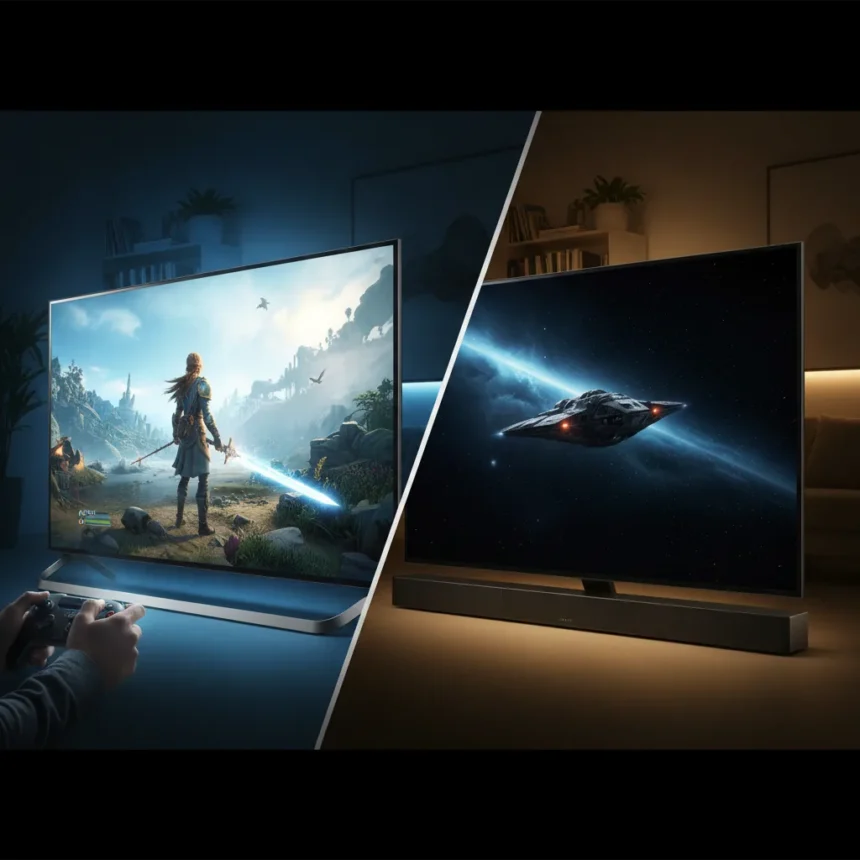
The LG C6 vs Sony Bravia 8 showdown pits two formidable OLED TVs against each other, and the winner depends entirely on what you value most. LG’s C6 is a step-down OLED that punches above its weight class with unexpected brightness and gaming chops, while Sony’s Bravia 8 counters with superior color accuracy, cinematic sound, and premium design. Both are excellent—but they’re built for different viewers.
Key Takeaways
- LG C6 delivers 355 nits SDR brightness and 1,355 nits HDR, outshining Sony Bravia 8’s 103 nits SDR
- Sony Bravia 8 achieves better out-of-box color accuracy in Cinema mode, Delta-E under 2.0
- LG C6 features lower input lag and 144Hz gaming support, ideal for competitive players
- Sony Bravia 8 offers premium cinematic sound and advanced AI features
- LG C6 marks the new benchmark for step-down OLEDs despite minimal hardware changes from C5
Brightness and Picture Quality: LG C6’s Commanding Lead
The LG C6 vs Sony Bravia 8 brightness comparison is lopsided in LG’s favor. The C6 hits 355 nits in standard dynamic range (SDR) and 1,355 nits in high dynamic range (HDR), crushing Sony’s Bravia 8, which maxes out at 103 nits in SDR. That gap translates to a noticeably brighter, punchier image on the LG—especially in bright rooms where SDR performance matters. Sony’s peak HDR brightness reaches around 1,300-1,584 nits depending on the test, so it’s competitive in highlights, but the LG’s overall brightness advantage is undeniable.
Where Sony claws back ground is color accuracy. The Bravia 8 achieves exceptional out-of-the-box accuracy in Cinema mode, with Delta-E scores under 2.0 without calibration, making it reference-grade straight from the box. The LG C6 posts a Delta-E of 1.53, which is excellent, but Sony’s color rendering feels more refined for film enthusiasts who care about precision. The C6 does improve color rendering over its C5 predecessor—skin tones look more natural, and the overall color palette is more controlled—but if you’re a purist about accuracy, Sony edges ahead.
Gaming Performance: LG C6 Dominates Competitive Play
For gamers, the LG C6 vs Sony Bravia 8 decision heavily favors LG. The C6 supports 144Hz refresh rates and boasts lower input lag, making it a powerhouse for fast-paced competitive titles. Sony’s Bravia 8 delivers lower input lag at 8-9ms, which is respectable, but LG’s gaming-focused features and 144Hz support make it the clear winner for console and PC gamers who demand responsiveness. PlayStation owners might feel a slight pull toward Sony’s ecosystem integration, but the LG’s gaming performance is simply superior across the board.



The LG C6 also includes four HDMI 2.1 ports, future-proofing your setup for next-gen consoles and high-bandwidth sources. That versatility, combined with low input lag and variable refresh rate support, positions the C6 as the gamer’s OLED, whereas the Bravia 8 prioritizes cinematic excellence over gaming dominance.
Design, Sound, and Premium Features: Sony’s Strengths
Sony’s Bravia 8 compensates for its brightness disadvantage with superior industrial design and audio engineering. The TV features thin bezels, an elegant stand, and a premium aesthetic that feels more refined than LG’s approach. Sony also built cinematic sound into the Bravia 8, delivering a more immersive audio experience out of the box—a meaningful advantage for movie lovers.



The LG C6, by contrast, shows improved audio tuning compared to earlier LG models. During testing on films like Blade Runner 2049, the C6’s speakers handled dialogue and midrange content without distortion, though bass remains light. It’s a step forward for LG, but Sony’s dedicated audio engineering still leads. Sony’s Bravia 8 also includes advanced AI features that LG doesn’t emphasize, adding value for tech-forward buyers.
LG C6 vs Sony Bravia 8: Value and Upgrade Path
If you own an LG C5 OLED, the jump to the C6 is modest. The C6 is brighter and sounds better, but the differences aren’t dramatic enough to justify an immediate upgrade. However, if you’re shopping for a new step-down OLED without a recent LG in your home, the C6 is now the benchmark in its class. It outperforms competitors like Samsung’s S90F in brightness and matches the best in color rendering and gaming performance.
Sony’s Bravia 8 remains a compelling alternative if you prioritize color accuracy, premium design, and cinematic experience over raw brightness and gaming features. The choice hinges on your priorities: brightness and gaming favor LG, while accuracy and audio favor Sony.
Is the LG C6 worth buying over the C5?
The LG C6 offers meaningful improvements in brightness (355 vs 335 nits SDR), color rendering, and audio tuning over the C5. If you’re buying new, the C6 is the better choice. However, if a used C5 is significantly cheaper, the value proposition shifts—the C5 is still an excellent TV, and the C6’s gains are incremental rather than revolutionary.



Does the Sony Bravia 8 beat the LG C6 in HDR performance?
The Bravia 8 matches or slightly exceeds the LG C6 in peak HDR brightness depending on the test, but the C6’s superior SDR brightness and overall picture luminance make it the brighter TV overall. For HDR-heavy content, the difference is negligible; for mixed content, LG wins.
Which TV is better for gaming: LG C6 or Sony Bravia 8?
The LG C6 is decisively better for gaming, offering 144Hz support, lower input lag, and four HDMI 2.1 ports. The Sony Bravia 8’s 8-9ms input lag is respectable, but LG’s gaming-centric design makes it the clear choice for competitive and console players.
The LG C6 vs Sony Bravia 8 decision ultimately comes down to priorities. Choose the LG C6 if you want a brighter picture, superior gaming performance, and excellent value in the step-down OLED space. Choose the Sony Bravia 8 if you prioritize color accuracy, cinematic sound, and premium industrial design. Both are outstanding TVs—neither is a mistake, but they’re optimized for different types of viewers.
Where to Buy
£2,499.99 at Amazon | £1,559 at Amazon
Edited by the All Things Geek team.
Source: What Hi-Fi?