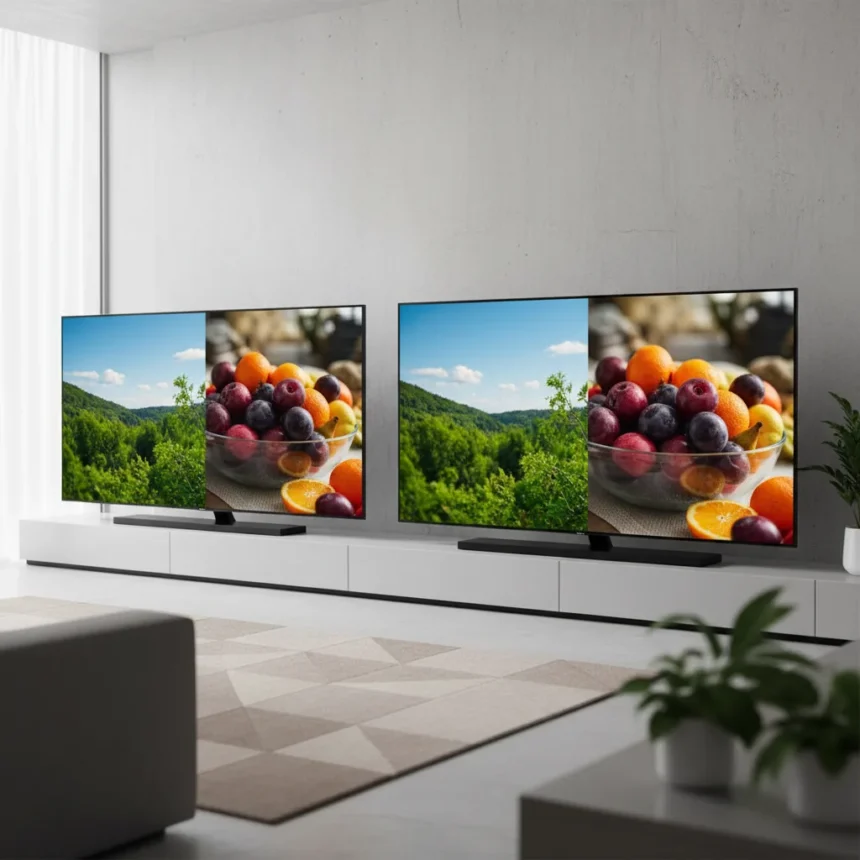
The LG G6 vs LG B6 OLED comparison reveals something unexpected: LG’s entry-level model holds its own against the flagship in raw brightness, but the gap widens when you examine color nuance and consistency across real film footage.
Key Takeaways
- The B6 delivers approximately 20 nits more brightness in Cinema Home mode across both SDR and HDR content.
- Peak areas and highlights appear visibly brighter on the B6, creating stronger perceived contrast in certain scenes.
- The B6 exhibits occasional green tinting in white areas, while the G6 maintains more consistent color accuracy.
- Both TVs render vibrant, saturated colors accurately in test footage like Wicked’s musical scenes.
- The G6 shows more refined color depth in orange and earth tones compared to the budget model.
Brightness: Where the Budget Model Wins
The B6 surprises with a brightness advantage. In side-by-side testing using reference movie scenes, the budget OLED delivered approximately 20 nits more brightness in Cinema Home mode in both SDR and HDR playback. This might seem counterintuitive for a flagship, but brightness alone does not define picture quality—consistency and color accuracy matter more for long-term viewing satisfaction.
In Dark City, when the protagonist speaks to the hotel desk clerk, the desk lamp on the B6 showed visibly brighter highlights, creating stronger perceived contrast and a more dramatic scene. Similarly, in Lawrence of Arabia, the white desert sands appeared more impactful on the B6 due to its boosted peak brightness. For viewers who prioritize punch and visual drama, the B6’s brightness advantage is tangible.
Color Accuracy: The G6’s Real Strength
Where the LG G6 vs LG B6 OLED comparison becomes interesting is in color handling. The B6 showed richer, deeper colors in the orange butterfly sequence from Spears & Munsil test footage, but this brightness boost comes with a trade-off. The B6 displayed a noticeable green tint in the white sands of Lawrence of Arabia, an artifact that appeared less consistently on the G6.



In the cliffside sunrise shot, the G6 demonstrated a more accurate color profile alongside extra brightness, suggesting that the flagship’s processing handles extreme brightness transitions more gracefully. This refinement matters if you watch diverse content—from bright daytime scenes to dark thrillers—without wanting color shifts to distract you.
Real-World Performance Across Film Content
Both TVs handled Wicked’s Wizard and I scene with strong, vibrant colors that looked accurate, with pink flowers and Elphaba’s green skin rendering correctly on each display. However, the yellow stone of the walls and pillars appeared brighter on the B6, while taking on a darker tone on the G6. This difference is subtle but noticeable during extended viewing—the G6 maintains a more neutral baseline, while the B6 occasionally pushes saturation and brightness to create impact.



The G6’s approach feels more calibrated for reference viewing, where accuracy takes priority. The B6 feels tuned for living room drama, where brightness and pop matter as much as technical precision. Neither approach is wrong; it depends on your viewing habits and room conditions.
Should You Choose the G6 or B6?
If you prioritize brightness, pop, and visual drama, the B6 delivers compelling performance at an entry-level price point. Its brightness advantage is real and visible in everyday content. However, if you watch a mix of content types and want consistent, accurate colors without green tinting in highlights, the G6’s refinement justifies the flagship positioning. The LG G6 vs LG B6 OLED decision ultimately hinges on whether you value raw impact or color consistency.
Is the LG B6 OLED a better value than the G6?
The B6 offers strong brightness and contrast at a lower price, making it excellent value for viewers who want OLED performance without flagship pricing. The G6 costs more but delivers more refined color handling and consistent accuracy across diverse content, which matters if you watch films, streaming shows, and sports regularly.
How do the G6 and B6 compare in black levels?
Both TVs delivered strong contrast with deep black tones, though the B6’s brightness advantage sometimes made peak areas appear more dramatic. The G6 maintains more consistent black depth without the occasional brightness spikes that characterize the B6’s performance.



The LG G6 vs LG B6 OLED comparison shows that flagship and budget OLED models now compete on brightness and impact, but the G6 earns its position through color consistency and refined processing. For casual viewers, the B6 is compelling. For those who care about picture accuracy, the G6 justifies its premium.
Where to Buy
$1,349.99 | No price information | No price information
Edited by the All Things Geek team.
Source: TechRadar