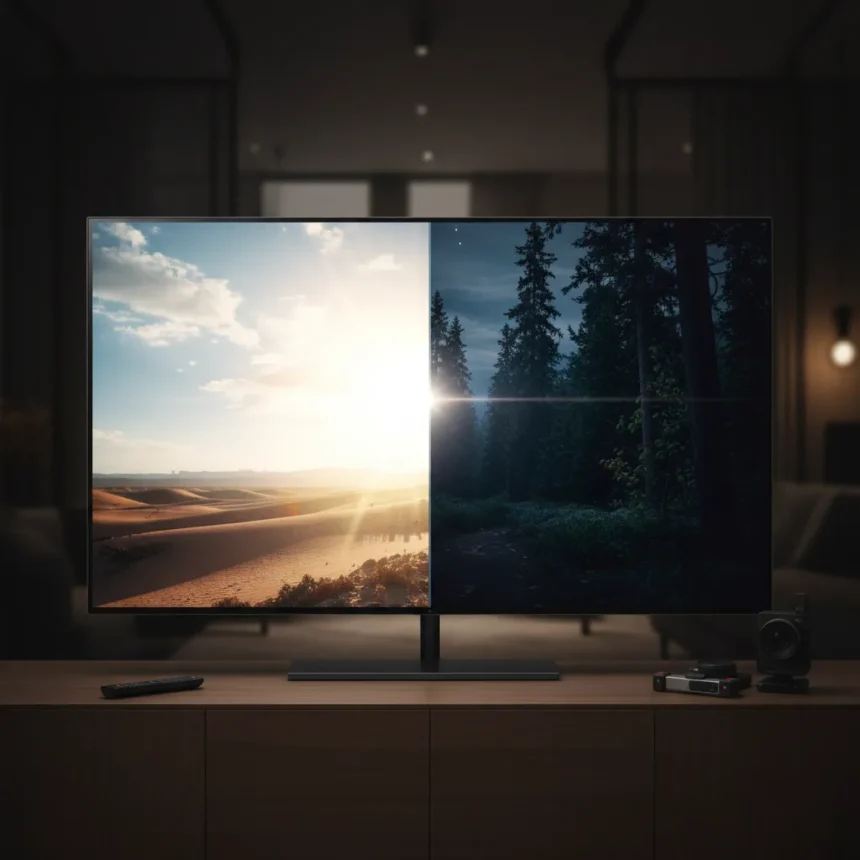
OLED TV brightness design has become the metric that matters most to manufacturers, and LG’s latest flagships prove why this approach is fundamentally broken. The company’s G5 OLED represents everything wrong with chasing peak brightness as a primary quality benchmark, sacrificing image finesse and control for bombastic nit counts that impress spec sheets but frustrate viewers.
Key Takeaways
- LG’s G5 OLED prioritizes peak brightness over color accuracy and image control, creating an unbalanced viewing experience.
- The TV raises brightness across the entire panel instead of limiting it to specific sections, causing blooming and loss of detail.
- LG announced the G6 would be 20 percent brighter than the G5, doubling down on a flawed design philosophy.
- Peak brightness (nit count) is a misleading quality metric compared to color volume, color accuracy, motion handling, and dark detail.
- TV manufacturers’ focus on brightness-focused design represents a misguided industry trend that prioritizes marketing over viewing experience.
Why OLED TV brightness design is the wrong priority
The obsession with OLED TV brightness design has infected the entire premium TV market, but LG’s G5 stands as the worst offender. The TV’s bombastic focus on constantly showing how punchy and bright it could go undermines every other aspect of image quality. When testing Dune: Part 2, the G5’s image lacked finesse—the TV raised brightness across the entire panel rather than limiting its efforts to the sections it was meant to illuminate. This is not sophistication. This is a sledgehammer approach to display engineering.
The problem with OLED TV brightness design as a marketing metric is that it conflates raw power with restraint. A truly excellent TV knows when not to be bright. It understands that crushing blacks matter as much as punchy highlights, that a single bright object should not force the entire screen to glow, and that color accuracy at various brightness levels is what separates reference displays from attention-seeking consumer products. LG’s G5 fails on all three counts.
What TV makers should actually prioritize instead
If manufacturers stopped obsessing over OLED TV brightness design and peak nit counts, they could focus on metrics that actually improve the viewing experience. Color volume—the ability to maintain color saturation at various brightness levels—matters infinitely more than raw brightness. A TV that produces accurate, vibrant colors at 500 nits will always outperform a TV that pushes 2000 nits but crushes color accuracy in the process.



Motion handling, dark detail, and black level stability are equally neglected in the rush to chase brightness numbers. These are the qualities that separate a good TV from a great one, yet they rarely appear in marketing materials or spec sheets. Dark detail is particularly important for OLED because it directly impacts the perceived depth and dimensionality of the image. When a TV sacrifices black level control to maximize brightness, it loses the very advantage that makes OLED technology compelling in the first place.
The G6 suggests LG hasn’t learned the lesson
LG’s announcement that the G6 would be 20 percent brighter than the G5 is deeply concerning. Rather than addressing the fundamental design philosophy that made the G5 problematic, LG is doubling down. A 20 percent brightness increase means nothing if the underlying problem—uncontrolled blooming and loss of image finesse—remains unresolved. The company appears committed to winning a brightness race that no one asked for and that ultimately harms the viewing experience.



This is not an indictment of OLED technology itself. OLED displays are capable of extraordinary image quality when engineered with restraint and sophistication. The problem is the design choices LG has made in pursuit of marketing differentiation. Peak brightness sells TVs. Nuanced color accuracy and controlled contrast do not fit neatly into a spec sheet that consumers see at retail.
Is OLED TV brightness design actually important for viewing?
Peak brightness becomes relevant only in extremely bright rooms or for specific content like sports or gaming. For the vast majority of TV viewing—drama, cinema, documentaries—a TV’s ability to render shadow detail, maintain color accuracy, and control highlight blooming matters exponentially more. OLED TV brightness design optimized for living room viewing should prioritize balance, not maximum output.
Will other manufacturers follow LG’s brightness strategy?
If LG’s approach proves commercially successful, other premium TV makers will almost certainly follow suit. This is how marketing arms the entire industry—one manufacturer chases a metric, competitors feel pressured to match it, and suddenly the entire market is optimizing for the wrong thing. The only way to break this cycle is for reviewers and consumers to stop rewarding brightness-focused design and start demanding the image quality metrics that actually matter.
LG’s flagship OLED TVs should represent the pinnacle of display technology. Instead, they exemplify how marketing metrics can derail engineering priorities. Until manufacturers recognize that peak brightness is a red herring—that color volume, color accuracy, motion handling, and dark detail are the true measures of excellence—flagship OLED TVs will continue to prioritize spectacle over substance. The G5 proved it, and if the G6 follows the same path, the industry will have learned nothing at all.



Where to Buy
Edited by the All Things Geek team.
Source: What Hi-Fi?