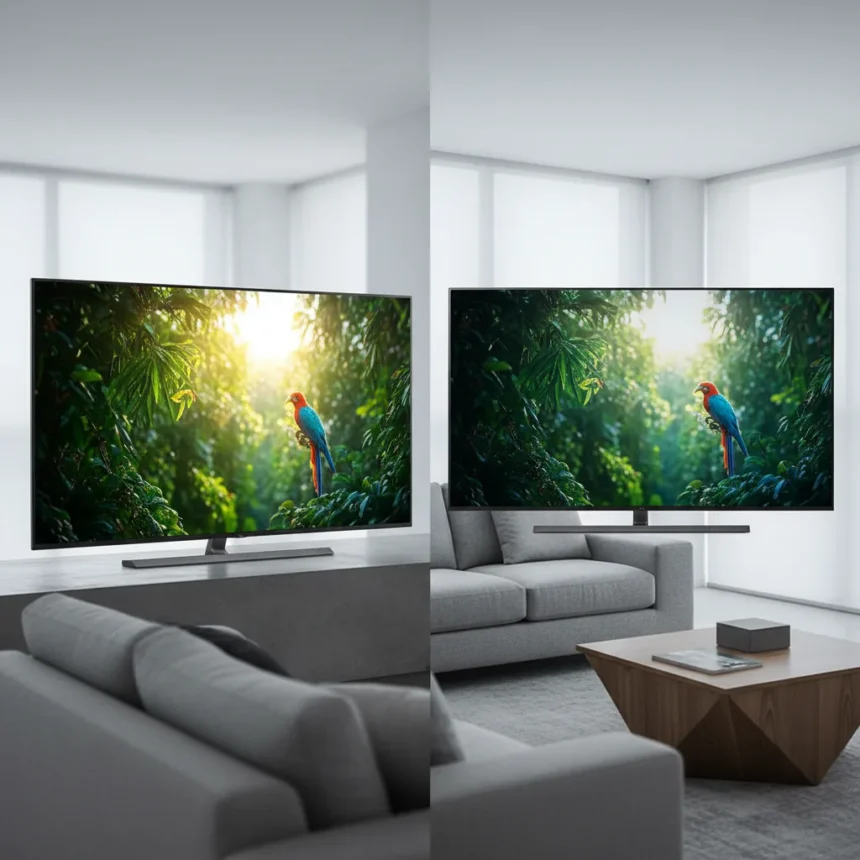
LG OLED evo vs standard OLED is the question every premium TV shopper faces today. Both use organic light-emitting diode technology, but LG’s evo lineup claims meaningful improvements in brightness, color accuracy, and panel longevity that justify a higher price tag.
Key Takeaways
- OLED evo panels deliver significantly brighter peak brightness compared to standard OLED models
- Color accuracy and vibrancy improve in evo TVs through enhanced phosphorescent materials
- OLED evo technology reduces the risk of image persistence and burn-in over extended use
- Standard OLED remains excellent for dark room viewing and still offers superior contrast
- Price premium for evo models typically ranges from several hundred dollars upward
Brightness: The Core Difference Between LG OLED evo vs standard OLED
The fundamental gap between LG OLED evo vs standard OLED lies in peak brightness output. OLED evo panels achieve significantly higher brightness levels, particularly in HDR content and bright scenes. This matters because standard OLED panels, while excellent in dark rooms, struggle in brightly lit spaces where peak brightness becomes critical for visibility and impact.
Standard OLED technology has inherent brightness limitations due to how the pixels generate light. Each pixel emits its own light, and pushing brightness too high risks damaging the organic materials. OLED evo overcomes this through improved phosphorescent materials and refined manufacturing processes that allow pixels to run hotter without degradation. The result is noticeably brighter whites, more vivid highlights, and better overall picture pop in daylit viewing conditions.
For viewers who primarily watch in controlled, dark environments, this brightness advantage matters less. But in living rooms with windows or ambient light, the OLED evo’s brightness boost transforms the viewing experience. Content that looks washed out on standard OLED becomes vibrant and punchy on evo panels.



Color Accuracy and Visual Performance in LG OLED evo vs standard OLED
Beyond brightness, LG OLED evo vs standard OLED shows meaningful differences in color reproduction and vibrancy. OLED evo panels deliver superior color accuracy through enhanced phosphorescent materials that maintain color saturation even at higher brightness levels. Standard OLED panels can struggle to maintain color intensity when brightness increases, leading to slightly muted tones in bright scenes.
This improvement benefits multiple content types. Sports programming looks more realistic with richer grass and sky tones. Movies maintain their intended color grading across both dark and bright scenes. Gaming benefits from better shadow detail without sacrificing color punch in highlights. The difference is subtle enough that casual viewers might not immediately notice it, but side-by-side comparison reveals cleaner, more accurate colors on evo models.



Standard OLED still excels at contrast and black levels—both technologies produce perfect blacks since individual pixels can turn completely off. The color advantage of evo is about consistency and saturation across the brightness spectrum, not a fundamental superiority in contrast performance.
Durability and Burn-In Risk: OLED evo vs standard OLED
LG OLED evo vs standard OLED also diverges on long-term reliability. OLED evo technology reduces the risk of image persistence and burn-in through improved panel materials and more efficient pixel operation. This is significant because burn-in—where static images permanently damage the screen—remains a legitimate concern for standard OLED panels, particularly with heavy use or static content like news tickers or logos.
The enhanced materials in OLED evo panels degrade more slowly under stress. Pixels can operate at higher brightness levels without accelerating organic material degradation, which extends the panel’s lifespan and reduces burn-in vulnerability. Both technologies include anti-burn-in features like pixel shifting and screen savers, but OLED evo’s hardware advantage provides an extra safety margin.
For users planning to keep their TV for five-plus years, or those who display static content regularly, OLED evo’s durability advantage becomes increasingly valuable. Standard OLED panels are still reliable for typical use, but evo offers genuine peace of mind for demanding scenarios.



Standard OLED Strengths You Shouldn’t Overlook
Despite OLED evo’s advantages, standard OLED remains an exceptional choice for specific viewing scenarios. If your primary use is dark-room movie watching or gaming in controlled lighting, standard OLED’s superior contrast and perfect blacks deliver an unmatched experience. The brightness limitations that disadvantage standard OLED in bright rooms become irrelevant when ambient light is minimal.
Standard OLED also costs significantly less than comparable evo models. For budget-conscious buyers, the performance gap may not justify the premium. A 55-inch standard OLED still outperforms mid-range LED or QLED TVs dramatically in picture quality, making it a smart choice if budget constraints exist.
The technology is mature and proven. Standard OLED panels have been in use for years without widespread reliability issues, so buyers can feel confident in the platform’s stability and longevity.
Which Should You Actually Buy?
Choose LG OLED evo if you watch TV in bright or normally lit rooms, value color accuracy across all brightness levels, or plan to keep the TV for many years. The brightness and durability advantages justify the premium for these use cases. OLED evo is the safer long-term investment and the better choice for varied content and lighting conditions.
Choose standard OLED if you watch primarily in dark rooms, have budget constraints, or prioritize maximum contrast and black levels above all else. Standard OLED still delivers stunning picture quality and exceptional reliability for typical use patterns. You’ll save hundreds of dollars without sacrificing the core OLED experience.
Does LG OLED evo deliver noticeably better picture quality than standard OLED?
The difference is noticeable in bright rooms and with HDR content, but subtle in dark viewing environments. Brightness improvement is the most obvious change; color and durability gains are more incremental. A side-by-side comparison shows clear advantages, but casual viewing might not reveal dramatic differences.
Is OLED evo worth the extra cost?
Yes, if you watch in bright or mixed lighting conditions or plan long-term ownership. The brightness and durability advantages compound over years of use. For dark-room-only viewing or tight budgets, standard OLED remains excellent value.
Will standard OLED develop burn-in easily?
Burn-in risk exists but is low for typical use. Avoiding prolonged display of static images and using built-in protection features minimizes risk significantly. OLED evo reduces this risk further through improved materials.
The choice between LG OLED evo vs standard OLED ultimately depends on your viewing environment and budget. Both deliver exceptional picture quality compared to other TV technologies. OLED evo is the premium choice for bright rooms and long-term ownership, while standard OLED remains a smart, cost-effective option for dark-room enthusiasts and budget-conscious buyers who still want flagship performance.
Where to Buy
55-inch LG C5 is $1,096 at Amazon | 55-inch LG B5 is $896 at Amazon
Edited by the All Things Geek team.
Source: Tom's Guide