





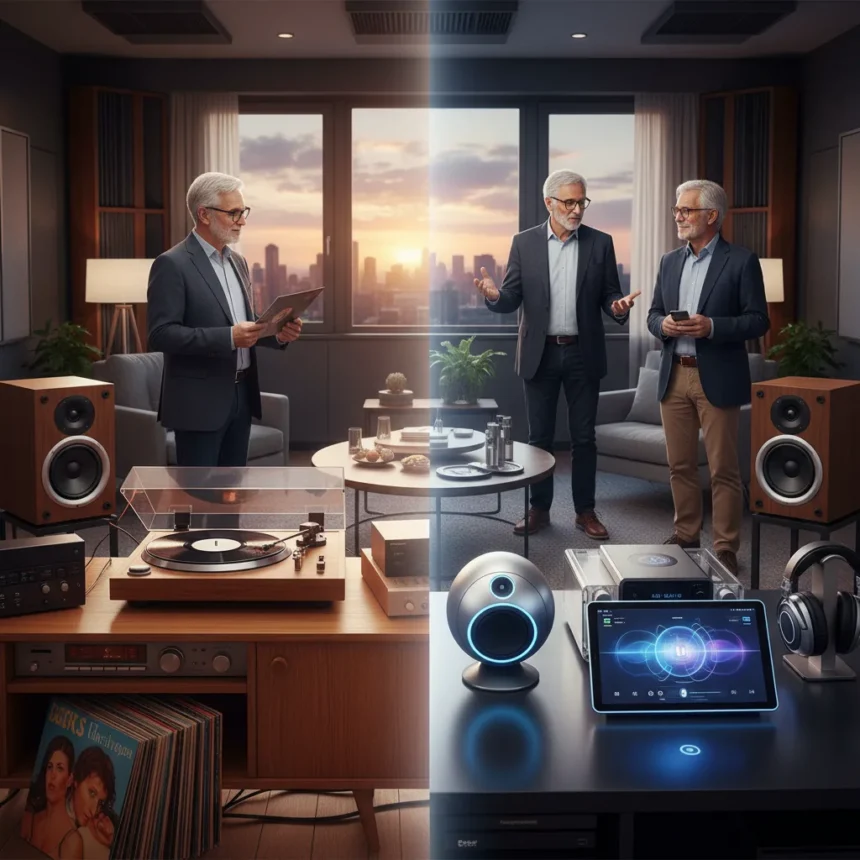
Music and hi-fi evolution over the past five decades represents one of the most dramatic transformations in consumer electronics. What Hi-Fi?’s 50-year milestone provides the perfect occasion to examine how the industry has shifted since 1976, drawing on the perspectives of seasoned veterans who have witnessed the entire arc of change.
Key Takeaways
- What Hi-Fi?’s 50-year span provides a comprehensive window into music and hi-fi transformation since 1976.
- Veteran audio experts offer firsthand perspectives on the biggest industry shifts over five decades.
- The comparison between 1976 and today reveals fundamental changes in how consumers experience music.
- Industry insiders highlight the evolution of both playback technology and music distribution methods.
- The retrospective captures a pivotal moment in audio history as streaming and digital formats dominate.
The 50-Year Milestone and Industry Reflection
What Hi-Fi?’s 50-year lifetime marks a significant checkpoint for the audio industry. The publication’s longevity itself reflects how dramatically the market has evolved. In 1976, hi-fi meant something fundamentally different than it does today. Veteran audio experts who have spent their careers in this space possess unique insight into how consumer expectations, technology, and the music business itself have transformed.
The decision to bring together seasoned industry members for a retrospective underscores how much has changed. These are professionals who remember when physical media dominated, when amplifiers and turntables were the centerpiece of home entertainment, and when buying music meant visiting a record store. Their perspectives ground the conversation in lived experience rather than abstract analysis.
What Has Changed Most in Music and Hi-Fi Evolution
The music and hi-fi evolution over 50 years encompasses shifts that touch nearly every aspect of how people listen to music. Distribution has moved from vinyl and cassette to digital streaming. Playback devices have shrunk from large furniture-sized systems to pocket-sized smartphones. The listening experience itself—once a deliberate, focused activity—has become background accompaniment to daily life.



Veteran audio professionals have watched the industry navigate these transitions. Some changes were predictable; others caught the industry off guard. The rise of convenience over fidelity, the normalization of compressed audio, and the collapse of the physical media market represent seismic shifts that industry insiders have had to reconcile with their professional values and expertise.
What makes the 1976 versus today comparison particularly revealing is how it exposes the non-linear nature of progress. Some aspects of audio quality have improved dramatically. Other dimensions—like the cultural importance of album artwork, the ritual of listening, or the investment consumers make in playback equipment—have diminished. Veteran audio experts can articulate these trade-offs in ways that newer industry entrants cannot.



Industry Perspectives on the Biggest Transformations
Seasoned members of the audio industry bring nuanced perspectives to this comparison. They understand not just what changed, but why it mattered and what was lost in the process. A veteran who worked in hi-fi retail in the 1970s can describe how consumers approached equipment purchases differently. Someone with decades in recording knows how studio practices have evolved. Audio engineers who have worked across multiple eras can speak to technical shifts that casual listeners might miss.
The retrospective format allows these experts to step back and assess the arc of change. Rather than reacting to each new technology as it arrives, they can offer reflective judgment about which shifts proved genuinely transformative and which were merely novelties. This perspective is invaluable for understanding not just the history of audio, but the trajectory of consumer electronics more broadly.
What Hi-Fi?’s decision to mark its 50-year milestone with this kind of industry conversation reflects recognition that institutional memory matters. In a field that moves quickly and often looks forward rather than back, taking time to assess how far the industry has come provides context for where it might go next.
Why This Moment Matters for Audio Enthusiasts
For anyone invested in music and hi-fi, the 1976 versus today comparison offers more than nostalgia. It provides a framework for understanding current debates in the audio world. Why do some listeners still prize vinyl? Why do high-fidelity formats struggle to gain mainstream adoption? Why do some professionals lament the loss of physical media while others celebrate streaming’s accessibility?



Veteran audio experts can answer these questions by situating them within the broader 50-year arc. They have seen technologies rise and fall. They have watched consumer preferences shift in ways that surprised the industry. They understand the difference between what is technically possible and what actually resonates with listeners.
How Has Listening Itself Changed?
One of the most profound aspects of music and hi-fi evolution involves the act of listening itself. In 1976, high-fidelity listening was often a dedicated activity. Enthusiasts would sit down with a record, pay attention, and experience music as a primary focus. Today, listening is frequently incidental—music accompanies work, exercise, commuting, and countless other activities.
This shift represents a fundamental change in how the industry approaches product development and business models. Streaming services optimize for convenience and discovery rather than fidelity. Portable devices prioritize battery life and durability over sound quality. The cultural value placed on audio equipment has shifted accordingly.
What Do Veteran Audio Experts Predict Going Forward?
While the research brief does not provide specific predictions from the experts quoted, the retrospective format invites consideration of what comes next. Veteran audio professionals have seen enough cycles to recognize patterns. They understand which changes stick and which fade. Their perspective on the past 50 years of music and hi-fi evolution informs their outlook on the industry’s future.
Has hi-fi quality improved since 1976?
The answer depends on what metrics matter. Technical specifications for many components have improved dramatically. Distortion levels are lower, frequency response is flatter, and manufacturing precision is far greater. However, the most common way people listen to music today—compressed streaming on portable devices—represents a significant step down in fidelity compared to high-quality vinyl playback in 1976. Veteran audio experts would likely acknowledge this paradox: the best possible sound quality has improved, but the average listening experience has degraded.
Why does What Hi-Fi?’s 50-year milestone matter?
What Hi-Fi?’s 50-year span coincides with one of the most transformative periods in audio history. The publication has documented the industry through vinyl’s dominance, the rise of digital audio, the CD era, the transition to digital files, and now the streaming age. This institutional record makes the publication itself a valuable lens for understanding music and hi-fi evolution. The decision to bring together veteran experts at this milestone reflects recognition that this moment is significant for the audio industry.
What aspects of 1976 audio culture do professionals miss?
The research brief does not specify which aspects veteran audio experts particularly miss about 1976. However, the framing of the retrospective suggests that the comparison reveals genuine losses alongside genuine gains. Music and hi-fi evolution has been uneven—some dimensions have improved while others have diminished. The veteran perspective is valuable precisely because these professionals can articulate what was valuable about the earlier era, even as they acknowledge the benefits of today’s technology.
What Hi-Fi?’s 50-year retrospective serves as a reminder that the audio industry’s story is not one of simple progress. Instead, music and hi-fi evolution represents a complex negotiation between technical capability, business incentives, consumer preferences, and cultural values. Veteran audio experts who have lived through this entire arc offer irreplaceable perspective on how we got here and what the journey reveals about where the industry might go next.
Edited by the All Things Geek team.
Source: What Hi-Fi?




