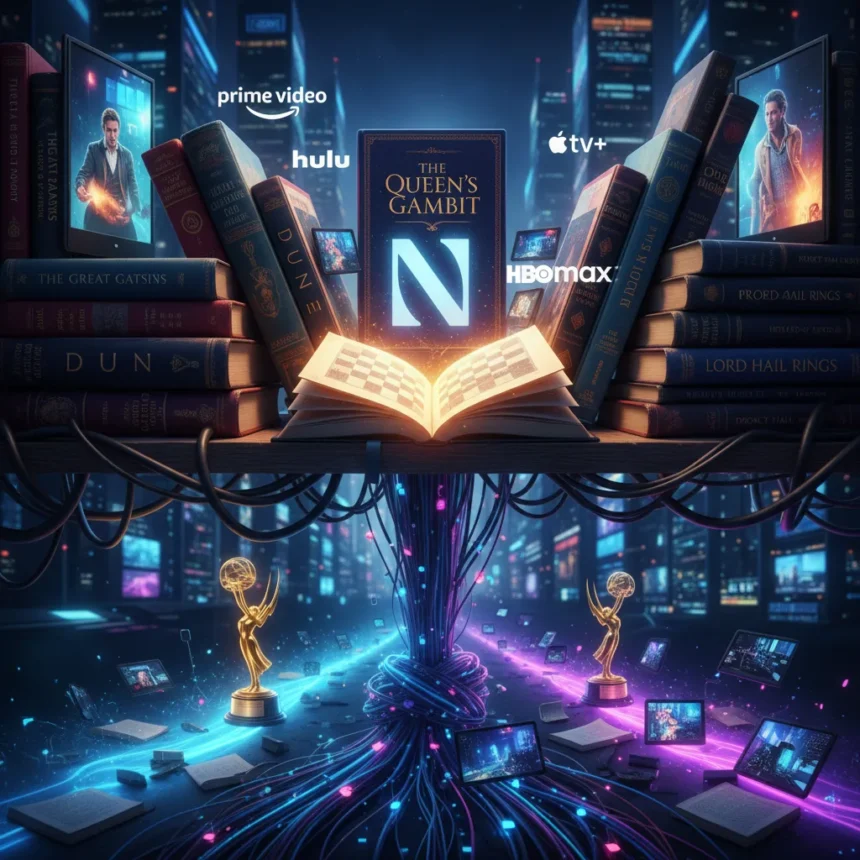
Netflix literary adaptations represent a strategic bet that prestige storytelling drives subscriber growth in an increasingly fragmented streaming landscape. As Netflix invests in bringing famous novels to screen, the platform joins a crowded field where Amazon Prime Video, Apple TV+, and HBO Max are pursuing identical source material with comparable budgets and production pedigree.
Key Takeaways
- Netflix is expanding its literary adaptation slate across multiple genres and source material.
- Competing streamers are simultaneously developing shows based on the same famous novels.
- Literary adaptations carry both prestige appeal and execution risk in streaming.
- Success depends on casting, showrunner choices, and faithfulness to source material.
- The market for prestige adaptations is saturating faster than viewership can absorb.
Why Netflix Chose Literary Adaptations as Core Strategy
Netflix literary adaptations tap into a proven audience: readers with established emotional investment in source material. Unlike original concepts that require marketing spend to build awareness, adapting famous novels starts with a built-in fanbase. The strategy mirrors HBO’s decades-long playbook, where prestige adaptations (The Leftovers, True Detective) anchored premium positioning.
The logic is straightforward. A novel that sold millions of copies globally has already validated its narrative appeal across demographics. Netflix can spend production budget on execution rather than concept explanation. Yet this same logic applies to every rival streamer, creating a rush to option the same bestsellers simultaneously.
Netflix Literary Adaptations Face Unprecedented Competition
The real challenge is not whether Netflix can adapt famous novels—it clearly can. The problem is that Amazon Prime Video, Apple TV+, and HBO Max are adapting the same novels with equivalent resources. When multiple streamers pursue identical source material, the first to market gains advantage, but subsequent versions struggle for differentiation.



This mirrors the streaming wars’ broader pattern: Netflix’s dominance in one area (original comedy, reality TV) crumbles once competitors match investment and quality. Literary adaptations will follow the same trajectory. Within two years, prestige novel adaptations will be table stakes across all major streamers, not a competitive moat.
Execution Remains the Wildcard for Netflix Literary Adaptations
Netflix literary adaptations live or die on three variables: showrunner talent, casting choices, and creative fidelity. A mediocre adaptation of a beloved novel generates backlash far more intense than a mediocre original series. Fandoms are organized, vocal, and quick to abandon a streamer that mishandles source material they treasure.



Prestige casting helps but does not guarantee success. A-list actors in a poorly adapted script still fail. Netflix’s advantage lies in its ability to attract top-tier showrunners and writers who have proven track records with literary material. This is where execution separates Netflix from rivals—not in the novels chosen, but in who is hired to adapt them.
Is Netflix’s Literary Adaptation Strategy Sustainable?
Netflix literary adaptations work as a component of broader content strategy, not as a standalone competitive advantage. The platform needs original concepts, genre variety, and international content alongside prestige adaptations. Overweighting toward literary adaptations risks the same trap: saturation, fan disappointment, and diminishing returns.
The streaming market is consolidating around prestige content, and literary adaptations are table stakes in that fight. Netflix will continue pursuing famous novels because rivals do, not because the strategy alone drives growth. Success depends on Netflix’s ability to execute at higher quality than competitors while maintaining production velocity across all content categories.
What makes a Netflix literary adaptation successful versus a flop?
A successful adaptation respects source material while adapting it for visual storytelling—cutting subplots that don’t serve the screen, deepening character arcs, and casting actors who embody the emotional core of beloved characters. Flops typically occur when showrunners prioritize spectacle or their own creative vision over the reason audiences loved the novel in the first place.



Are Netflix literary adaptations better than Amazon or Apple’s versions?
Quality varies by individual project, not by streamer. Netflix has produced acclaimed literary adaptations, as have Amazon Prime Video and Apple TV+. The differentiator is showrunner talent and budget allocation, not platform affiliation. Viewers should evaluate each adaptation on its own merits rather than assuming Netflix’s version is superior simply because Netflix released it.
Will literary adaptations remain a priority for Netflix?
Yes, because rivals are investing in them and Netflix cannot cede prestige content to competitors. However, Netflix literary adaptations will become one content category among many rather than a strategic focus. The platform’s growth will depend on maintaining quality across originals, genre content, and international series—not on dominating literary adaptations specifically.
Netflix literary adaptations are a rational response to market dynamics, not a breakthrough strategy. The real test is whether Netflix can execute these adaptations at higher quality than rivals while keeping production costs sustainable. In a crowded market, prestige is table stakes—execution is everything.
Where to Buy
Amazon Fire TV Stick 4K Max 2023 | Google Chromecast with Google TV
Edited by the All Things Geek team.
Source: T3