





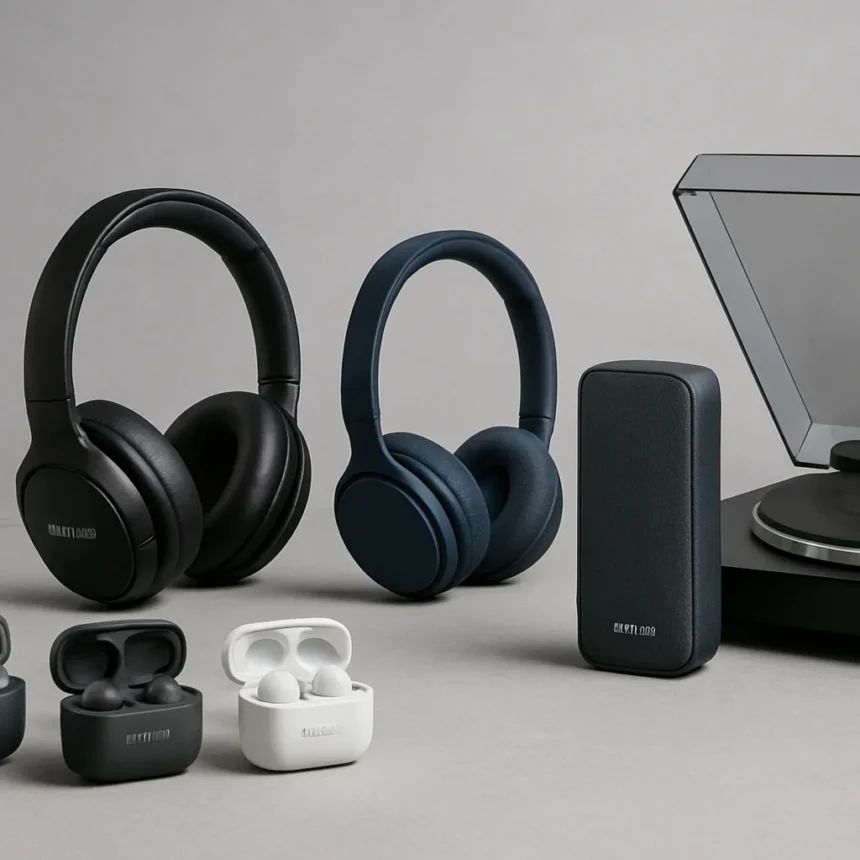
Philips 2026 audio lineup is so expansive it raises a simple question: is there any audio category left that Philips isn’t touching? The brand’s upcoming releases span everything from micro hi-fi systems to retro-styled boombox speakers, wireless earbuds, and turntables—a portfolio so broad it borders on the absurd.
Key Takeaways
- Philips 2026 audio lineup includes retro Moving Sound range with 1980s-inspired designs and modern wireless tech
- Moving Sound speakers start at €34.99 for earbuds, rising to €349.99 for the flagship Tube speaker
- Century Retro Range celebrates Philips’ 100-year audio history with five classic-meets-modern products
- TAM4205 micro hi-fi system features 60W output, USB, and Bluetooth connectivity
- Indian market gets five new TPV-launched Philips audio products ranging from €11 to €160 equivalent
Philips 2026 audio lineup: strategy or saturation?
The Philips 2026 audio lineup represents either bold market diversification or a desperate attempt to capture every possible audio niche. Late 2025 revealed the Moving Sound retro range, set for summer 2026 release, which resurrects 1980s design language with modern wireless capabilities. The MS80 The Tube speaker (€349.99), MS60 The Roller (€179.99), MS3 The Buds (€79.99), and MS1 The Ringo Duo earbuds (€34.99) arrive in retro yellow or black with neon pink accents. These aren’t just throwback aesthetics—they’re betting that nostalgia-driven audio is a genuine market segment worth pursuing aggressively.
This isn’t Philips’ only 2026 offensive. The Century Retro Range launches to commemorate 100 years of sonic innovation, combining classic designs with contemporary technology across five distinct products. Simultaneously, the brand pushes forward with the TAM4205 micro hi-fi system, a compact all-in-one featuring bass-reflex loudspeakers, a 4-inch woofer, 20mm tweeter, 60W output, USB, and Bluetooth. That’s not counting the ORD2100B/37 original radio mini, AZ330T/37 CD Soundmachine, and AJ3910/37 clock radio already in the pipeline.
Can one brand own retro audio in 2026?
Retro audio is experiencing genuine demand in 2026, and Philips is gambling that first-mover advantage in the retro-wireless hybrid space justifies flooding the market with variants. The Moving Sound range targets a specific aesthetic appetite—consumers who want 1980s styling without sacrificing Bluetooth connectivity or modern codecs. That’s a real audience. But does Philips need to release four separate products in this category simultaneously?



The TAM4205 micro hi-fi system suggests Philips believes there’s appetite for compact, connected hi-fi that bridges vintage aesthetics and streaming convenience. Yet this overlaps conceptually with the Moving Sound speakers and the Century Retro Range. Buyers seeking nostalgic audio now face a fragmented choice: Which retro Philips product actually suits their space and budget? Confusion is the enemy of conversion.
What the 2026 Philips audio lineup reveals about market trends
Philips’ aggressive expansion into portable, wireless, and retro-styled audio reflects genuine 2026 consumer behavior: demand for design-forward speakers, wireless convenience, and nostalgic product experiences is real and growing. The brand is also hedging bets across multiple price tiers. Indian market launches via TPV include the TAB4230 soundbar (Rs 19,999, approximately €240), TAS4400 Bluetooth speaker (40W max, magnetic detach, 8-hour playtime), and SHP9500 wired over-ear headphones (Hi-Fi stereo, Rs 12,999, approximately €155). These products target cost-conscious buyers in emerging markets while the European Moving Sound range pursues premium nostalgia seekers.



The sheer breadth suggests Philips is treating audio as a total-addressable-market problem rather than a focused product strategy. Earbuds, over-ears, soundbars, micro systems, turntables, clock radios, and vintage-styled speakers all coexist in the 2026 lineup. That’s not a product line—it’s a product catalog masquerading as strategy.
Will buyers actually care about this many options?
The critical risk is choice paralysis. Consumers researching Philips audio in 2026 will encounter dozens of overlapping products with unclear differentiation. The Moving Sound MS80 The Tube speaker and the TAM4205 micro hi-fi system both promise retro styling and modern connectivity—what’s the meaningful difference for a buyer deciding between them? Philips hasn’t articulated a clear answer.
Competitors offering focused, curated product lines may actually win market share simply by making the decision easier. A buyer overwhelmed by Philips’ catalog might choose a single-product-category competitor instead—a soundbar specialist or a retro speaker maker with one flagship offering rather than four.
Is the Philips 2026 audio lineup worth the hype?
The Moving Sound range is genuinely compelling if you value 1980s aesthetics paired with Bluetooth. The micro hi-fi system serves apartment dwellers seeking all-in-one connectivity. But the totality of the 2026 lineup suggests Philips is more interested in market coverage than market leadership. That’s a distribution strategy, not a product strategy.



What’s the cheapest Philips audio product launching in 2026?
The MS1 The Ringo Duo earbuds start at €34.99, making them the most accessible entry point into the Moving Sound retro range. In India, the TAA1009 in-ear wired headphones launch at Rs 899 (approximately €11), though these are TPV-distributed rather than direct Philips releases.
Which Philips 2026 audio product is best for retro design lovers?
The Moving Sound range is explicitly designed for retro aesthetics, with the MS80 The Tube speaker (€349.99) as the flagship offering in classic yellow or black with neon pink accents. The Century Retro Range also celebrates vintage design language, though Philips hasn’t detailed all five products or their specific styling.
Philips’ 2026 audio ambition is undeniable, but ambition without focus often becomes noise. The brand has built a portfolio so comprehensive it risks becoming incoherent. Success in 2026 won’t depend on how many audio products Philips releases—it will depend on whether any of them actually stand out in a market increasingly crowded with retro-styled, wireless-enabled alternatives. Right now, the Philips 2026 audio lineup feels like a brand throwing everything at the wall, hoping something sticks.
Edited by the All Things Geek team.
Source: TechRadar




