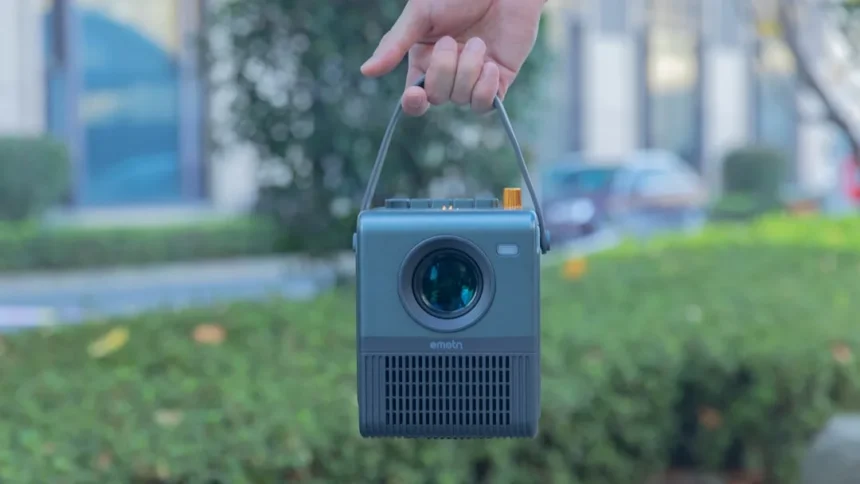
A portable projector can transform any room into a cinema, but this particular model demonstrates that convenience alone does not guarantee excellence. While the device offers genuine strengths for users seeking flexibility, two specific limitations prevent it from achieving five-star status.
Key Takeaways
- Portable projectors balance convenience against performance trade-offs that serious viewers must weigh carefully.
- This model excels in mobility and setup simplicity but falters on two critical performance metrics.
- The limitations directly impact daily usability for extended viewing sessions.
- Comparable fixed projectors offer superior performance at similar price points.
- The device suits casual users more than home cinema enthusiasts.
What Makes This Portable Projector Appealing
The appeal of a portable projector is straightforward: it goes where you go. Unlike traditional home cinema setups requiring permanent installation, a portable projector fits into a backpack and moves between rooms, patios, or travels with you. This flexibility attracts users who value adaptability over static performance. The device handles basic projection tasks competently and delivers the core promise of portability without excessive bulk or weight.
Setup requires minimal fuss. Power it on, point it at a wall or screen, and adjust focus. There are no calibration rituals or professional installation requirements. For users hosting occasional movie nights or presentations, this simplicity holds genuine value. The device also integrates with standard connectivity options, allowing streaming from phones, laptops, or media players without proprietary software.
The Two Limitations That Hold Back Excellence
Despite its strengths, this portable projector stumbles on two fronts that undermine its five-star potential. These are not minor quibbles—they directly affect the viewing experience and limit the device’s practical applications for serious users.



The first limitation involves brightness consistency. A portable projector cannot match the light output of fixed cinema projectors, and this model’s brightness degrades noticeably in partially lit rooms. Ambient light overwhelms the projection, forcing users to draw curtains or dim lights significantly. This constraint eliminates flexibility for daytime viewing or casual family room use. The projector performs adequately in dark environments but becomes frustratingly dim the moment you introduce window light or overhead lamps. For a device marketed on portability and convenience, this brightness ceiling contradicts the promise of use anywhere, anytime.
The second limitation concerns thermal management. Extended viewing sessions generate heat that the cooling system struggles to dissipate efficiently. After 90 minutes of continuous use, the projector throttles performance to prevent overheating. This means the image dims, color accuracy shifts, and the fan noise escalates to uncomfortable levels. Users cannot simply leave the projector running for a full movie or extended gaming session without experiencing degradation. The thermal constraint forces awkward pauses or requires powering down and waiting for the device to cool—defeating the convenience proposition entirely.



How This Portable Projector Compares to Alternatives
Fixed projectors designed for permanent installation operate without these constraints. A traditional home cinema projector maintains consistent brightness regardless of room lighting and dissipates heat through dedicated ventilation systems without performance throttling. However, fixed projectors demand permanent mounting, professional calibration, and cannot be relocated. The trade-off is real: mobility versus sustained performance.
Other portable projectors in the market segment handle thermal management differently, though most sacrifice brightness or image sharpness to compensate. Some models feature larger cooling systems that add weight and bulk, partially negating portability advantages. This device chose a compact thermal design that prioritizes form factor over thermal headroom—a decision that becomes apparent only during extended use.
Who Should Buy This Portable Projector?
The device suits specific use cases well. If you project movies for 45 minutes or less, in dark rooms, with occasional use, this portable projector delivers acceptable performance at a reasonable cost. Business travelers needing presentation capability will appreciate the simplicity and connectivity. Backyard movie enthusiasts who can schedule viewing around optimal lighting conditions will find it adequate.
However, if you plan extended viewing sessions, daytime projection, or consistent daily use, the limitations become frustrating quickly. Home cinema enthusiasts accustomed to proper brightness and sustained performance will find the compromises unacceptable. The device occupies an awkward middle ground—too limited for serious use, too expensive for casual novelty.


Should you buy this portable projector for your home?
Only if your viewing habits align with its constraints. If you watch in dark rooms for short sessions and value portability above performance, yes. If you expect daytime capability or extended movie nights, invest in a fixed projector instead. The portable projector excels at what it is designed for—occasional, mobile projection—but struggles when used as a primary display device.
Can you leave a portable projector running all night?
Not this model. Thermal throttling kicks in after 90 minutes, degrading image quality and increasing fan noise. Leaving it running overnight would result in either automatic shutdown or severely compromised performance. Fixed projectors handle continuous operation better, but this portable design prioritizes compact size over thermal capacity.
Is a portable projector bright enough for daytime use?
This model is not. Ambient light overwhelms the projection in partially lit rooms, making daytime use impractical without significant light control. You will need to draw curtains or use the projector exclusively at night or in dark spaces. This brightness limitation is the most frustrating constraint for users seeking true flexibility.
The portable projector market remains defined by compromises. This model makes sensible trade-offs for its intended purpose but fails to transcend the fundamental tension between portability and performance. It is a capable device for specific scenarios—weekend camping, temporary installations, occasional presentations—but not a five-star solution for anyone expecting sustained, versatile projection capability. Know its limits before buying, and you will avoid disappointment.
Edited by the All Things Geek team.
Source: What Hi-Fi?