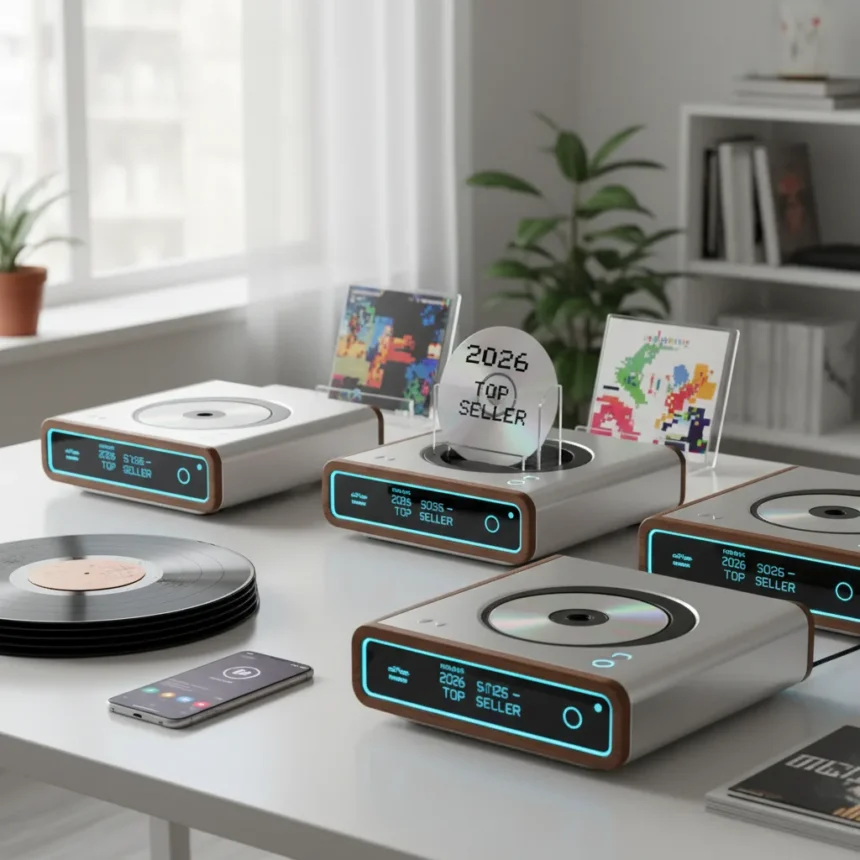
Retro desktop CD players are experiencing an unexpected resurgence in 2026, challenging vinyl’s reign as the physical media format of choice. After years of streaming dominance, listeners are rediscovering the appeal of compact discs—and the sleek, vintage-styled players designed to spin them. New models from brands like Quad, Pro-Ject, FiiO, Shanling, Rotel, and Marantz are hitting the market with significantly improved sound quality compared to their 1990s and 2000s predecessors, thanks to advances in digital-to-analog conversion technology.
Key Takeaways
- Retro desktop CD players are surging in 2026 with new releases from major audio brands.
- Modern CD players ($500–$1,000) deliver superior sound quality to vintage models due to improved DACs.
- CDs offer ownership, no compression, and reliable access compared to streaming services.
- Nearly 50 million CDs sell annually, proving physical media remains viable.
- Retro portables now include Bluetooth, USB-C charging, and 6-hour battery life.
Why Retro Desktop CD Players Are Winning Over Vinyl
Vinyl’s dominance as the retro format is slipping. While record players remain popular, retro desktop CD players offer practical advantages that appeal to pragmatic listeners. CDs are compact, affordable to store, and far cheaper than vinyl—both the discs themselves and the players required to spin them. A quality CD player in the $500–$1,000 range delivers exceptional sound without the space demands of a full vinyl collection.
The ownership argument resonates with streaming-fatigued audiences. CDs provide permanent access to music without compression artifacts, algorithm changes, or the risk of tracks disappearing when licensing deals expire. You own the physical disc outright. That sense of control, combined with the ritualistic pleasure of inserting a disc and listening to a complete album, mirrors vinyl’s appeal—but without the fragility or bulk.
Modern CD Players Sound Better Than You Remember
If your last experience with a CD player was a cheap Discman in the 2000s, today’s retro models will surprise you. Modern desktop CD players ($500–$1,000) incorporate superior digital-to-analog converters (DACs) and refined engineering that outperform their predecessors by a significant margin. These improvements translate to cleaner treble, deeper bass, and less digital harshness—the very complaint that drove listeners toward vinyl in the first place.


The technology gap matters. Older CD players used basic DACs that struggled with timing accuracy and noise floor. Contemporary designs address these weaknesses, making CDs sound genuinely competitive with high-end vinyl setups without the maintenance hassle. For listeners who abandoned CDs after the MP3 era, this represents a genuine sonic revelation.
Retro Desktop CD Players vs. Streaming and Portable Alternatives
Streaming services dominate convenience, but they sacrifice ownership and introduce compression. Retro desktop CD players occupy a middle ground: they demand slightly more intentionality than hitting play on Spotify, yet they avoid vinyl’s maintenance and space requirements. The listening ritual appeals to the same audience that appreciates physical media’s tangibility without accepting vinyl’s drawbacks.



Portable retro CD players add another dimension to the trend. Modern versions support both old and new CDs, incorporate Bluetooth connectivity, include USB-C charging, and deliver approximately 6 hours of battery life. This combines nostalgic hardware with contemporary convenience—a hybrid that vintage Discman owners can only dream about. Collectors hunting eBay for original Sony Discmans now have legitimate new-in-box alternatives that actually work reliably.
All-in-one units like the Majority Oakington blend CD playback with DAB/FM radio and Bluetooth speaker functionality, offering flexibility for listeners unwilling to commit to a dedicated CD-only device. The market is expanding beyond purist audio enthusiasts into mainstream consumers who simply want options beyond streaming.
CD Sales Prove Physical Media Isn’t Dead
The numbers validate the trend. Nearly 50 million CDs sell annually—approximately 46.6 million units per year. This figure holds steady well after the vinyl resurgence of the early 2020s, demonstrating that CD demand exists independently of nostalgia cycles. The format refuses to disappear, and manufacturers are finally responding to that persistent demand with quality products.
Retro styling has accelerated this shift. Desktop CD players designed to evoke 1980s and 1990s aesthetics appeal to both longtime collectors and younger listeners discovering physical media for the first time. The visual appeal of a sleek retro player sitting on a desk next to a monitor or speaker system taps into the broader trend of intentional, analog-adjacent technology choices.


Current Deals and Availability
Retro desktop CD players are currently available with significant discounts, with some models offering up to 25 percent off. New releases from FiiO, Pro-Ject, Quad, and other manufacturers are widely available through major retailers. Prices in the $500–$1,000 range represent the sweet spot for quality without requiring audiophile-level investment. Portable retro models with modern features like Bluetooth and USB-C charging are also shipping new-in-box from multiple brands.
Should You Buy a Retro Desktop CD Player?
Yes, if you own a physical CD collection gathering dust or want to build one affordably. Retro desktop CD players deliver genuine sonic improvements over streaming and avoid vinyl’s maintenance demands. The $500–$1,000 investment pays dividends over years of use, especially if you value ownership and sound quality over convenience.
Skip it only if you’re committed to streaming’s ecosystem and have no desire for physical media. But if you’ve felt the creeping frustration of algorithm-driven playlists, licensing disputes, or compression artifacts, a retro CD player offers a tangible escape hatch.
What makes retro desktop CD players better than old CD players?
Modern retro CD players use superior digital-to-analog converters and refined engineering compared to 1990s and 2000s models. This results in cleaner sound, better timing accuracy, and a lower noise floor—improvements that make contemporary CD playback genuinely competitive with high-end vinyl.
Are CDs really cheaper than vinyl?
Yes. CDs cost less per disc, take up far less storage space, and don’t require expensive turntables or maintenance. A quality CD player in the $500–$1,000 range delivers excellent sound without the bulk or fragility of vinyl collections.
Can modern retro CD players play both old and new CDs?
Yes. Retro portable CD players support legacy CDs and contemporary discs alike, and many now include Bluetooth connectivity, USB-C charging, and battery life around 6 hours—features that original Discmans never offered.
Retro desktop CD players represent a genuine shift in how listeners think about physical media. They’re not nostalgia traps—they’re practical devices that deliver ownership, sound quality, and ritual in a format that refuses to die. With nearly 50 million CDs selling annually and new models arriving from serious audio brands, the CD’s comeback is real, not a marketing gimmick. If you’ve been curious about leaving streaming behind, now is the time to explore what modern CD playback actually sounds like.
Where to Buy
Syitren R300 CD player | Syitren R300 portable desktop CD Player :
Edited by the All Things Geek team.
Source: Creativebloq