





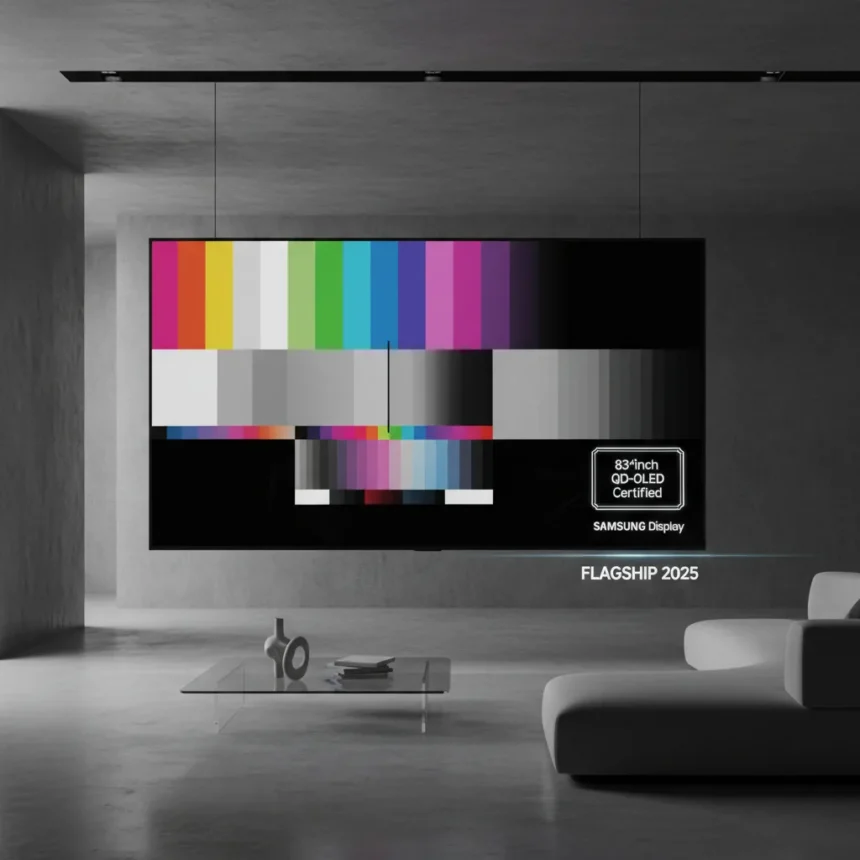
Samsung’s 83-inch QD-OLED TV just cleared a major hurdle. Samsung Display registered an 83-inch QD-OLED panel with UL Solutions’ QuantumView certification program, proving the technology works at a scale that has eluded the company for years. This is not vaporware—it is a compliance milestone that typically precedes product launch.
Key Takeaways
- Samsung Display certified an 83-inch QD-OLED panel via UL Solutions, the first time QD-OLED reaches this size
- A 24-inch QD-OLED monitor panel was also certified, expanding QD-OLED beyond TVs
- Expected 2025 Samsung models include the S95F, S90F, and S91F in 83-inch variants
- FlatBright Technology delivers up to 25% better Delta-E values for reflections versus previous generations
- Samsung’s 83-inch OLED TVs have historically used LG’s WOLED panels, but QD-OLED offers brighter, more efficient alternatives
Why This Certification Matters for 83-inch QD-OLED TV Buyers
The certification is the smoking gun. UL Solutions’ QuantumView program tests display panels for color accuracy, brightness, and overall performance—getting your panel certified means Samsung has submitted it for independent verification and passed. For consumers, this signals that the 83-inch QD-OLED TV is not just a prototype; it is ready for production. Previously, Samsung’s largest QD-OLED TVs topped out at 77 inches, leaving the premium 83-inch segment to LG’s WOLED technology and Samsung’s own WOLED panels sourced from LG Display.
The timing is crucial. Samsung typically unveils its full TV lineup at CES in January, and 2025 is shaping up to be the year QD-OLED finally scales to the sizes that matter most to high-end buyers. The 83-inch segment is where margins are fattest and where buyers expect the absolute best image quality. Having a certified QD-OLED option at that size changes the competitive calculus entirely.
What Makes 83-inch QD-OLED TV Different From Current Samsung OLED Models
Samsung’s current 83-inch OLED TVs—like the 2024 S95F—use WOLED panels with RGB Tandem technology, which Samsung sources from LG Display. That is a pragmatic choice, but it is also a compromise. QD-OLED uses quantum dots to achieve higher brightness and better efficiency, which translates to deeper blacks, more vibrant colors, and lower power consumption. The new FlatBright Technology, verified by UL Solutions, promises up to 25% better Delta-E values (a measure of color accuracy in reflections) compared to previous generations.



The irony is stark: Samsung invented QD-OLED technology but has relied on LG’s WOLED panels for its largest TVs. QD-OLED has already dominated the monitor and smaller TV markets, displacing WOLED in those segments. Now Samsung is finally closing the gap at the 83-inch size, which should force LG to accelerate its own QD-OLED roadmap or cede the premium segment to Samsung.
Expected 2025 Models and What to Watch For
Samsung’s 2025 OLED lineup is expected to include the S95F (flagship), S90F, and S91F in 83-inch variants. Model numbers matter here: suffixes indicate panel type, with “T” denoting QD-OLED and “E” denoting WOLED. So the GQ83S95FAEXZG (S95F) and GQ83S91FAEXZG (S91F) may use QD-OLED, while other regional variants could still use WOLED. This mixing strategy—which Samsung employed with its 2024 S90D lineup—means buyers may not know which panel they are getting until purchase, a frustrating reality of Samsung’s current sourcing strategy.



The 24-inch QD-OLED monitor certification is equally significant. QD-OLED has already overtaken WOLED in the monitor market, and Samsung’s move to certify a 24-inch panel suggests the company is preparing to launch a new generation of professional and gaming monitors. For content creators and esports players, this opens a new product category that combines QD-OLED’s efficiency with a size that fits on most desks.
When Will These TVs Actually Launch?
The certification does not guarantee an immediate launch date. Samsung typically announces 2025 models at CES in January, but regional availability and pricing remain unclear. Reports suggest the 83-inch QD-OLED TV may be UK-only initially, though this could change depending on Samsung’s production capacity. There is also conflicting information about whether 2026 Samsung flagships will stick with WOLED RGB Tandem, which would suggest Samsung views QD-OLED at 83 inches as a 2025-only push rather than a permanent shift.
What is certain: the certification is real, and it proves the technology works. Samsung would not submit panels for UL Solutions testing unless it planned to sell them. The question is not whether 83-inch QD-OLED TVs are coming, but how many markets will get them and at what price.
Is Samsung replacing WOLED with QD-OLED in all 83-inch TVs?
Not necessarily. Samsung’s 2025 lineup will likely mix both technologies. The certification proves QD-OLED is viable at 83 inches, but Samsung may reserve it for specific markets or models while continuing to use WOLED panels from LG Display in others. This hedging strategy gives Samsung flexibility if QD-OLED production faces bottlenecks.



What is the difference between QD-OLED and WOLED in large TVs?
QD-OLED delivers higher brightness, better power efficiency, and improved color accuracy, especially in reflections thanks to FlatBright Technology. WOLED offers mature production and proven reliability. For 83-inch TVs, QD-OLED is the superior technology, but WOLED remains a credible alternative if supply or cost constraints emerge.
Will the 24-inch QD-OLED monitor be cheaper than current WOLED monitors?
The certification does not include pricing information. However, QD-OLED’s efficiency and the monitor market’s competitive dynamics suggest pricing should be competitive with or cheaper than comparable WOLED monitors once production scales.
The 83-inch QD-OLED TV certification is the breakthrough the market has been waiting for. Samsung finally has proof that its flagship quantum dot technology scales to the sizes where it matters most. Whether the company capitalizes on this advantage or stumbles on pricing and availability remains to be seen, but the certification removes the last technical excuse for delay. Expect Samsung to lead with these models at CES 2025, and expect the rest of the industry to follow.
Edited by the All Things Geek team.
Source: TechRadar




