





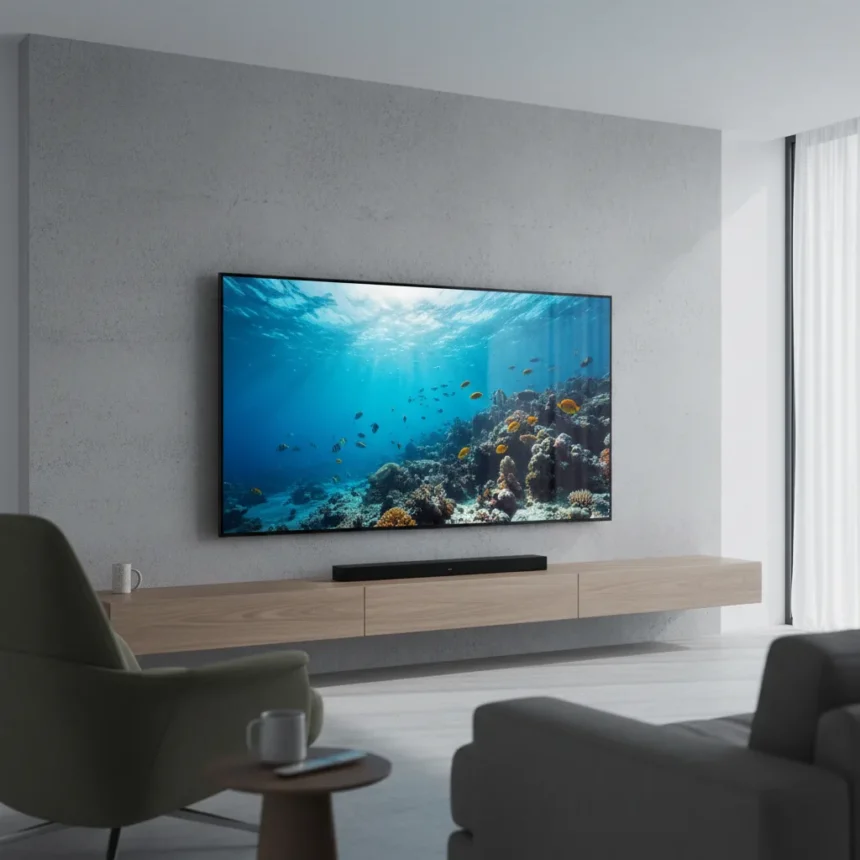
The Samsung S95H OLED TV is Samsung’s flagship television offering, built on quantum dot OLED technology that combines the brightness and color precision of quantum dots with the contrast advantages of OLED panels. This display represents a significant leap in television engineering, delivering picture quality that reviewers have found difficult to match in the current market.
Key Takeaways
- Samsung S95H OLED TV uses quantum dot OLED technology for superior brightness and color accuracy
- The display achieves exceptional contrast performance with pixel-level light control
- Flagship pricing reflects the advanced engineering and materials involved in quantum dot OLED production
- The television competes directly with LG’s OLED lineup and high-end Sony models
- Real-world performance demonstrates the engineering advantages of the quantum dot OLED approach
What Makes the Samsung S95H OLED TV Stand Out
The Samsung S95H OLED TV distinguishes itself through quantum dot OLED technology, which integrates quantum dot layers into an OLED panel structure. This architectural approach delivers brightness levels that traditional OLED displays struggle to achieve, while maintaining the deep blacks and infinite contrast that define the OLED advantage. The combination addresses a long-standing weakness in OLED televisions—peak brightness in bright room conditions.
What sets this television apart from competitors like LG’s OLED lineup is the quantum dot enhancement. Where LG OLED panels excel at contrast and color volume in controlled lighting, the Samsung S95H OLED TV adds a brightness dimension that makes the picture pop in daylit rooms. The pixel-level dimming control remains intact, meaning each quantum dot-enhanced pixel still operates independently, preserving the contrast advantages that made OLED technology revolutionary in the first place.
The engineering complexity is substantial. Quantum dot OLED manufacturing requires precise layering of quantum dot materials onto OLED substrates, a process that adds cost and manufacturing difficulty compared to traditional OLED production. This explains why the Samsung S95H OLED TV commands premium pricing—the materials and fabrication processes are genuinely more complex than standard OLED manufacturing.



Picture Quality That Justifies the Premium Price
Real-world viewing of the Samsung S95H OLED TV reveals why reviewers have struggled to find comparable alternatives. The display delivers exceptional color accuracy across the full brightness range, maintaining saturation and hue precision even when the backlight is pushed to maximum output. This is where quantum dot OLED proves its value—traditional OLED panels lose color volume at peak brightness, but the quantum dot enhancement preserves color intensity.
The contrast performance remains OLED’s defining strength. The Samsung S95H OLED TV renders dark scenes with absolute black levels, since individual pixels can turn completely off. Simultaneously, bright highlights punch through without blooming or halo effects. This dynamic range—the gap between the darkest blacks and brightest whites—creates a viewing experience that feels more like looking through a window than watching a display.



For content creators and cinephiles, the Samsung S95H OLED TV’s color gamut and accuracy matter significantly. The display reproduces wide color spaces without the color shift that affects some competing models when brightness levels change. Whether watching SDR content in a bright room or HDR material in darkness, the picture maintains consistency.
Samsung S95H OLED TV Versus Competing Flagship Displays
The Samsung S95H OLED TV faces competition from LG’s OLED televisions and Sony’s high-end models, each taking different technological approaches. LG’s OLED displays prioritize contrast and color volume but rely on traditional OLED architecture without quantum dot enhancement. Sony’s flagship models use different panel sources and processing algorithms, focusing on upscaling and motion handling rather than raw panel technology.
The key difference is the quantum dot layer. LG OLED televisions achieve stunning picture quality through superior processing and calibration, but they lack the brightness ceiling that quantum dots provide. Sony’s approach emphasizes content processing and frame interpolation. The Samsung S95H OLED TV, by contrast, solves brightness through panel technology itself—a more direct but more expensive solution.
For buyers choosing between these flagships, the decision hinges on room lighting and content preferences. In controlled, dark viewing environments, traditional OLED panels from LG deliver excellent results at lower price points. In bright rooms or for mixed content viewing, the Samsung S95H OLED TV’s quantum dot enhancement becomes a tangible advantage that justifies the premium cost.



Should You Buy the Samsung S95H OLED TV?
The Samsung S95H OLED TV makes sense for buyers who prioritize picture quality above all other considerations and have the budget to match. If you watch television in bright rooms, work with color-critical content, or simply want the best possible picture regardless of price, this display delivers. The quantum dot OLED technology is not incremental—it represents a genuine engineering advancement that changes how the television performs in real-world conditions.
If budget is a primary concern, LG’s OLED televisions offer exceptional picture quality at lower price points, and the difference in dark-room viewing is marginal. If you prioritize features like advanced motion handling or AI upscaling, Sony’s flagship models may align better with your priorities. But if you want the most advanced display technology available and are willing to pay for it, the Samsung S95H OLED TV is the choice.
What makes the Samsung S95H OLED TV different from traditional OLED panels?
The Samsung S95H OLED TV integrates quantum dot technology into the OLED panel structure, enhancing brightness while maintaining OLED’s contrast advantages. Traditional OLED panels lack this brightness enhancement, making the Samsung approach a genuine technological advancement rather than a marketing distinction.
Is the Samsung S95H OLED TV worth the premium pricing?
The premium reflects genuine manufacturing complexity—quantum dot OLED requires more sophisticated fabrication processes than standard OLED production. Whether the cost justifies the benefit depends on your viewing environment and content priorities. In bright rooms, the answer is yes; in dark viewing spaces, traditional OLED offers similar results at lower cost.
How does the Samsung S95H OLED TV compare to LG’s OLED televisions?
Both deliver excellent picture quality, but the Samsung S95H OLED TV achieves higher peak brightness through quantum dot enhancement, while LG’s OLED panels excel through superior processing and calibration. The choice depends on whether brightness in bright rooms matters more to you than other factors.
The Samsung S95H OLED TV represents a genuine advancement in television technology. Quantum dot OLED is not a minor refinement—it solves a real limitation of traditional OLED displays by adding brightness without sacrificing contrast. For viewers who demand the best picture quality available and have the budget to match, this flagship television delivers exactly what it promises.
Edited by the All Things Geek team.
Source: TechRadar




