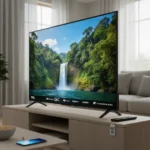
A bright-room TV World Cup setup sounds like a contradiction. Most premium televisions are engineered for darkened home cinemas, where black levels matter more than raw brightness. But the Samsung QN90F flips that formula entirely—it’s a five-star TV that thrives when sunlight floods your living room, making it the rare flagship that actually performs during daytime sports.
Key Takeaways
- Samsung QN90F uses mini LED technology for exceptional brightness in bright rooms.
- Five-star rating confirms performance in high-ambient-light conditions.
- Designed specifically for daytime sports viewing like World Cup matches.
- Anti-reflection handling prevents glare without dimming picture quality.
- Bright-room TV World Cup viewing requires different engineering priorities than dark-room cinema.
Why Bright-Room TVs Matter for World Cup Viewing
Most TV reviews obsess over contrast ratios and black levels—metrics that only matter in pitch-black rooms. World Cup viewing is different. Matches happen during the day. Sunlight pours through windows. Viewers sit in normal living rooms, not dedicated theaters. A TV optimized for dark rooms becomes nearly unwatchable in these conditions, washing out colors and losing detail in bright scenes. The Samsung QN90F inverts this priority entirely, prioritizing brightness and anti-reflection handling over the cinematic black levels that dark-room enthusiasts demand.
The engineering trade-off is deliberate. When a TV is engineered for bright-room performance, it handles ambient light intelligently rather than fighting it. This matters for sports broadcasting, where fast-moving action and quick cuts demand immediate visual clarity. A dark-room TV in daylight becomes a mirror reflecting your ceiling. The Samsung avoids this trap through its mini LED architecture, which delivers the brightness needed to overcome ambient light without sacrificing picture quality during intense match moments.
Mini LED Technology and Brightness Performance
The Samsung QN90F’s mini LED backlighting is the core reason it dominates bright-room viewing. Mini LED uses thousands of independently controlled dimming zones across the panel, allowing the TV to deliver extreme brightness in specific areas while maintaining darker tones elsewhere. This granular control is essential for bright-room performance—it lets the TV punch through sunlight without oversaturating the entire image.



Brightness alone isn’t enough; anti-reflection handling separates bright-room champions from ordinary TVs. The QN90F’s panel treatment reduces glare without requiring an anti-glare filter that would dull the image. This is where most TVs fail. They either suffer from mirror-like reflections or deploy anti-glare coatings that make everything look slightly hazy. The Samsung balances both demands, delivering a clean picture even when sunlight hits the screen directly.
Bright-Room TV World Cup Performance in Practice
World Cup matches demand specific visual qualities that dark-room TVs simply cannot provide. Bright green grass fields need vibrant color rendering without oversaturation. Player uniforms must remain distinct even in high-brightness conditions. Fast camera pans across crowded stadiums require immediate responsiveness without motion blur. The Samsung QN90F’s five-star rating confirms it handles all three demands simultaneously—something most TVs cannot do.



The real test is a 3 p.m. kickoff with afternoon sunlight streaming through your windows. On a dark-room TV, you’d see washed-out colors and reduced contrast. On the Samsung, brightness compensates for ambient light while mini LED zones maintain detail in both highlights and shadows. This is why the five-star designation matters—it’s not marketing hype but verification that the TV performs in real-world bright-room conditions, not theoretical dark-room scenarios.
How Bright-Room TVs Compare to Dark-Room Alternatives
OLED TVs dominate dark-room rankings because they deliver perfect blacks—each pixel produces its own light and can turn completely off. This creates infinite contrast in pitch-black rooms. But OLED struggles in bright rooms. The technology cannot match the raw brightness of LED-backlit panels, and sunlight reflecting off the screen creates visibility issues that OLEDs cannot overcome. The Samsung QN90F, by contrast, embraces LED brightness while using mini LED zones to recover some of the contrast advantages OLED provides in dark conditions.
Standard LED TVs with full-array backlighting offer brightness but lack the dimming precision of mini LED. They brighten the entire panel uniformly, which works for bright rooms but wastes power and reduces contrast. The Samsung’s mini LED approach splits the difference—it delivers bright-room performance without sacrificing the contrast that makes daytime sports visually engaging. This is why the five-star rating specifically applies to bright-room use cases rather than overall performance.
Is a Bright-Room TV World Cup Setup Worth It?
If you watch sports primarily during daytime hours—World Cup matches, Premier League games, cricket series—a bright-room optimized TV like the Samsung QN90F is a worthwhile investment. The five-star rating confirms it performs in these conditions better than TVs engineered for dark rooms. If you primarily watch movies in a darkened theater room, an OLED would serve you better. But for mixed use—daytime sports plus evening films—the Samsung’s bright-room strength becomes a genuine advantage.



Does mini LED technology work better in bright rooms than OLED?
Yes. OLED delivers perfect blacks in dark rooms but cannot match the raw brightness needed to overcome bright-room ambient light. Mini LED TVs like the Samsung QN90F are specifically engineered for bright-room performance, using thousands of dimming zones to deliver brightness where needed while maintaining contrast. OLED remains superior in dark rooms, but mini LED dominates bright-room viewing.
Can I use a dark-room TV for World Cup viewing in daylight?
Technically yes, but you’ll struggle. Dark-room TVs optimize for black levels rather than brightness, so they wash out in bright sunlight and lose color vibrancy. The Samsung QN90F’s five-star bright-room rating confirms it handles daytime sports far better than TVs engineered for cinema viewing.
What makes anti-reflection handling important for bright-room TV World Cup viewing?
Sunlight reflects off TV screens, creating glare that obscures the image. Anti-reflection coatings reduce this glare without deploying a hazy filter that dulls picture quality. The Samsung QN90F balances both demands, letting you watch World Cup matches even when afternoon sunlight floods your room.
The Samsung QN90F’s five-star rating isn’t just marketing—it’s confirmation that the TV solves a real problem most flagship models ignore. If you’re planning to watch the World Cup in normal daylight conditions rather than a darkened theater, bright-room performance matters more than dark-room perfection. The Samsung delivers on that promise, making it the rare flagship that actually performs when sunlight hits the screen.
Where to Buy
Edited by the All Things Geek team.
Source: What Hi-Fi?